How Often to Water Potted Plants in Summer: A Pot-by-Pot Guide
How often to water potted plants in summer? Check the mix and lift the pot rather than obeying a calendar: a 3 L (0.8 gal) terracotta rosemary pot may need a daily check, while a 30 L (8 gal) glazed pot in part shade can stay workable for several days. For many established plants, water when the upper 2–5 cm (1–2 in) of mix is dry and the container feels noticeably lighter, then soak the root zone slowly until excess drains.
That physical check is the useful answer because summer water loss depends on the pot, plant and balcony around it. A schedule can remind you to look; it cannot tell you what is happening below the leaves.
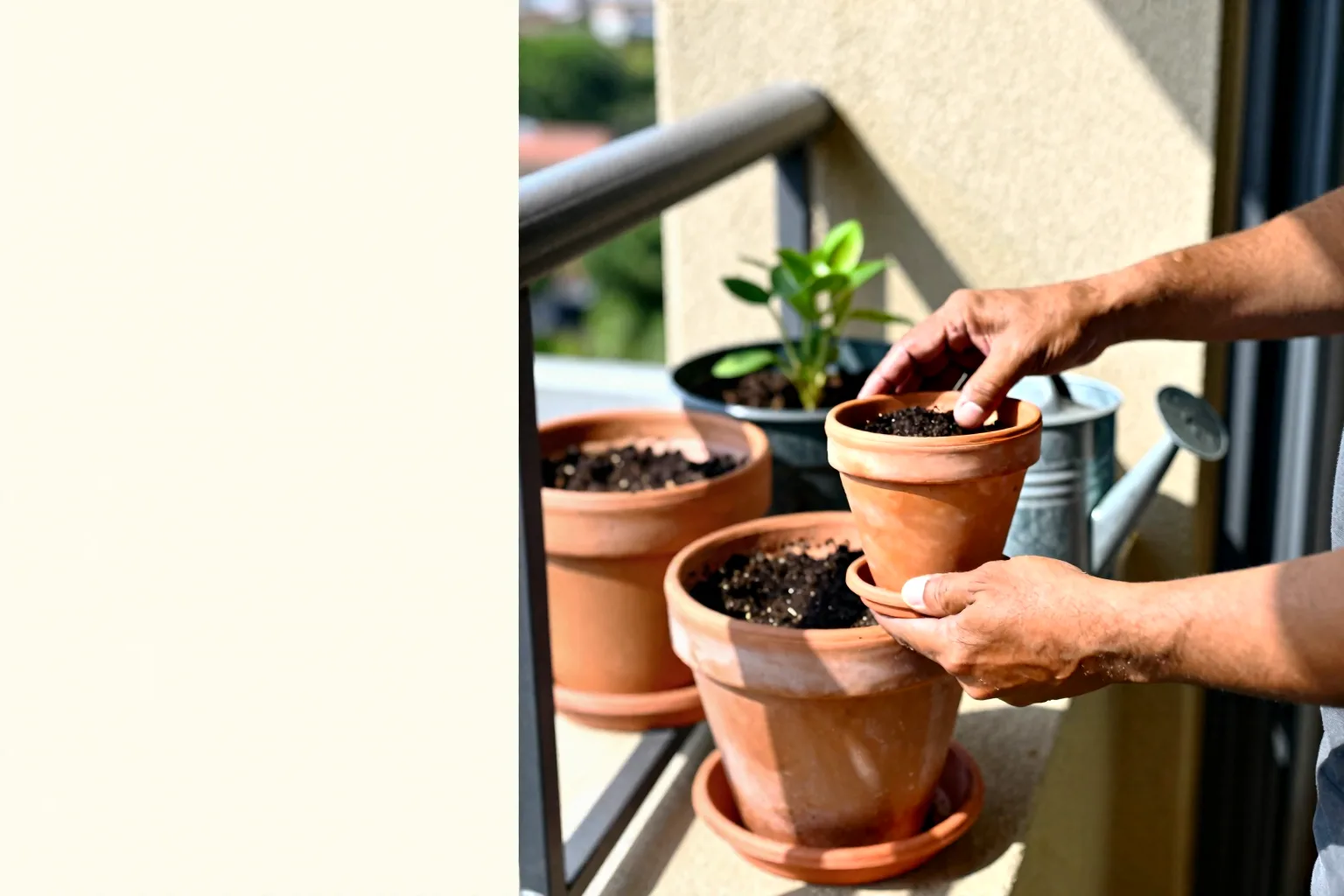
Forget the calendar: start with a moisture check
A pot has a small, exposed reservoir of water. Sun warms the surface, wind strips moisture from leaves and mix, and the plant itself draws water through its roots. Change any one of those conditions and yesterday’s interval can become too long or unnecessarily wet.
I use the calendar as a prompt to inspect, not as the watering decision. For many established herbs, vegetables and ornamentals, the upper 2–5 cm (1–2 in) provides a useful starting line. Seedlings and shallow-rooted salad crops deserve an earlier check because their usable root zone is close to the surface. A thirsty fruiting plant may also need attention sooner.
Rosemary and thyme can usually tolerate a deeper dry-down than soft-leaved basil or lettuce, provided the plant remains firm and the whole root ball is not being left bone-dry. The thicker, tougher leaves lose water more slowly, so the plant can draw down more of the mix before showing stress. For another viewpoint, keep University extension guidance on container irrigation and growing-media moisture in your reference list, but let the pot in front of you make the final call.
The 30-second check that tells you whether to water today
Check before watering, ideally at the same time each morning. Push a finger 2–5 cm (1–2 in) into the mix near the pot’s edge, away from the stem. If it feels cool and slightly damp below a dry surface, wait and check again. If the mix is dry through that depth and the pot feels light, watering is due.
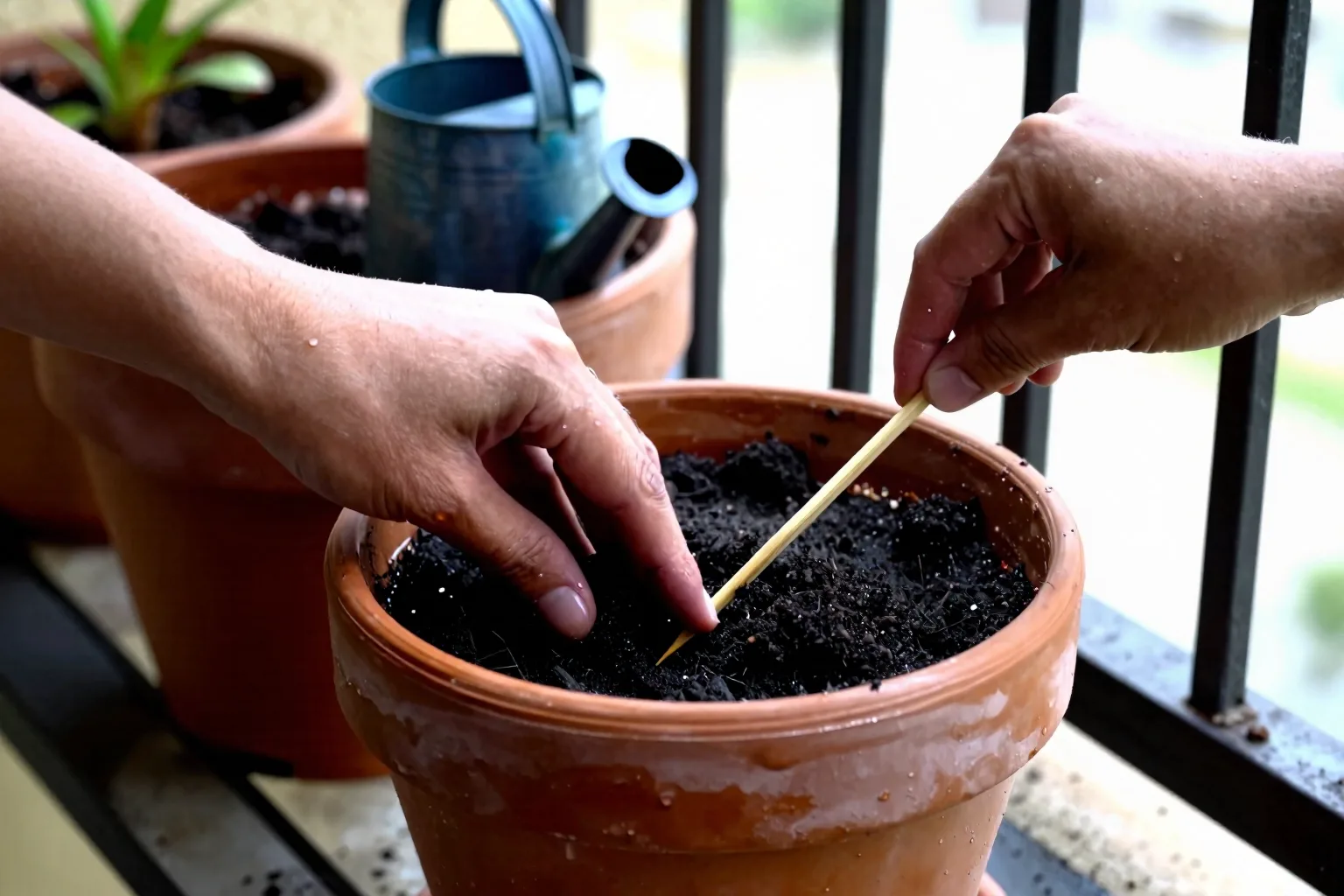
A bamboo skewer gives you a longer probe for a deep container. Push it down toward the middle, leave it for a few seconds, then pull it out. Dark mix clinging to the wood points to moisture; a clean, pale skewer suggests the root zone has dried. In a small pot, lifting is often the quickest test: learn the heavy, freshly watered feel and compare it with the lighter feel that develops as water leaves.
Use two clues together. A dry top with a heavy pot calls for another check lower down, while a dry top with a very light pot points toward watering. Plants that prefer evenly moist mix, such as seedlings, may need water before the full 5 cm has dried.
Read the pot before you read the plant label
Finite root volume is the first reason small pots dry quickly: there is simply less mix holding available water. A shallow, wide container also exposes more mix to warm air than a deep container with the same volume. Roots filling most of the pot can speed demand, but a tightly packed root ball can also repel water, letting it run down the gap between roots and container wall.
| Container material | What to expect | Practical adjustment |
|---|---|---|
| Plastic | Most water loss happens through the surface and drainage rather than the side walls. | Use the volume and exposure as your main guide; dark plastic in strong sun deserves an earlier inspection. |
| Unglazed terracotta | The porous wall can release moisture into surrounding air, especially in wind. | Check earlier than an equal-sized plastic pot. |
| Glazed ceramic | The glaze limits side-wall loss, and larger pots hold a bigger reserve. | A large glazed pot in part shade may need checking every few days. |
| Fabric | Air reaches the sides, so the outer root zone can dry quickly. | Lift and probe regularly; edge roots may need attention before the centre looks dry. |
The material of the container changes the timing, but volume still matters more than the label on the front. A well-drained 10 L (2.6 gal) terracotta pot and a 10 L plastic pot may hold the same amount of mix, yet the terracotta one can reach the dry trigger sooner in a breezy position.
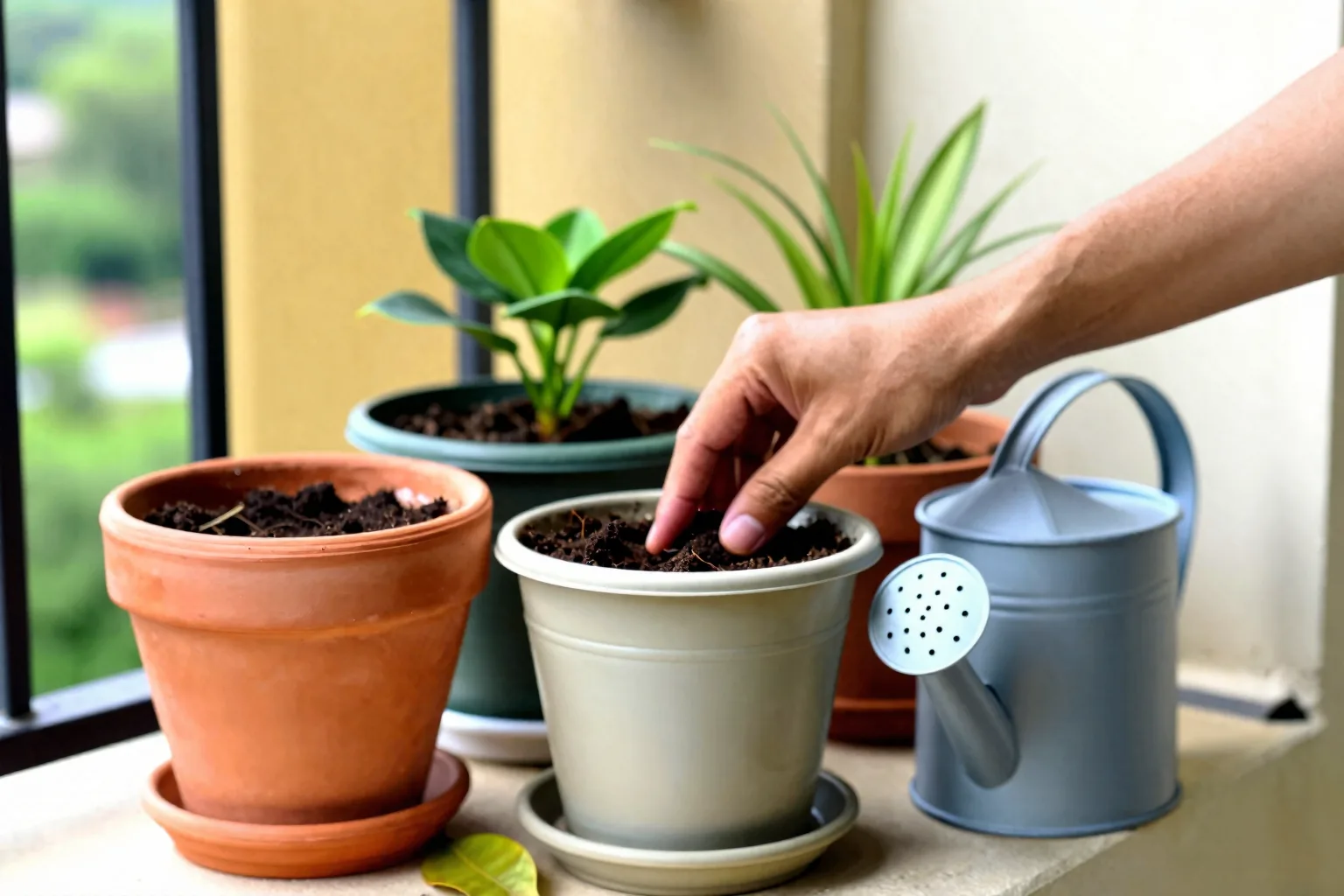
A starting schedule by pot size and crop
Use the table as a checking plan for an ordinary summer day, not a promise that each pot will need water on that exact day. The listed intervals assume a quality potting mix, open drainage holes and moderate exposure; full afternoon sun or a hot wall can move the check earlier.
| Mix volume | Starting check | Container examples | What may change it |
|---|---|---|---|
| 2–5 L (0.5–1.3 gal) | Every day; exposed pots may need a second look late afternoon. | Small herbs, strawberries and leafy greens. | Terracotta, wind and a shallow shape shorten the interval. |
| 8–15 L (2–4 gal) | Every 1–2 days. | One pepper, salad crops or a compact tomato early in the season. | A fruiting tomato may outgrow this reserve and need a larger container. |
| 20–30 L (5.3–8 gal) | Every 1–3 days. | One fruiting tomato, a mature pepper or a young dwarf citrus. | Full sun and free-draining mix can bring the check forward. |
| 40 L-plus (10.5 gal-plus) | Every 2–4 days. | Mature dwarf citrus, shrubs and large fruiting crops. | Cool nights, rain and part shade extend the interval. |
These volumes refer to the mix inside the container, not the outside measurement printed on a listing. A tapered pot or one with a thick rim can hold considerably less than its nominal diameter suggests. If you are choosing a crop and pot together, use How much soil does a container vegetable need? as the sizing check, then use this table for summer inspection.
My judgment call is to water by the moisture signal even if the table says today is the usual day. A 30 L glazed pot in part shade may still be heavy and moist on day three; watering it simply because the calendar says so adds wet time without adding useful oxygen to the root zone.
Five conditions that can turn every-other-day into twice a day
Move the inspection earlier when a pot faces hot afternoon sun, a reflective wall or warm paving. Strong wind increases moisture loss from leaves and exposed mix. Terracotta and fabric containers add side exposure, very free-draining mix releases water quickly, and dense foliage can increase the plant’s demand once growth is vigorous.
Roots filling the container create a special case. The plant has less spare mix between roots, while a dry root ball can pull away from the wall and allow water to bypass it. At the other end, shade, humid air, recent rain, a large glazed pot and cool nights usually justify a later check. A thin mulch layer can slow surface evaporation, but it also hides the visible dry line, so push the skewer through the mulch rather than guessing.
Give each pot a complete drink, not a sprinkle
Once the check says water, the order matters. Apply water slowly over the whole surface, keeping the stream away from one narrow channel. Pause when the first drops begin to leave the drainage holes, then wait a few minutes and apply a second slow pass if the root ball was very dry.
- Wet the mix evenly across the pot instead of flooding one spot.
- Let the first pass soak in and watch where water exits.
- Repeat gently if water is racing down the sides or the centre still feels dry.
- Let the container drain fully, then empty a saucer that is holding standing water.
A quick sprinkle wets the surface while leaving dry pockets lower down, particularly if mix has compacted or become water-repellent. Drainage holes let excess water escape; they do not guarantee that every part of the root zone has received water. The wet band that can remain above the holes is the perched water table, explained more fully in How drainage holes and the perched water table work in pots.
Wilted leaves are a clue, not a diagnosis
Start with the pot, then interpret the leaves. Here is the decision path:
- Dry mix and a light pot: water slowly and thoroughly. If water immediately runs down the sides, use staged watering and check again after a few minutes.
- Wilt in the hottest part of the day, with cool or damp mix: move the pot into temporary shade and recheck later. Leaf demand can briefly exceed root uptake during intense heat.
- Wet, heavy pot with yellowing leaves: pause watering and inspect the drainage holes. Persistent saturation reduces the air available around roots; the plant can look thirsty while its root zone is wet.
- Water beads on the surface or channels around the rim: the mix may be compacted or water-repellent. Apply several slow passes; severe cases need the mix loosened or replaced.
- Water exits quickly while the centre stays dry: look for a root-bound mass or a gap between mix and pot wall. Rehydrate in stages, then consider moving the plant into a slightly larger container.
- Sour or stagnant smell from wet mix: treat it as a clue to poor air exchange or slow drainage, not as a watering signal. Check the pot’s weight, holes and root condition before adding more water.
If the distinction still feels uncertain, How to tell if a potted plant is overwatered or underwatered gives the symptoms more room. The useful habit is simple: a wilted leaf starts an inspection; it does not finish one.
What to do on a 35°C (95°F) balcony
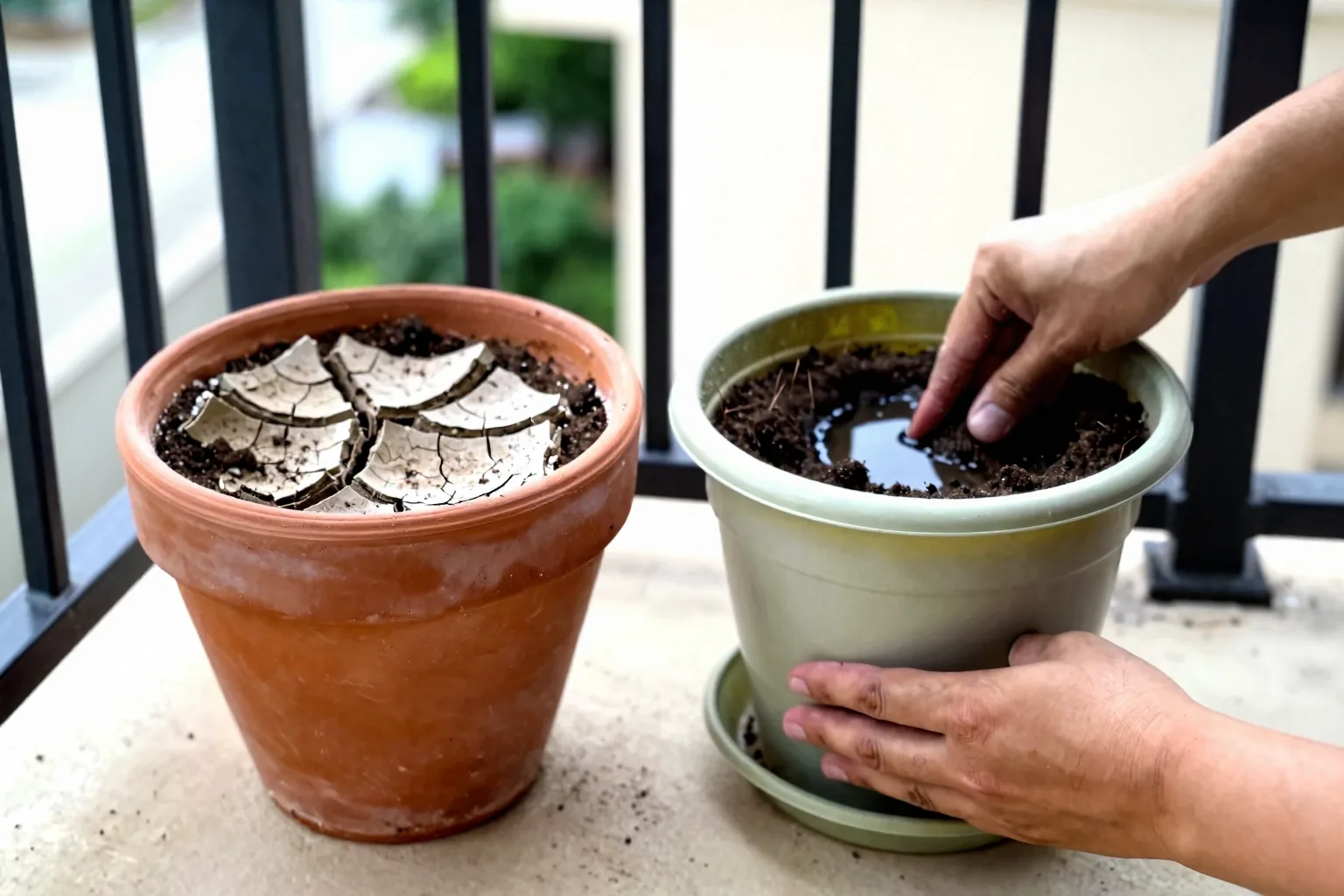
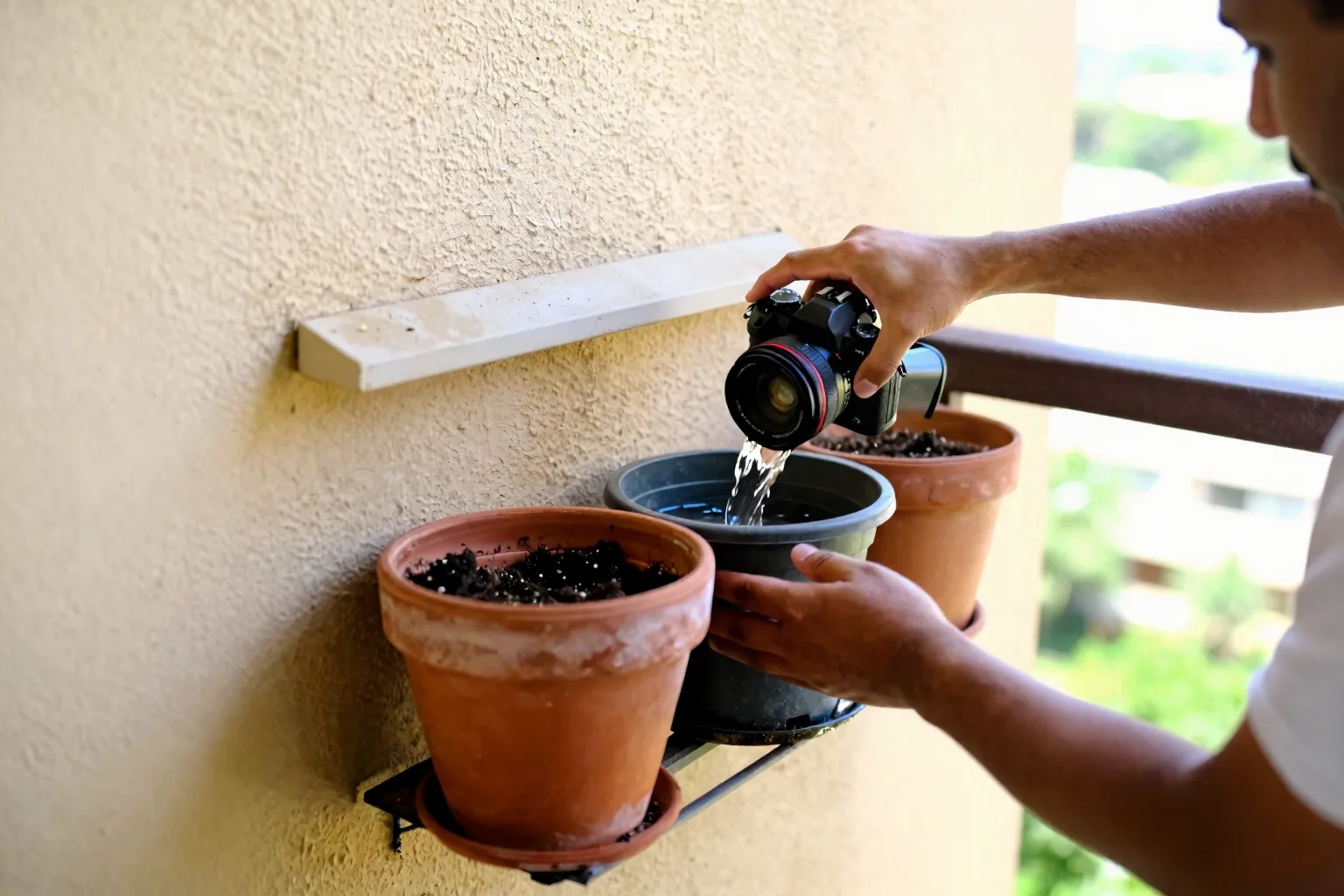
At 35°C (95°F), water in the morning where possible, move containers away from hot walls, group them to reduce wind and use temporary shade for plants that cannot tolerate the exposure; a genuinely dry root ball can be watered at any hour rather than left dry overnight. Recheck small, shallow or terracotta pots in late afternoon because their reserve can disappear within the same day, while a damp heavy pot needs cooling and ventilation more than another drink. For the weather side of the decision, Meteorological guidance on heat, wind and evaporation during heatwaves can help explain why a previously reliable interval suddenly fails.
If you’re away for two days, change the setup—not just the timing
For a two-day absence, water normally after checking the mix, move exposed pots out of harsh afternoon sun and group them where wind is weaker; the full plan belongs in How to water balcony plants while you’re on holiday. A reservoir or capillary mat holds water below or beside the pot and moves it upward through a wick or connected moist material, so test it before relying on it for several days. Keep ordinary pots from sitting in a full saucer for the whole absence, because prolonged saturation can replace dehydration with a poorly aerated root zone.
Build a seven-day routine that replaces guesswork
Today, write each pot’s mix volume and material on a label or phone note. For the next seven days, check at roughly the same time and record two observations: whether the upper layer is dry and whether the pot feels light, heavy or somewhere between. Record rain or an unusually hot, windy day beside the result.
If a pot reaches the dry-and-light trigger before your planned watering day, move its next check one day earlier. If it remains heavy and moist past the planned day, move the check one day later. Keep the change small; a one-day adjustment reveals a pot’s rhythm without turning the routine into a new rigid calendar.
By the end of the week, healthy moisture management should look like a repeatable trigger: you can lift the pot, confirm the root-zone condition and water completely without chasing every wilted leaf. Start now with the smallest pot on the balcony, lift it before watering, and write down how it feels; check that same pot tomorrow before reaching for the hose.