Best Container Size for Vegetables: 9 Pots by Crop
The best container size for vegetables is usually decided by litres of usable mix, not by the pot’s advertised diameter. A full-size or vining tomato belongs in 30–40 litres (8–10.5 US gallons) for one plant; a zucchini needs 40–60 litres (10.5–16 US gallons), while radishes can manage 5–10 litres (1.3–2.6 US gallons).
These are practical shopping targets, not guarantees. Variety, wind, sun, watering access and the shape of the container can move the answer up or down.
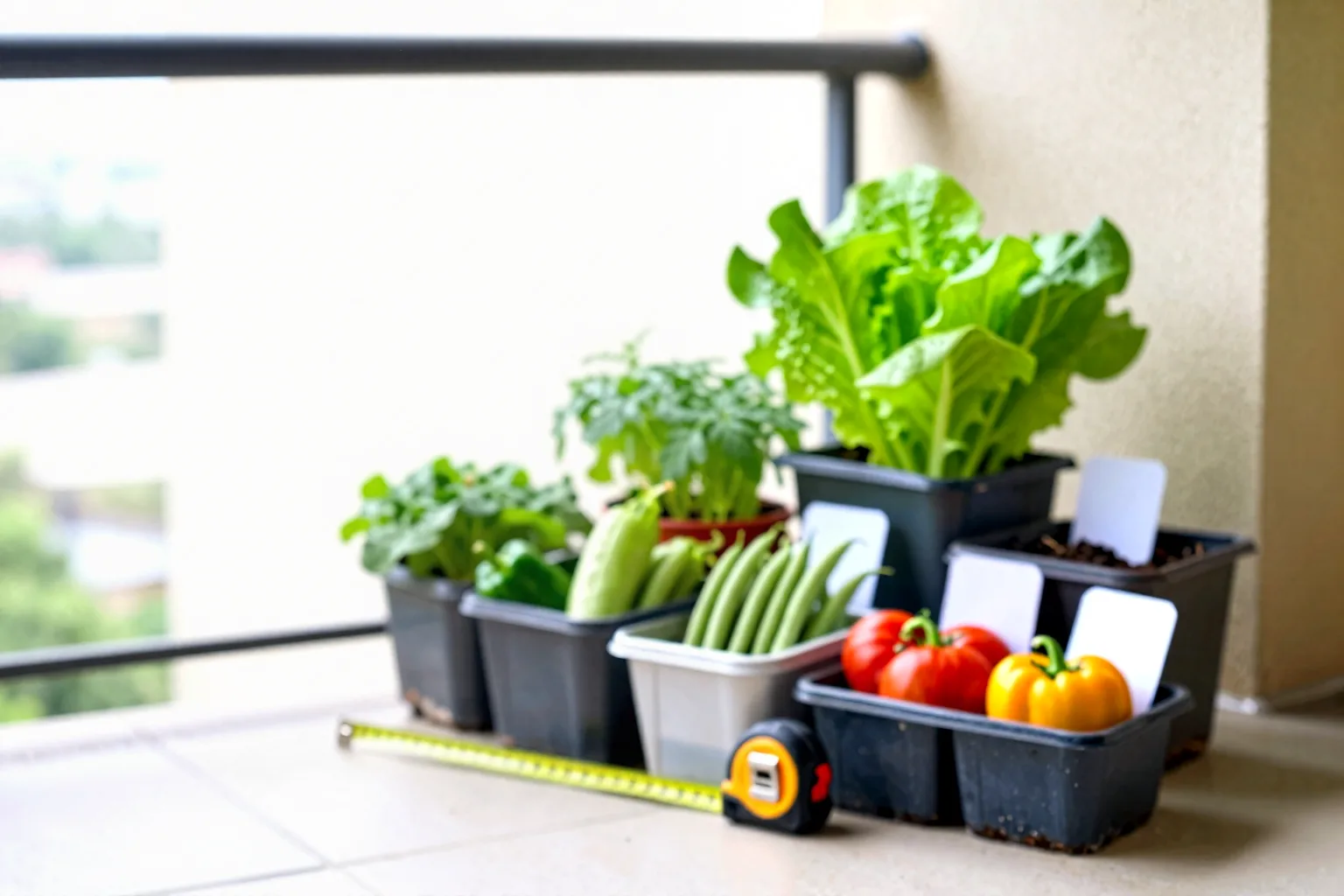
The shopping answer first: nine crops and the pot volumes that work
Use the table as a starting specification. The volume means the amount of potting mix the container can actually hold after you leave room below the rim for watering. US-gallon figures are rounded conversions, so don’t reject a suitable pot because its label is off by a fraction.
| Crop | Practical mix target | Minimum usable depth | Plant count |
|---|---|---|---|
| Tomato | 30–40 L (8–10.5 US gal) | 30 cm (12 in) | 1 full-size or vining plant |
| Pepper | 15–20 L (4–5.3 US gal) | 25–30 cm (10–12 in) | 1 plant |
| Cucumber | 20–30 L (5.3–8 US gal) | 30 cm (12 in) | 1 compact or vining plant |
| Bush beans | 10–15 L (2.6–4 US gal) | 20–25 cm (8–10 in) | About 3–4 plants |
| Carrots | 15–25 L (4–6.6 US gal) | 15–20 cm (6–8 in) short types; 25–30 cm (10–12 in) long types | Space according to root size |
| Lettuce | 8–12 L (2.1–3.2 US gal) | 15–20 cm (6–8 in) | About 3–4 full heads |
| Radishes | 5–10 L (1.3–2.6 US gal) | 15 cm (6 in) | About 10–15 radishes |
| Potatoes | 30–40 L (8–10.5 US gal) | 30 cm (12 in) mix plus 15–20 cm (6–8 in) headroom | 1–2 seed pieces |
| Zucchini | 40–60 L (10.5–16 US gal) | 40 cm (16 in) | 1 plant |
The exceptions matter. A compact determinate tomato can use less mix than an indeterminate, vining plant. A round or short-rooted carrot can use a shallower pot than a long-rooted variety. Treat the lower end of each range as a workable boundary, not the most forgiving choice.
Measure the pot you have before trusting its label
A pot label tells you something about the outside shape. Your vegetable needs usable root volume. A tapered planter, thick-walled ceramic pot or grow bag can hold substantially less mix than its top diameter suggests, and a window box may be wide enough for several plants but too shallow for carrots.
Measure inside the pot where the mix will sit. For a straight-sided round container, multiply the inside radius in centimetres by itself, multiply by 3.14, multiply by the usable fill depth, then divide by 1,000. In shorthand:
litres = 3.14 × radius × radius × fill depth ÷ 1,000
A round container with a 30 cm (12 in) inside diameter and 25 cm (10 in) of usable depth holds about 17.7 L (4.7 US gal). That is why a 30 cm pot can be a poor tomato purchase even though it looks substantial: its actual mix volume sits below the more forgiving tomato target.
For a rectangular planter, use:
litres = inside length × inside width × usable fill depth ÷ 1,000
A 60 × 25 × 20 cm window box holds 30 L before you allow for the gap below the rim and any internal taper. In a box that shape, width creates useful planting positions for lettuce, radishes or bush beans. It does not turn 20 cm of depth into a long-carrot pot.
For a tapered round pot, use the top and bottom radii rather than the top diameter alone: litres = 3.14 × depth × (top radius² + top radius × bottom radius + bottom radius²) ÷ 3,000. A pot measuring 30 cm across at the top, 22 cm across at the bottom and 25 cm deep holds about 13.4 L. That difference is enough to change a tomato decision.
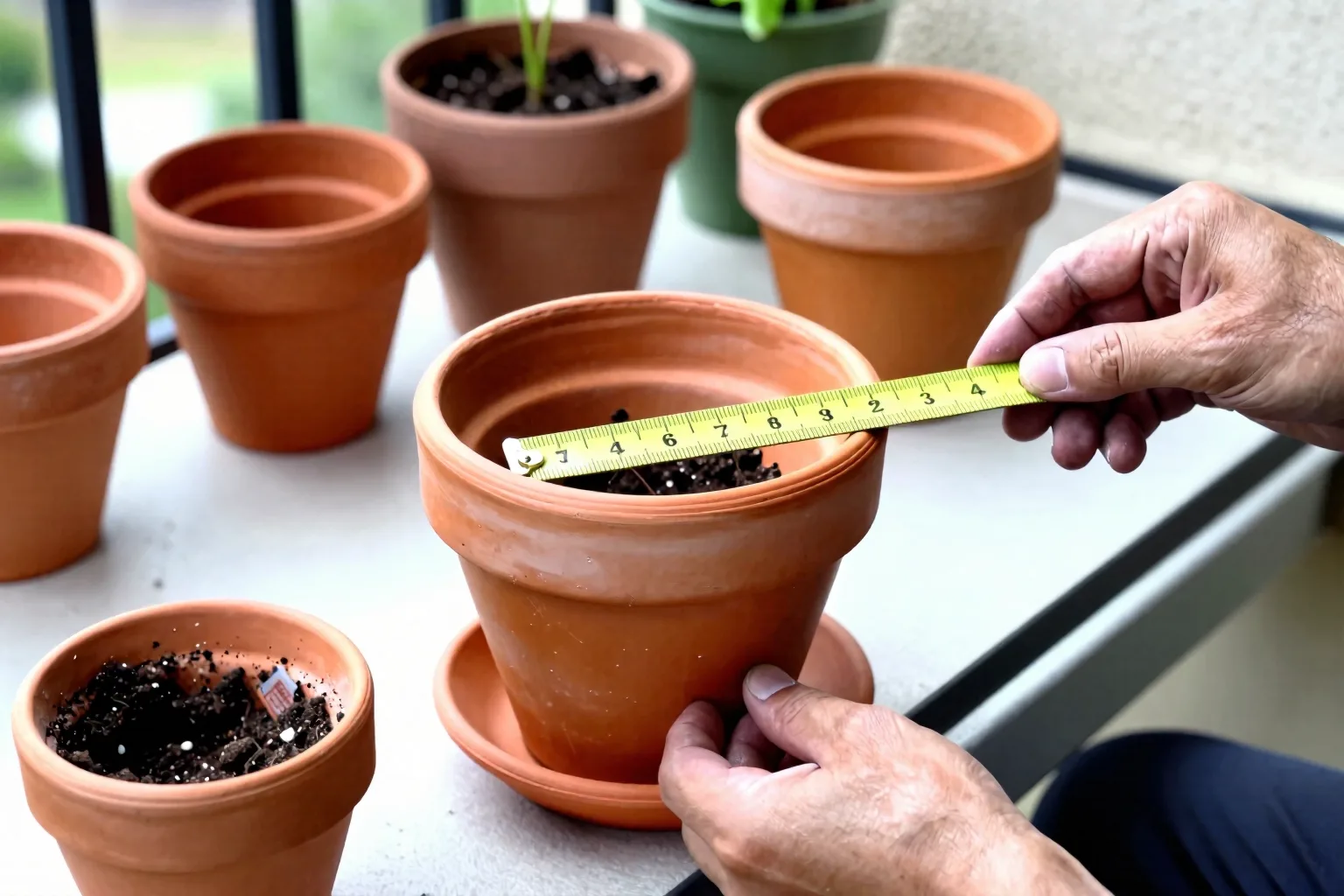
Depth, width and footprint solve different problems. Depth gives roots room to occupy mix below the surface. Width lets you meet spacing requirements and gives a broad plant some stability. A tall, narrow pot can meet a depth number while wasting balcony floor area and becoming easy to tip.
Look for drainage holes that are open and spread across the base. The holes do not make water vanish instantly; water moves through the mix under gravity, while the small spaces between mix particles hold some water by capillary attraction. The saturated layer that can remain above the holes is called a perched water table. It is simply a wet band at the bottom of the pot, not a separate underground tank.
I would not put gravel in that bottom layer as a drainage fix. A gravel layer takes away root volume and can move the saturated boundary higher into the mix. For the mechanism, see Why gravel at the bottom of a pot does not improve drainage. Use a free-draining potting mix instead of garden soil, keep the holes clear, and place the container where excess water can leave without damaging the balcony.
Weight deserves a separate check on an elevated space. One litre of water weighs approximately one kilogram, so a larger container becomes heavier when the mix is thoroughly wet, before you add the pot, plant and support. Read How much weight can a balcony planter add when the soil is wet? before lining up several large pots along a railing. Wind matters too: a tall tomato cage or cucumber trellis can act like a sail, and a broad zucchini canopy can shift the centre of gravity.
For unusual container shapes, use How many litres of potting mix does my container need? A simple volume calculator. If you’re comparing general guidance, university extension guidance on crop-specific container vegetable spacing and root depth is a useful cross-check; for the drainage mechanism, compare authoritative horticultural guidance on potting mix, drainage, and the perched water table.
Tomatoes are the crop most often under-potted
Give one full-size or vining tomato 30–40 L (8–10.5 US gal) of usable mix and at least 30 cm (12 in) of depth. A genuinely compact or determinate variety can work in 20–25 L (5.3–6.6 US gal), but the smaller pot leaves less room for missed watering and hot roots.
Put the cage or trellis in place before the plant becomes large. That order matters: pushing a support into an established root ball can cut roots, while a support fixed after the canopy fills out can pull a light container off balance. Use one tomato per pot, fill to two fingers below the rim, and keep the mix evenly moist rather than alternating between dust-dry and saturated.
Restricted volume shows up as midday wilting that recovers in the evening, stalled growth, small fruit or blossom-end rot. Blossom-end rot is seen as a dark, sunken patch at the flower end of the fruit. It involves the plant’s difficulty moving calcium into rapidly developing tissue; adding calcium alone doesn’t correct the water-uptake swings that commonly contribute to the problem.
For a vining tomato, I’d expect 30–40 L to be more forgiving than 20–25 L; a determinate tomato in 20 L may still need close moisture checks during hot fruiting weather. My size call is wrong for a particular site if the smaller pot stays evenly moist below the surface through that weather, supports steady growth and fruiting, and does not require extra watering.
Peppers: smaller plants, but not tiny pots
Choose 15–20 L (4–5.3 US gal) for one pepper plant, with 25–30 cm (10–12 in) of usable depth. A compact pepper can be placed in 10–15 L (2.6–4 US gal), but that is a deliberate trade: the pot is lighter and easier to move, while the moisture reserve is smaller.
Peppers can look perfectly healthy in a small container and still stop flowering, set fewer fruits or produce smaller peppers. Repeated drying concentrates salts as water leaves the pot, reduces the root’s ability to supply the canopy, and can make a dark container’s root zone heat quickly in direct sun. A larger, pale-coloured pot buffers those swings; it does not remove the need for drainage or feeding.
Put the plant in its final pot before the roots circle densely. Water through the mix, wait for the excess to drain, and check the mix below the surface before watering again. If foliage is firm but flowers are dropping, inspect heat and moisture first. If leaves are soft and the mix is wet, look for poor drainage or damaged roots rather than adding more water.
Cucumbers need a root pot and a vertical plan
Give one compact or vining cucumber 20–30 L (5.3–8 US gal) and at least 30 cm (12 in) of depth. The pot contains the roots, but the cucumber’s vines, leaves and fruit may occupy several times the floor area of the container. A trellis saves floor space; it does not reduce the plant’s need for sun, water or a stable base.
Build the vertical plan before planting. Set the trellis into a heavy pot or attach it to a balcony structure that can take the load, then secure the plant’s first stems loosely. If the support rocks in a gust, the plant will transfer that movement into its roots. A narrow pot with a tall trellis is a particularly poor combination because the support raises the tipping force while the base remains small.
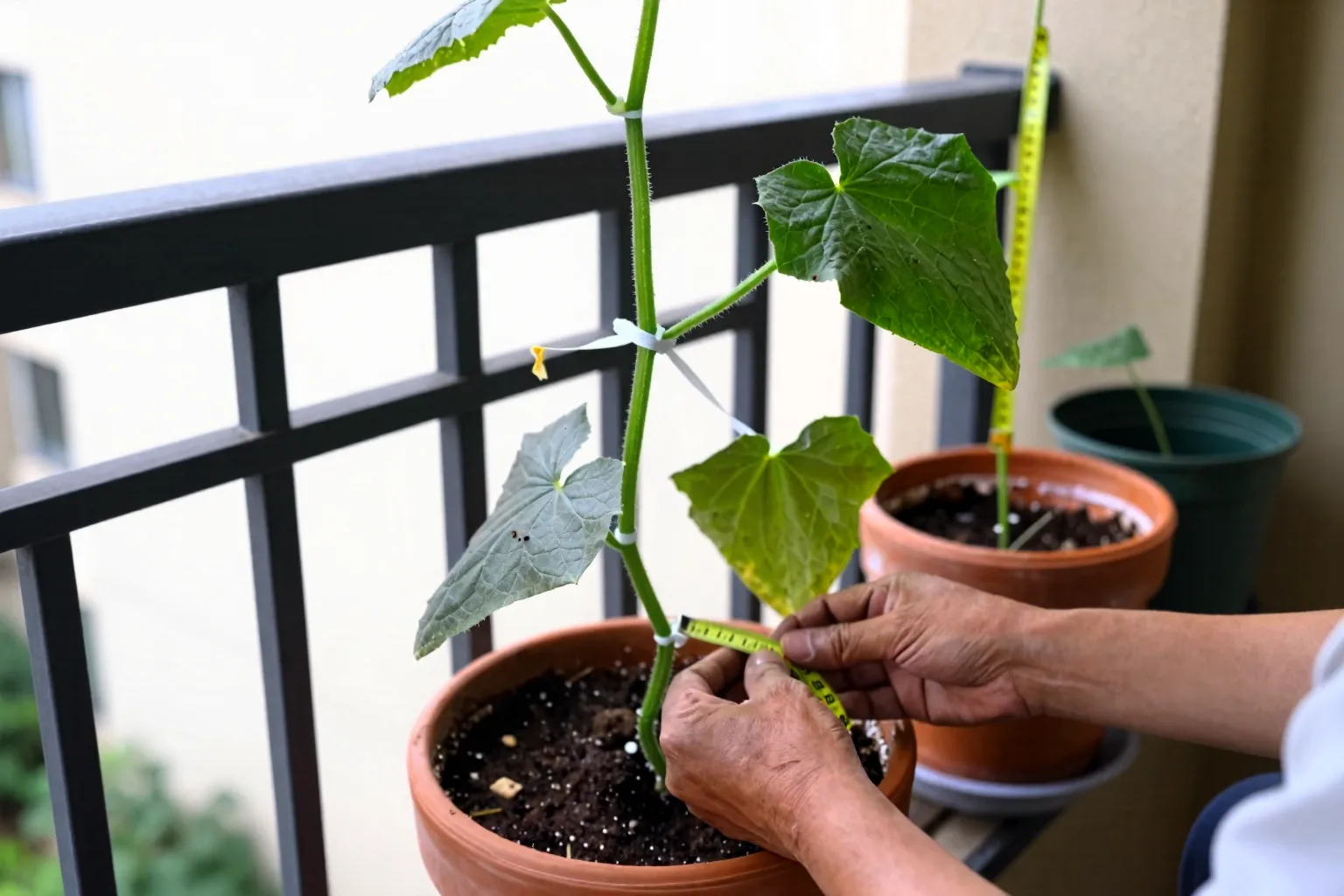
Repeated midday wilt, yellowing older leaves and misshapen or bitter fruit can all appear in a cucumber pot, but they don’t point to the same fault. Wilt that improves after watering suggests a small or dry root reserve. Yellowing with persistently wet mix points me toward restricted roots or poor aeration. Misshapen fruit can follow uneven water supply or incomplete pollination. A 30 L pot cannot compensate for a shaded balcony or a watering pattern that swings between drought and flooding.
Compact bush cucumbers reduce the trellis problem but not the root-volume calculation. For a vining type, count the support as part of the pot’s engineering, not as an optional accessory.
Bush beans reward width more than a tall, narrow pot
Use a broad 10–15 L (2.6–4 US gal) container with 20–25 cm (8–10 in) of depth for roughly three to four bush bean plants, adjusting the count to the seed packet’s spacing. Width gives each plant a separate starting position and leaves room for air to move through the foliage. Extra depth in a narrow cylinder adds less value for this relatively shallow-rooted crop than a wider surface.
Sow directly, thin seedlings while they are small, and make a second sowing two or three weeks later if your growing season allows. Successive sowing uses the same pot repeatedly instead of cramming every seed into the first planting. Keep the mix evenly moist while pods are forming; drying at that point can interrupt the steady growth you want.
Ask two questions if the crop disappoints: are the plants packed so tightly that leaves stay damp and light cannot reach the lower stems, or is the pot drying from the edges inward? Thin overcrowded seedlings and move the container out of a wind tunnel before buying a larger one.
Climbing beans can use a similar root volume, but they need a tall support. Install it when you sow, not after the stems have wrapped around neighbouring plants.
Carrots: choose the depth after you choose the variety
Choose the carrot first. Short, round or small-rooted varieties can use 15–20 cm (6–8 in) of unobstructed mix. Standard long-rooted types need about 25–30 cm (10–12 in), and the depth should exceed the expected root length rather than merely match it.
A broad 15–25 L (4–6.6 US gal) pot or trough is usually a better balcony shape than a narrow tower. Scatter seed over a level, fine-textured surface, cover lightly, keep the top layer damp until seedlings appear, then thin them to the spacing the mature roots require. The thinning step is not cosmetic: roots that collide underground compete for the same limited column of mix and tend to swell poorly.
Stones, woody fragments and compacted pockets force a developing root to split, bend or stop. A shallow pot produces stubby or exposed shoulders because the root reaches the base before it can lengthen. If the leaves look plentiful but the roots pull up thin, check spacing and depth before adding feed.
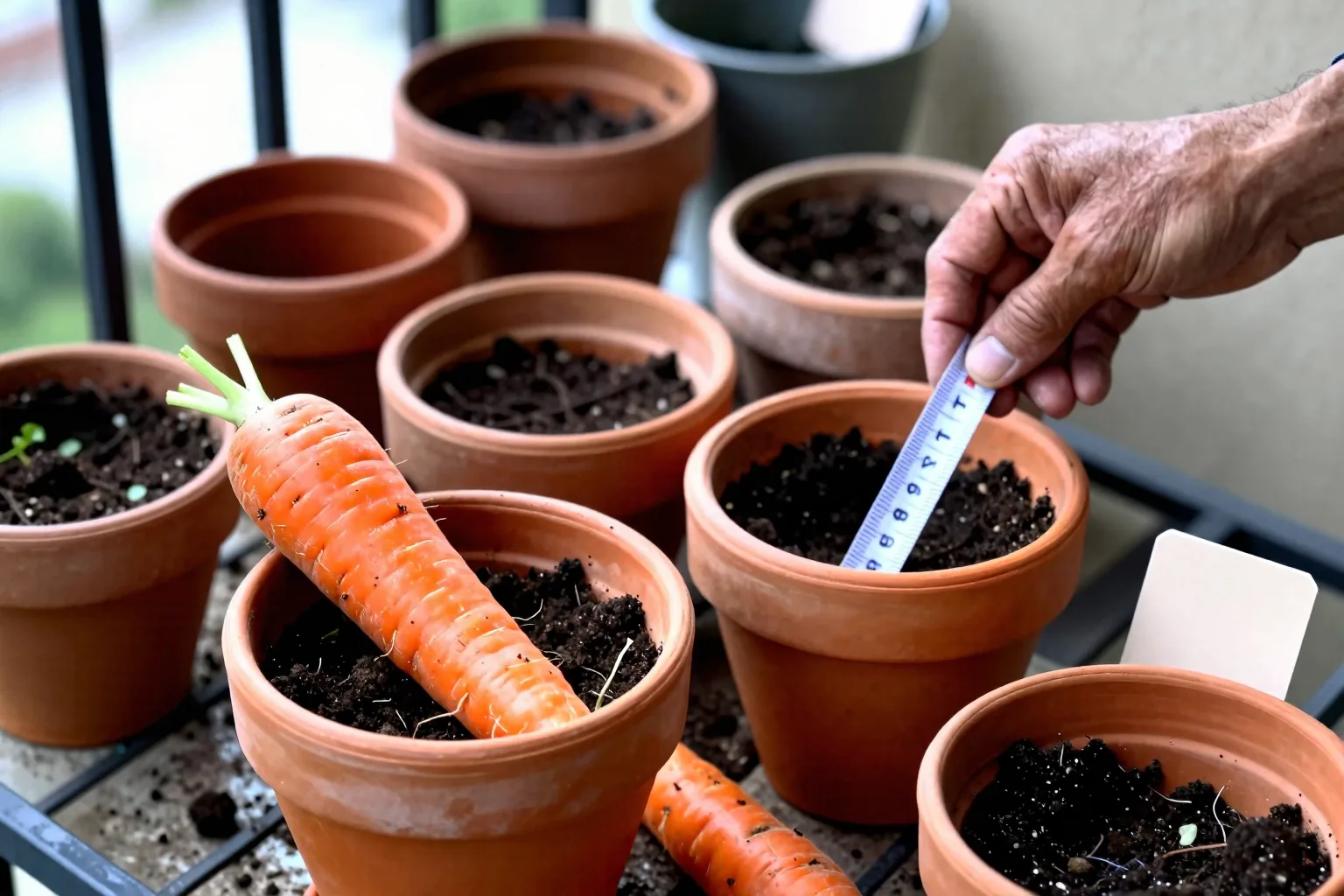
Use How deep a pot for carrots as a variety-led question, not a universal number. A 20 cm container is a sensible target for short carrots but a false economy for a long type; buying a taller pot cannot fix a mix full of lumps.
Lettuce fits a shallow window box—but not a tiny cup
Give lettuce 8–12 L (2.1–3.2 US gal) with 15–20 cm (6–8 in) of depth for about three to four full heads. For loose-leaf varieties, use the same depth in a wider box and harvest outer leaves rather than waiting for every plant to form a large head.
Width and moisture consistency matter more than a deep root column. A shallow pot contains less reserve, so its surface area, pot material and exposure to wind become decisive. On an exposed, bright balcony, I’d expect to check a 5 L lettuce pot at least once during the hottest part of the day; that expectation is falsified if the mix remains cool and moist below the surface through the same weather.
Limp leaves that recover in the evening point me toward heat or drying. Limp leaves beside wet, sour-smelling mix suggest poor aeration instead. Bitter flavour and bolting, meaning the plant sends up a flower stalk, are commonly connected with heat, moisture stress, crowding or a delayed harvest rather than pot depth alone. Harvest loose leaf early and give the box afternoon shade if the balcony becomes hot.
For the watering check, keep How to water balcony vegetables in hot, windy weather nearby. A 5 L pot is manageable for a short lettuce crop only if you can inspect it often.
Radishes are the quick crop with the smallest useful pot
Use a broad 5–10 L (1.3–2.6 US gal) container with at least 15 cm (6 in) of depth. With proper spacing, that gives room for roughly 10–15 radishes. The crop is short, so extra volume usually buys less than a loose, evenly moist seedbed.
Sow thinly across the surface, cover with fine mix, and thin seedlings before their roots become tangled. Heavy or lumpy mix makes the swelling root push against resistance. Drying followed by heavy watering can split roots; leaving mature radishes in place too long can make them pithy, with a dry, sponge-like centre. Leafy tops with no rounded root send me first to spacing, light and mix texture.
Pull one test radish when the shoulder of the root is visible at the surface. That physical check is more useful than waiting for every root to reach the same size.
Potatoes need headroom because the harvest is built by hilling
Give one or two seed pieces 30–40 L (8–10.5 US gal) of usable container volume. Plan for roughly 30 cm (12 in) of initial mix plus 15–20 cm (6–8 in) of headroom for later additions. In practice, that means a broad, tall vessel rather than a shallow decorative pot.
Hilling means adding more potting mix around the growing stems while leaving the leafy tops exposed. The buried stem section is where additional roots and tubers may form, and the added mix keeps developing potatoes covered from light. It is not a promise of a larger harvest: variety, seed-piece health, light, water and the length of the season still control what the plant can make.
Start with drainage holes and the initial layer of mix. Place the seed pieces with their sprouts facing up, cover them, then add mix in stages as the stems rise. Leave the top leaves in the light. Water the whole column after each addition so new mix settles around the stems without creating a dry layer above a wet one.
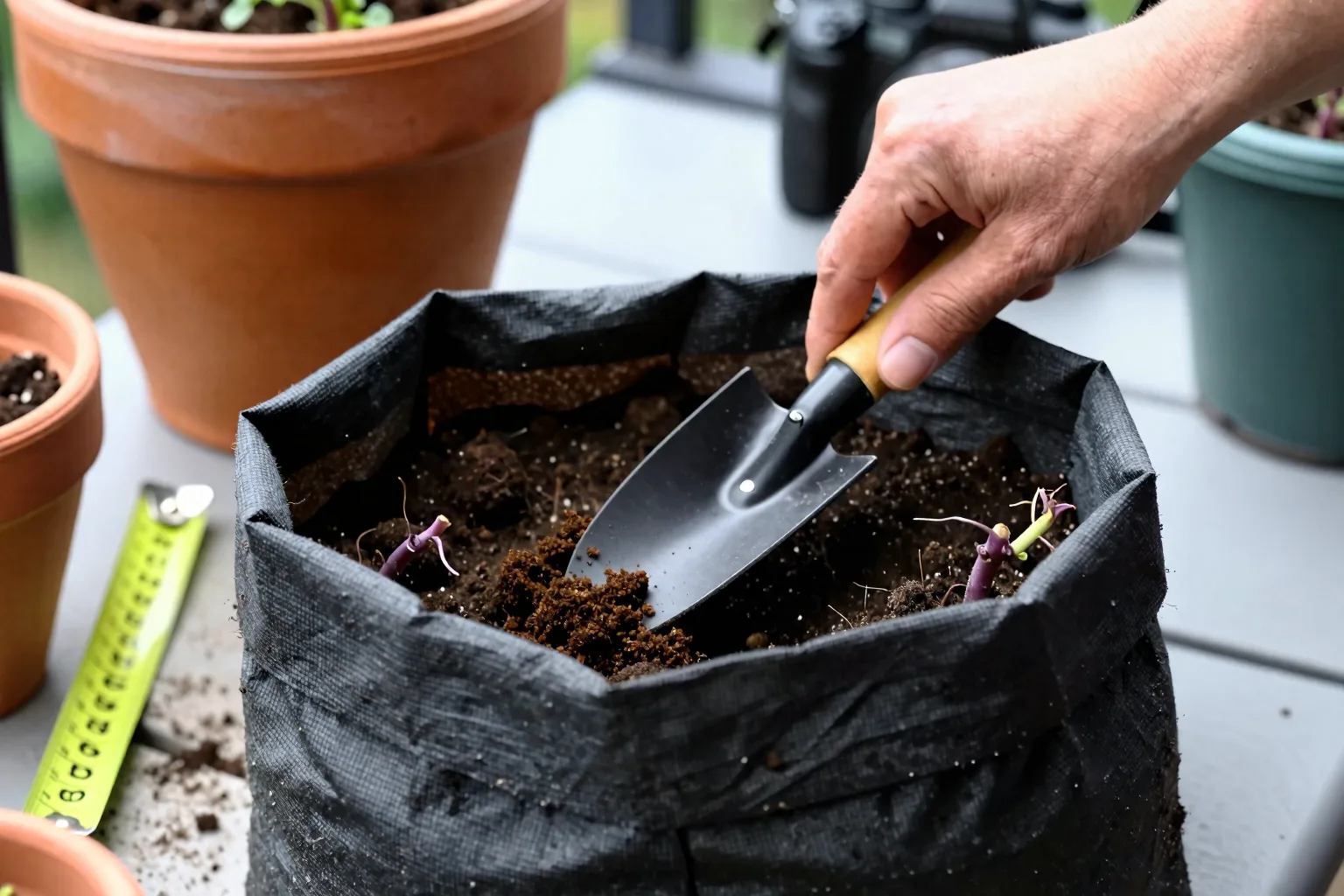
A rigid pot is stable and accepts a support or cover easily. A roll-down fabric grow bag can make harvesting easier because you can open the side, but its exposed sides can dry faster and the soft walls give less resistance to wind. Neither material replaces the 30–40 L target.
Green tubers have been exposed to light, usually because mix settled away from them or was not added high enough. Wet rot shows as soft, foul-smelling tissue in a pot that stays saturated. A crowded, hard-to-empty root zone is a planning failure: too many seed pieces or too little access space can make harvest more damage-prone. Use one seed piece in a smaller 30 L pot and two only when the container has the volume and headroom to support them.
Zucchini is a one-plant-per-pot commitment
Choose 40–60 L (10.5–16 US gal), at least 40 cm (16 in) deep, for one zucchini plant. Compact bush varieties are the sensible choice for a small patio, but even a compact plant can spread broad leaves beyond the pot’s footprint.
Place the container before filling it because a wet 40–60 L pot is awkward to move. Leave space around the canopy for airflow and keep the pot away from a railing edge where wind can catch the leaves. The broad foliage acts like a sail, so a lightweight pot that seemed stable at planting can become a tipping risk after the plant fills out.
Water deeply when the upper mix has dried but the root zone is not yet dust-dry, and feed according to the instructions for the vegetable fertiliser you choose. Keep the plant productive by picking zucchini while the fruits are still tender rather than allowing several oversized fruits to monopolise the plant’s resources.
Limited insect access can leave flowers without a developing fruit. If a female flower opens and the small swelling behind it turns yellow and shrivels instead of enlarging, hand-pollination is worth trying: transfer pollen from a fresh male flower to the centre of the female flower while both are open. Limp leaves with dry mix suggest water demand; limp leaves with saturated mix suggest root trouble. White powder on older leaves points to powdery mildew conditions, while a pot that tips under the canopy is an equipment problem, not a feeding problem.
Three cross-crop questions worth settling before checkout
Is a 5-gallon (19-litre) bucket big enough for vegetables?
>A 5-gallon bucket is close to 19 L, so it can sit near the lower edge for one compact tomato, pepper or cucumber if it is made for food contact, has several proper drainage holes and receives close moisture checks. It is below the more forgiving target for a full-size tomato, potatoes or zucchini. Don’t use a container that previously held chemicals, and check the maker’s food-contact guidance before reusing any bucket for edible crops.
Are fabric grow bags better than plastic pots for vegetables?
>Neither material replaces adequate volume. Fabric sides expose more mix to air, so they commonly dry faster and can be easy to fold or move when empty. Plastic usually slows moisture loss, but a dark plastic pot in strong sun can heat its root zone. Choose based on your watering access, wind exposure, moving needs and whether the crop requires a rigid trellis.
How many vegetable plants can share one container?
>Keep tomatoes, peppers, cucumbers and zucchini to one plant per recommended pot. Bush beans, lettuce and radishes can share a broad container when spacing is followed. Adding plants without adding mix gives roots the same finite reserve while increasing leaf area and water demand, so competition and rapid drying arrive together.
Before the weekend, take a tape measure to the pot rather than trusting its label. Record the inside length, width or diameters, the usable fill depth, the number and position of drainage holes, and the place where the finished container will stand. Then compare that calculation with the crop’s row above, buy enough potting mix for the actual volume, and leave the pot where you can check its moisture in a week.
Frequently Asked Questions
Is a 5-gallon (19-litre) bucket big enough for vegetables?
It can work for one compact tomato, pepper, or cucumber if it has food-safe construction, proper drainage, and close moisture checks, but it is below the more forgiving target for full-size tomatoes, potatoes, and zucchini.
Are fabric grow bags better than plastic pots for vegetables?
Neither material replaces adequate volume: fabric usually dries faster and can be easier to move when empty, while plastic retains moisture longer; choose based on heat, wind, watering access, and whether the crop needs a rigid trellis.
How many vegetable plants can share one container?
Keep tomatoes, peppers, cucumbers, and zucchini to one plant per recommended pot; multiple beans, lettuce, or radishes can share a broad container when spacing is followed, but adding plants without adding root volume increases competition and drying.