Aphids on Container Plants: 7 Fixes for Fast Control
Aphids on container plants can turn a clean pepper or basil pot into curled, sticky new growth within a week; my fastest control is a sequence of seven small interventions, not one brutal spray. Start with isolation, a directed wash, and a recheck—then choose soap or oil only if live aphids remain.
Length note: I’m treating this as a longer troubleshooting deep-dive, not a 600–1,200-word care diagnostic. The extra space earns its place because aphid control fails when identification, spray coverage and follow-up are treated as separate jobs.
Start with the underside of a leaf: confirm aphids before choosing a fix
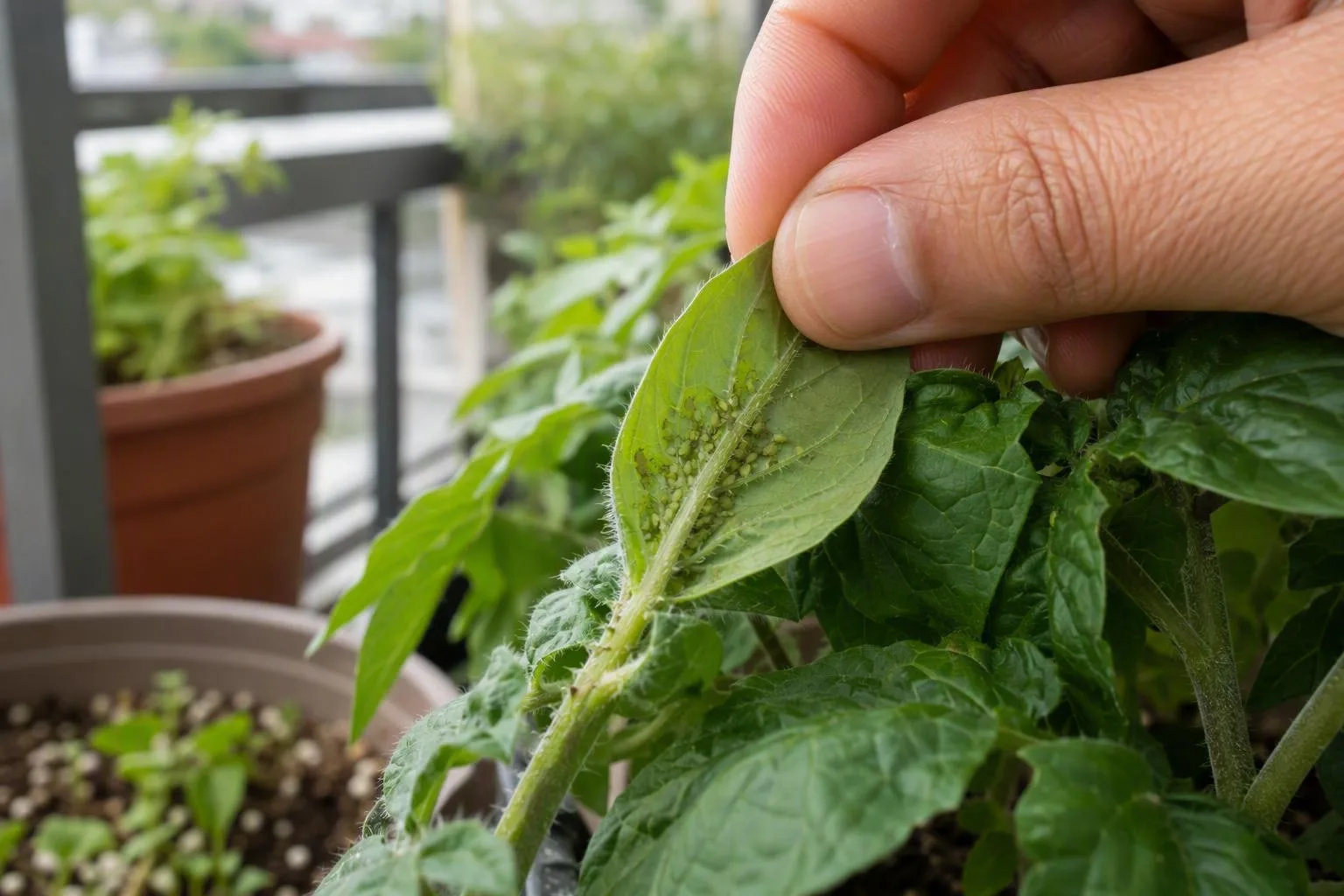
Before you reach for a spray bottle, spend 10 minutes checking the plant properly. Look at at least three growing tips, several leaf undersides and the stem joints where a leaf meets the main shoot. Aphids favour sheltered, soft growth, so a quick glance at the upper leaves can miss the colony entirely.
- Check the shape and size. Common foliage aphids are soft-bodied, pear-shaped insects about 1–3 mm long, or roughly 1/16–1/8 inch. Some have tiny paired tubes at the rear. They may be green, black, yellow, grey or pink, so colour is a poor first test.
- Look for the supporting clues. Shed white skins, a shiny sticky film called honeydew, and ants travelling up the stem all support the diagnosis. Ants are a clue, not proof; they can be visiting another source of honeydew.
- Read the plant’s newest growth. Aphid damage often shows as curled, puckered or distorted tips, yellowing leaves, or a sticky surface below a colony. Older scars can remain after the insects have gone.
I use movement and damage pattern to separate aphids from the other tiny pests that turn up in pots. Whiteflies usually flutter up when a leaf is disturbed; thrips are narrower and often leave silvery scuffed areas or black specks; spider mites are associated with fine stippling and, in a heavier or dry-weather infestation, fine webbing. If the insects do not fit the aphid shape, pause here. A stronger aphid treatment is still the wrong treatment.
Fix 1 — quarantine the pot before aphids reach its neighbours
Containment is the first 15-minute job. Move the entire container away from plants that touch it, but keep its light conditions as similar as you can. Putting a sun-loving pepper in a dim hallway may stop contact with the next pot while creating a new problem.
- Move the infested pot far enough that leaves and stems no longer brush another plant.
- Inspect the two or three nearest containers, especially their newest shoots and leaf undersides.
- Remove leaves or stems that are physically bridging the gap. Bag that material rather than laying it on the balcony floor.
- Mark the isolated pot so it doesn’t quietly rejoin the collection during watering.
Seven days with two clean follow-up checks is my practical balcony minimum. I check once around the middle of that period and again at day seven; if I find moving aphids, I extend isolation and restart the checks. This is containment, not a cure. Winged aphids can be carried by air currents, so isolation reduces contact between pots but does not replace washing or treatment.
Fixes 2 and 3 — wash off the colony, then prune the worst tips
Fix 2 is a firm, directed stream of water. Use a hose nozzle or shower setting that lets you aim accurately, and support fragile stems with your free hand. Start at the newest shoots, then work along the undersides of leaves and into the leaf axils. Rotate the pot as you work instead of spraying the same visible side repeatedly.
The water step works by dislodging insects, not by making the plant poisonous to them. Aphids knocked onto the balcony floor may not find their way back up, but a colony tucked inside a curled tip can survive a careless pass. Before you begin, check that water can leave the container through its open holes. If the pot stays flooded, sort out the drainage holes in pots separately; an aphid wash should not become a root problem.
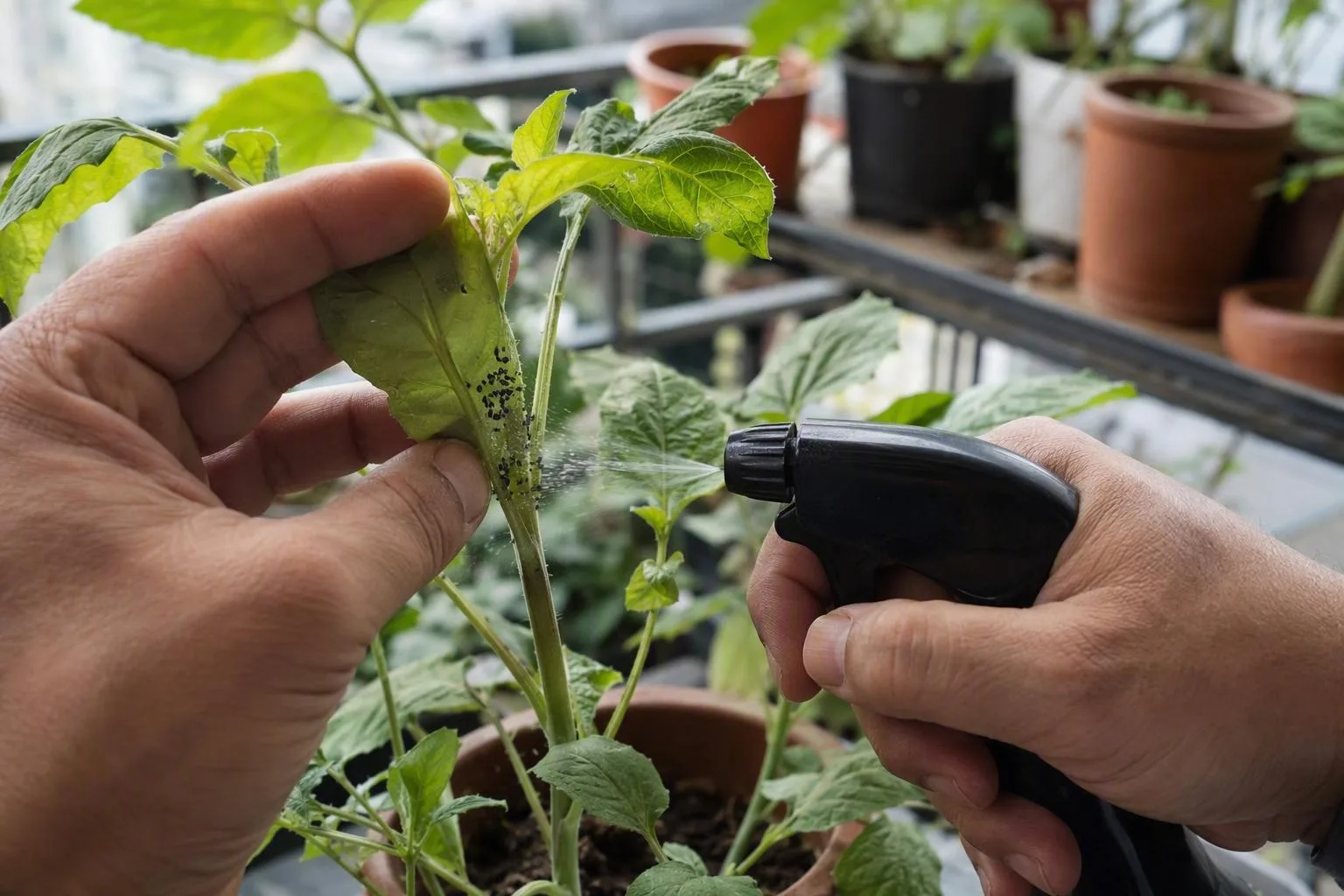
Use a firm stream, not a pressure washer. The latter can tear tender leaves, bury water in the crown or break a stem before it removes the colony. Let the pot drain freely, then repeat the wash every 2–3 days while you still find live aphids. Stop treating the calendar as the boss once the plant is clean; the presence of moving insects is the useful signal.
Fix 3 is selective pruning. Snip off the most crowded tips or leaves, cut below the colony, and drop the pieces directly into a bag. Tie the bag before it goes into household waste. Wipe or wash the snips before working on another plant, and don’t strip every leaf from a plant that still needs them for recovery. The point is to remove the densest feeding sites, not to make the pot look bare.
On my balcony, I once had a pepper and basil pot sitting shoulder to shoulder, with basil tips brushing the pepper. I sprayed the top surfaces first and thought I had caught the problem early. Two days later, the pepper looked better from above, but live aphids were still packed inside the curled tips. I separated the pots, rinsed the undersides, snipped the worst tips into a bag and repeated the wash two days later. The new pepper growth stayed clean over the following week; the old leaves remained marked, which taught me not to confuse lasting scars with a live colony.
Fixes 4 and 5 — choose a contact spray, not a stronger dose
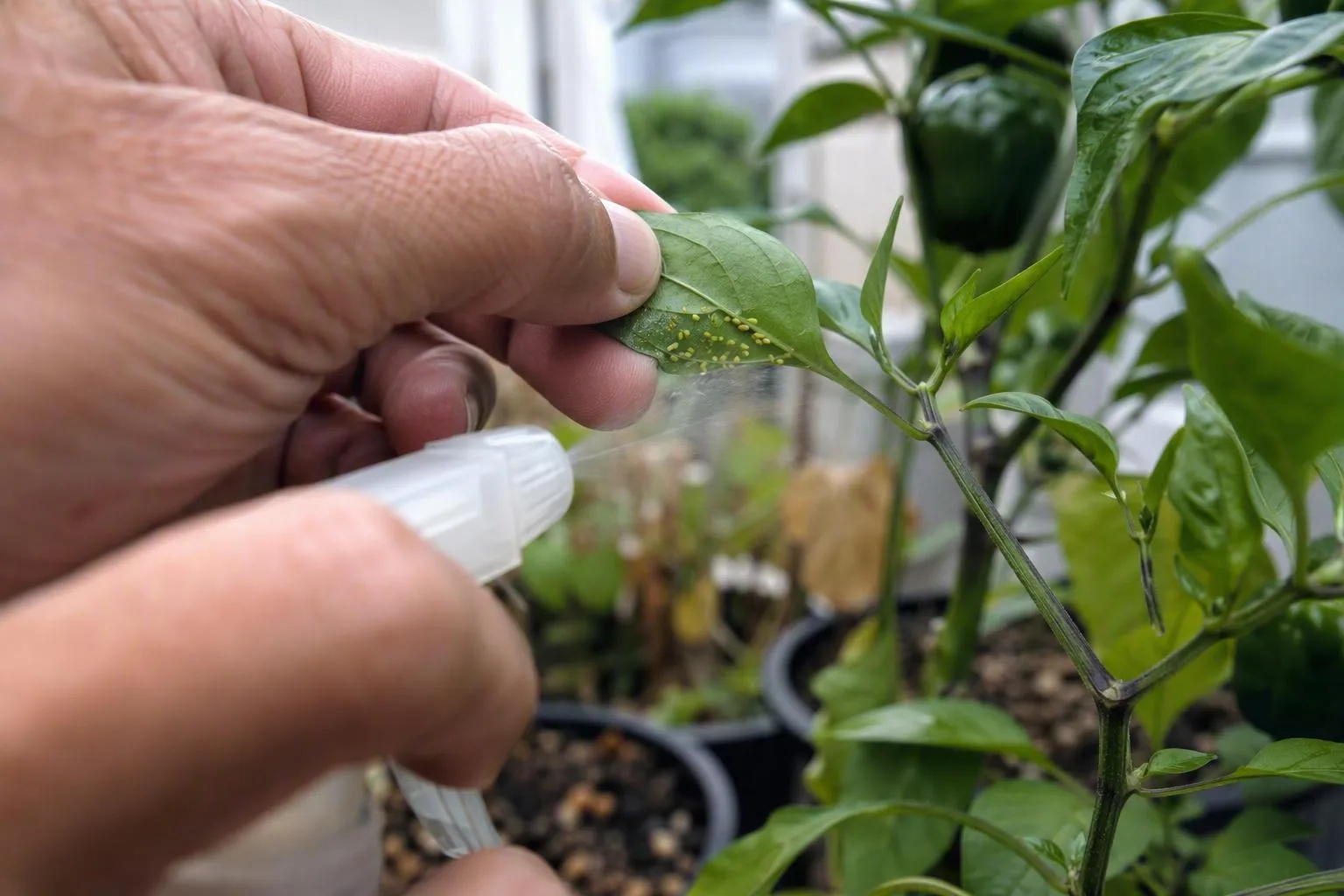
Soap and horticultural oil earn a place after washing and pruning, especially when aphids are hiding in growth you cannot remove without damaging the plant. Both are mainly contact treatments: the liquid has to reach the insect. A stronger mix cannot compensate for a spray that misses the underside of the leaf.
A contact spray earns its place only when you can cover the colony safely.
| Option | What I use it for | Where it fails |
|---|---|---|
| Insecticidal soap | A small, exposed colony on tender shoots or leaf undersides | Missed insects are unaffected; stressed foliage may burn |
| Horticultural oil | A colony tucked into crevices where a coating can reach the insects | Heat, drought stress and sensitive new leaves increase the chance of damage |
For either option, use this order:
- Read the label and confirm the product is approved for the plant you are treating. Food crops need crop-specific approval, not merely a general statement that the product controls aphids.
- Mix or apply it at the label rate. Don’t improvise by adding extra concentrate.
- Test a small patch and wait 24–48 hours. Tender new leaves, stressed plants and some plant varieties react more readily than mature foliage.
- Spray when conditions are cool and the plant is not wilted. Wet the aphids, the leaf undersides, the stem joints and the curled tips. Avoid open flowers and active pollinators unless the label specifically gives directions that cover the situation.
- Repeat only at the printed label interval. A 5–7-day interval is a practical range I commonly encounter for repeat contact treatment, but the product label wins if it says otherwise.
Household dish detergent is not the same thing as labelled insecticidal soap. Dish products can contain degreasers, fragrances or other additives, and a concentration that seems mild in a sink can strip the leaf’s protective surface. That is why I don’t turn a kitchen detergent into a homemade pesticide by guesswork.
Heat and drought stress raise the burn risk because a struggling leaf has less room to tolerate another stress. Oil can also damage tender foliage when applied in unsuitable conditions. I water a wilted plant normally, let it recover, and wait for a cooler application window rather than spraying a limp plant at midday. If open flowers are present, I either shield them carefully or postpone treatment according to the label and the pest pressure.
On herbs and vegetables, the label matters twice: it must allow the crop and it may specify a pre-harvest interval, meaning the waiting time between the final application and picking. For crop approval and any harvest interval, check national pesticide regulator label guidance before spraying food plants. If the mix is staying wet, correct the container gardening soil and drainage separately; aphid spray is not a treatment for waterlogged roots.
Fix 6 — break the ant–aphid partnership around the pot
Follow the ant trail instead of killing the first ant you see. Check the pot rim, saucer, railing, balcony wall and nearby stems. A leaf touching the next pot can act as a bridge, and honeydew on a saucer or railing can keep ants returning even after you have washed the plant.
Ants may protect aphids because they collect honeydew. Removing the ants will not kill the aphids, but it can remove a layer of interference that makes washing, contact sprays and naturally arriving predators less effective.
- Separate touching containers and trim bridge leaves.
- Wipe sticky honeydew from hard surfaces with a damp cloth.
- If bait is necessary, use an enclosed, label-approved bait station positioned away from edible plant parts, children and pets.
Never pour pesticide into potting mix unless the product is specifically labelled for that use and that crop. Treating the root zone with leftover spray is not a shortcut; it changes the exposure route and can harm roots, soil organisms or the person handling the pot.
Fix 7 — stop the rebound with a 7-day recheck and recovery test
Aphid control is a follow-up job. Inspect the plant at 24–48 hours, again at day 5–7, then weekly for the next 2–3 weeks. The first check tells you whether the spray or wash reached the colony; the later checks catch survivors hidden in new growth.
To test a shoot, hold a sheet of white paper under it and tap the stem gently. Moving insects are a live-colony signal. Dead aphids may remain stuck to the leaf, while shed skins are empty and do not move. If you find a few slow survivors soon after washing, repeat the physical removal rather than immediately increasing the spray concentration.
When the label permits a repeat at day 5–7, use the label rate and improve coverage. If live colonies are still thriving after a permitted repeat, stop treating blindly. Recheck the identification, open curled tips, inspect the newest growth and look for ants or a hidden root-zone problem. Switching products without fixing missed coverage usually produces a longer list of residues, not better control.
Clean new growth over 7–14 days is a better recovery signal than old leaves becoming smooth again. A leaf that curled during feeding may stay curled or scarred permanently, while healthy new tips show that the plant is outgrowing the damage. I judge success by fewer live aphids and sound new growth, not by demanding a sterile plant with no insect anywhere on the balcony.
For prevention, avoid pushing a potted crop with more nitrogen than it needs. A sudden flush of soft growth can provide more attractive feeding sites. Inspect new nursery plants before they join the collection, including the undersides and stem joints. Preserve lacewings and other predators that arrive naturally, and avoid broad spraying when a small colony can be washed away.
I wouldn’t make purchased ladybugs my first move on a balcony. They can leave before they find the colony, while the pot still has the same curled tips, ants and missed undersides that caused the rebound. I’d first reduce the colony myself, remove the ant bridges and leave a manageable remainder for naturally arriving predators.
For broader context on identifying aphids, their life cycle and natural enemies, the University extension integrated pest management guidance is a useful reference. It supports the same order I use here: identify first, reduce the colony physically, then preserve helpful predators where possible.
Can aphids live in potting soil?
Some can. The green or black colonies discussed in the main steps are usually foliage feeders above the soil line, while root aphids are a separate group that occupies the root zone. Growers often describe root aphids as pale, waxy insects around the roots, but that appearance is not enough to diagnose them without checking the location and the plant’s symptoms.
If repeated above-ground washing leaves the plant declining, isolate it and slide the root ball out of the container with one hand supporting the soil surface. Inspect the root crown and the outer roots for clusters, pale residue or insects that move when disturbed. Don’t automatically discard healthy potting mix because you saw one pale speck; confirm a colony and consider the plant’s overall condition before deciding whether the container needs a complete reset.
Can I eat herbs or vegetables that had aphids on them?
For a home harvest, I treat aphids as a washing and quality problem rather than proof that the produce is poisonous. Rinse edible leaves and fruit under running water, rub sturdy leaves gently, and discard portions that are badly curled, fouled with honeydew or unpleasant to eat. Aphids themselves are not the same as pesticide residue.
The answer changes if you sprayed. Use only a product whose label allows that crop and follow every stated harvest interval. If the product was not approved for the edible plant, don’t invent a safe waiting period from the appearance of the leaves; check the label and local regulator guidance first. This is especially worth doing with basil and other crops covered in the growing herbs in containers guide, because frequent picking can tempt you to harvest too soon.
Do aphids survive winter on a balcony?
That depends on the aphid species, its host plant and the local winter conditions. Cold weather can slow visible activity without removing every sheltered colony, and some aphids can leave eggs or protected colonies that restart when the plant produces fresh growth.
Before bringing a perennial container indoors, inspect the undersides, stem joints, pot rim and saucer. Wipe off visible colonies, remove badly infested tips, clean the container exterior and keep the plant apart from houseplants while you make the first two checks. A balcony plant that looks quiet in cold weather still deserves an inspection before it moves into a warm room.
Save this sequence: isolate the pot, inspect its neighbours, wash the undersides, prune crowded tips, choose a labelled soap or oil only when needed, break ant trails, and recheck at 24–48 hours and day 5–7. Today, put a white sheet under the most damaged shoot and look for moving insects. In a week, the result I want to see is live aphids becoming scarce and clean new growth beginning—not old leaves pretending nothing happened.
Frequently Asked Questions
Can aphids live in potting soil?
Ordinary foliage aphids usually feed above the soil line, but root aphids are a separate group. If repeated above-ground treatment fails and the plant is declining, explain how to check the root zone without automatically discarding healthy potting mix.
Can I eat herbs or vegetables that had aphids on them?
Aphids are removed by washing and do not make produce poisonous, but badly infested portions can be discarded and every pesticide label's crop approval and harvest interval must be followed.
Do aphids survive winter on a balcony?
It depends on the aphid species, host plant and local winter conditions. Explain why perennial containers should be inspected before being moved indoors and why overwintering eggs or sheltered colonies can restart an infestation.