Blossom Drop Tomatoes: 7 Causes and What to Do Next
If a tomato flower falls before a tiny green fruit forms, you have blossom drop, not blossom-end rot. The flower dries or shrivels, its short stem lets go, and nothing is swelling behind it; with blossom-end rot, a fruit has already formed and develops a dark, sunken patch at the blossom end.
That quick distinction saves a lot of wasted treatment. Watering changes can help a stressed container, but they do not repair a dropped flower. Before you feed, repot, or reach for a bloom booster, inspect the next handful of flowers and work out which problem you are actually seeing.
When people search for blossom drop tomatoes, they usually need one narrow answer first: did the flower fall before fruit formed?
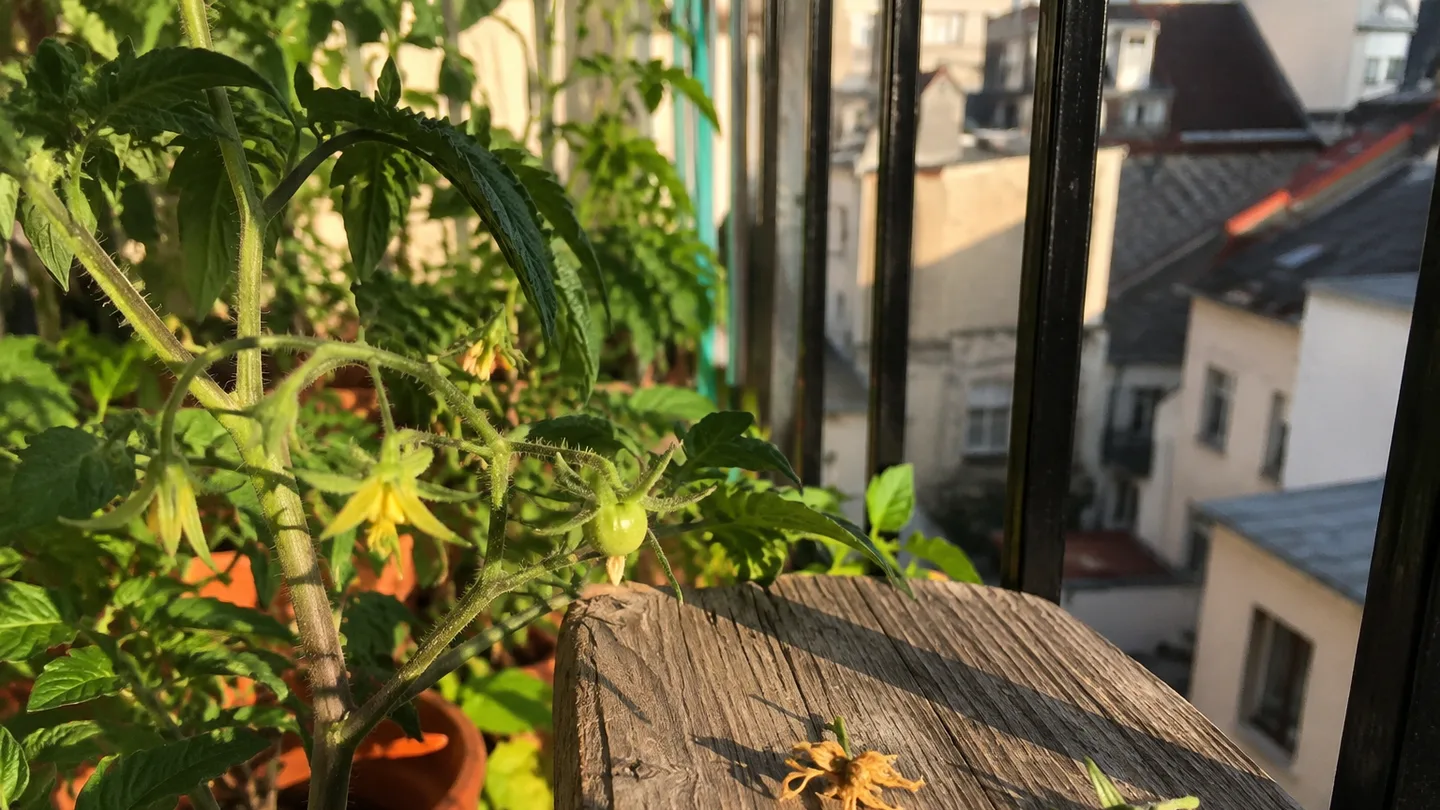
A dropped yellow flower is not the same as blossom-end rot
Start with the small green part directly behind the yellow petals. In true blossom drop, the flower opens, dries, shrivels, and falls while that base never becomes a swelling fruit. You may find a bare little stem on the truss, the branching stem that holds several tomato flowers, but no pea-sized tomato behind it.
Blossom-end rot looks different. A tiny tomato has already formed, then develops a pale, brown, or blackened patch at the blossom end, opposite the stem. The patch becomes sunken as the fruit grows. The problem is on the fruit, not an empty place where a flower used to be.
There is a third pattern worth separating out. Sometimes a tiny green fruit appears, stays small, turns yellow, and drops. That is early fruit abortion rather than a flower falling before fruit set, although the same stresses can sit behind both problems. Heat, erratic moisture, poor pollination, and root stress can all interrupt the process at slightly different stages.
Look at more than one flower. If only one old bloom has fallen but newer flowers are opening normally, I would not change the entire care routine yet. If a whole truss dries at once, or several trusses are affected, check the plant's surroundings, moisture, light, and recent handling.
In my own balcony checks, I start with the next flower cluster rather than the empty one. I look at whether the petals opened normally, whether the little green base ever swelled, and whether the leaves are relaxed or stressed. That simple order keeps me from treating one failed flower as a diagnosis.
Seven causes, with the number or symptom that points to each one
These seven causes cover the useful first pass for a container tomato. I use the temperatures, light hours, and moisture depth below as warning ranges, not as switches that turn blossom drop on at one exact number. Variety, wind, humidity, reflective walls, pot material, and general plant health can move the risk up or down.
| Cause | Warning range or condition | What is happening | Visible clue | First response |
|---|---|---|---|---|
| 1. Repeated daytime heat | Several daytime periods around or above 29°C/85°F | Heat can interfere with pollen release and the flower's ability to hold a developing fruit. A wall or paving surface can make the plant hotter than the weather reading suggests. | Flowers dry and drop while the leaves still look fairly healthy. The wall-facing side may be worse. | Move the pot away from heat-reflecting masonry or paving. Give temporary afternoon protection during extreme heat, but keep enough direct light for future flowers. |
| 2. Cold nights | Night temperatures below roughly 13°C/55°F | Cool nights can slow pollen movement and fruit set, meaning the point at which a flower begins becoming a tomato. | Drop follows a run of cool nights. New growth may look stalled even though the plant is not obviously wilted. | Keep the container in a warmer sheltered position overnight when practical. Wait for warmer nights before judging the next flower truss. |
| 3. Insufficient direct light | Less than about 6 hours of direct sun; 1 to 2 hours is a particularly weak setup for reliable fruiting | The plant may stay green in low light but have less energy available for repeated flowering and fruit development. | Long, soft stems, sparse flowers, pale new growth, or a plant that looks leafy without making many blooms. | Move it to the brightest safe position. If the balcony truly receives only 1 to 2 hours of direct sun, consider a different crop rather than asking the tomato to perform in the wrong spot. |
| 4. Dry-to-wet moisture swings | The top 5 to 7.5 cm/2 to 3 in dries before a heavy watering, then the mix stays saturated | Container roots experience a sharp change from limited water to a wet root zone. That repeated stress can interrupt flowering, especially in a small or wind-exposed pot. | Leaves droop before watering, perk up afterward, then repeat the cycle. Flowers may drop after hot, windy days. | Check depth rather than the calendar. When the mix is dry at the stated depth, water the whole root ball slowly until a little drains from the holes. |
| 5. Poor pollen release or transfer | Still, damp, rainy, or persistently humid conditions while flowers are open | Tomato flowers contain their own pollen, but that pollen still has to move within the flower. Wet or very still conditions can make that less reliable. | Flowers stay fresh for a while, then fall without a swelling fruit. The plant otherwise has reasonable light and moisture. | On a dry late morning, tap the supporting stem or truss gently. A clean, dry brush can also move pollen inside an open flower. |
| 6. Too much nitrogen | Repeated extra feeds or a high-nitrogen product, especially in a plant already growing vigorously | Nitrogen, the nutrient that pushes leafy growth, can keep the plant investing in stems and leaves when the better next step is flower and fruit production. | Very lush, dark foliage, long stems, and few flowers. New leaves look excellent while the plant sets little fruit. | Pause extra nitrogen. Do not try to correct the problem with a stronger bloom booster; first remove the excess input and check light and temperature. |
| 7. Root or plant stress | Recent transplanting, severe pruning, pests, disease, or a cramped container | Damaged roots, lost leaves, pests, and sudden changes in plant size can disrupt water movement and the balance between roots and shoots. | Wilt despite wet mix, spotted or distorted leaves, chewed foliage, sudden yellowing, or roots circling densely when the plant is lifted. A full-size indeterminate tomato is also more vulnerable in a pot below roughly 20 L/5 gal. | Inspect the leaves, stems, drainage, and root ball before changing feed. A dwarf or patio variety is a different case because its canopy and root demand are smaller. |
Read those figures as rails, not universal cutoffs. A tomato in a black plastic pot beside a reflective wall can feel more stress at the same air temperature than one in a pale glazed pot with moving air. A windy rooftop can dry a container faster than a sheltered patio. A healthy plant may ride through a short hot spell, while a recently transplanted plant may drop flowers under conditions it would normally tolerate.
For a full-size indeterminate tomato, meaning a vine that keeps extending and producing along a long stem, I treat a container under about 20 L/5 gal as a high-risk setup rather than an automatic failure. The smaller root volume dries quickly and gives the plant less room to recover from heat. The same root-volume logic is useful in growing peppers in containers, but a compact pepper is not permission to give a full-size tomato the same small pot.
My strongest practical judgment is to check heat, moisture, and light before adding food. Fertilizer is easy to reach for because the leaves are visible; the stressful condition is often sitting below the mix or behind the pot where it is less obvious.
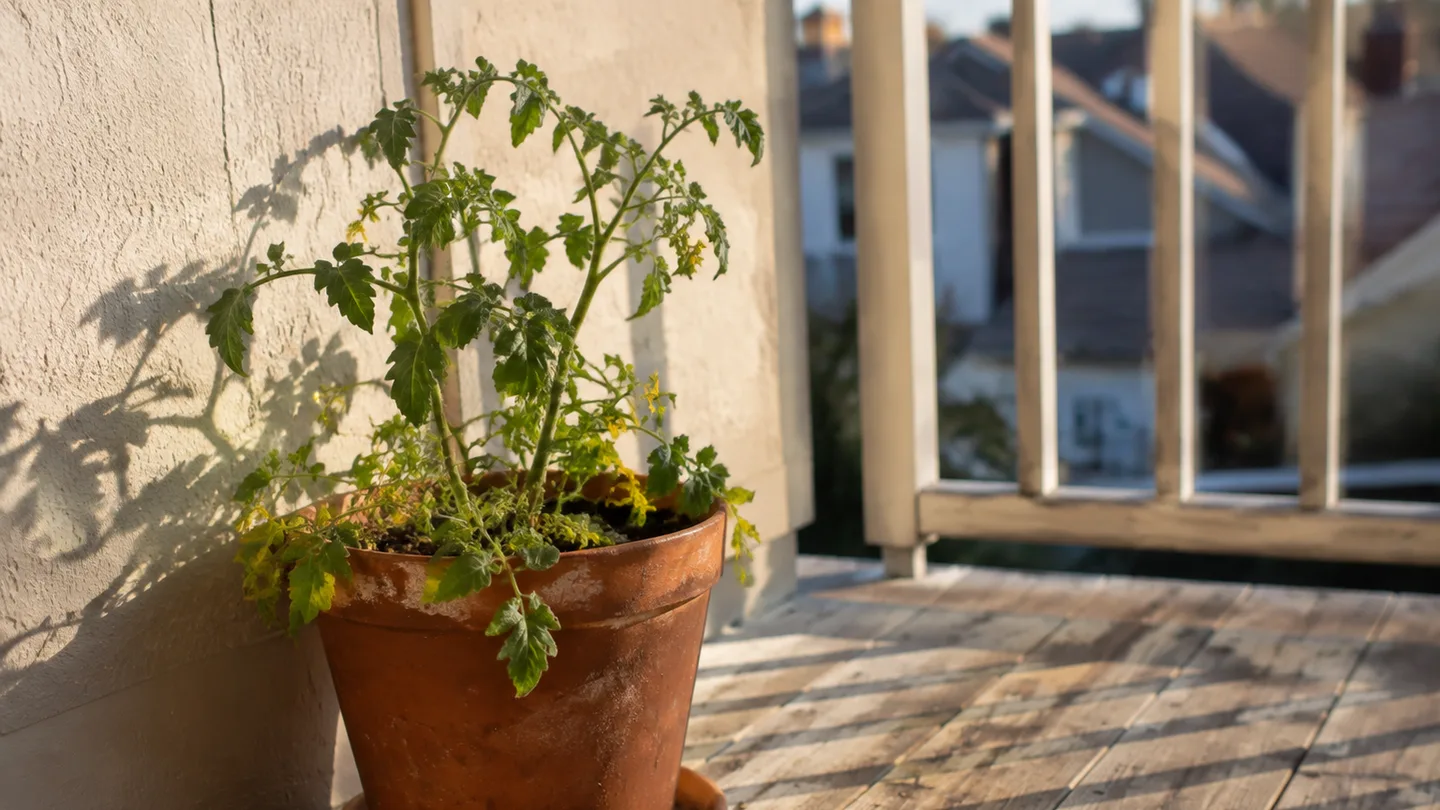
The 48-hour reset: fix the stress before you feed or repot
The next two days should be deliberately boring. Do not try five remedies at once. If you change temperature, water, feed, and pot size together, you may get a better flower cluster without learning what caused the first one to fail.
- Check the position first. Look at the pot's exposure, the hottest part of the day, and the coolest night. Notice whether it sits beside masonry, glass, dark paving, or a balcony wall that radiates stored heat. If extreme heat is the immediate problem, move the container away from that surface or give it temporary afternoon protection. Do not move a low-light tomato into permanent shade merely because one hot day caused flower drop.
- Check moisture 5 to 7.5 cm/2 to 3 in down. Feel the mix at that depth, not just at the surface. If it is dry there, water slowly around the entire root ball until a little water escapes from the drainage holes. A quick splash can wet one channel while leaving the centre dry. If the mix has pulled away from the pot wall and water runs straight down the gap, pause and make a slower second pass. The aim is a moist, evenly wetted root zone, not a saturated pot every evening.
- Give open flowers a chance to pollinate. On a dry late morning, after dew has gone, tap the flower truss gently. You can use a clean, dry artist's brush to touch inside an open flower, then repeat every other day while fresh flowers remain open. Do this only when the flowers are dry. A wet brush adds mess, not useful pollen movement.
- Pause unnecessary inputs. Stop extra nitrogen, Epsom salts, and bloom boosters while you diagnose the plant. None of those products can cool a hot wall, replace missing sunlight, or make a damaged root system healthy in a day. I would not repot solely because flowers dropped. Repot when the container is genuinely too small, drainage has failed, or the plant shows a root problem that needs correcting, and avoid adding transplant shock during the hottest part of the week.
- Inspect the plant without tearing it apart. Check leaf undersides for insects, look for sticky residue or fine stippling, and scan stems and leaves for spots that are spreading. Wilt while the mix is wet points me toward root damage or poor drainage before thirst. A few damaged leaves may be old injury; a pattern spreading into new growth deserves closer attention. For visual matching, I would compare the symptoms with local tomato disease and pest guidance rather than guessing from a single product label.
Here is the kind of container situation this reset is meant to untangle: imagine a full-size vine in a 25 L plastic pot, about 30 cm from a masonry wall, receiving roughly 6 hours of direct sun. The top 6 cm of mix is dry by late afternoon, the gardener adds a small amount of water each evening, and the pot records a 31°C day followed by an 11°C night. Moving the pot away from the wall, checking depth before watering, and waiting through the cool nights addresses three different stresses in the right order. Adding more nitrogen would address none of them.
Use the next 7 to 14 days of flowers as your recovery test
A fallen flower cannot be repaired. Your test is the next flower cluster, not the one already on the ground. Mark the cluster with a small plant label or take a phone photo, then record the nearby temperature, approximate direct-sun hours, and moisture depth before each watering for the next week.
Under improved conditions, I would look for a small green swelling at the base of a newly opened flower within about a week, followed by an obvious young tomato over roughly two weeks. That is an observation window, not a promise. Variety, weather, pollination, and plant health can stretch it.
If fruit set improves after cooler nights arrive, temperature stress moves higher on the list. The useful clue is the timing: the plant makes better flowers when the nights become more suitable, without a major change in feed.
If flowers keep falling despite steady moisture and good light, inspect pollination conditions, recent feeding, pests, and disease. Do not keep increasing water simply because the flowers are failing.
If the plant has abundant leaves but few flowers, look at nitrogen and light together. Excess nitrogen can push leaf growth, while low light can leave the plant green but underpowered for dependable flowering.
If the plant wilts while the mix is wet, treat that as a root-zone warning rather than proof that it needs more water. Check drainage, roots, and disease symptoms before watering again.
No care routine can fully overcome persistent temperatures outside the plant's workable range. The same is true of a balcony that receives only 1 to 2 hours of direct sun: the tomato may remain alive, but reliable fruit set is a poor expectation. In that situation, I would use the space for Easy fruits and vegetables to grow in pots instead of spending the season trying to negotiate with an unsuitable light pattern.
Before the weekend, place a thermometer near the pot, check the mix 5 to 7.5 cm/2 to 3 in down, and mark the next flower cluster. That is the evidence you need for the next decision.