Cold Frame for a Balcony: What Fits, What Actually Helps
A balcony cold frame is a sheltered, unheated box: it can cut wind and rain exposure and trap daytime sun, but it cannot promise frost-free nights. Before you buy, measure more than the floor footprint. The open lid, usable height, route to the door, sun and balcony load all decide whether it helps or becomes a bulky obstacle.
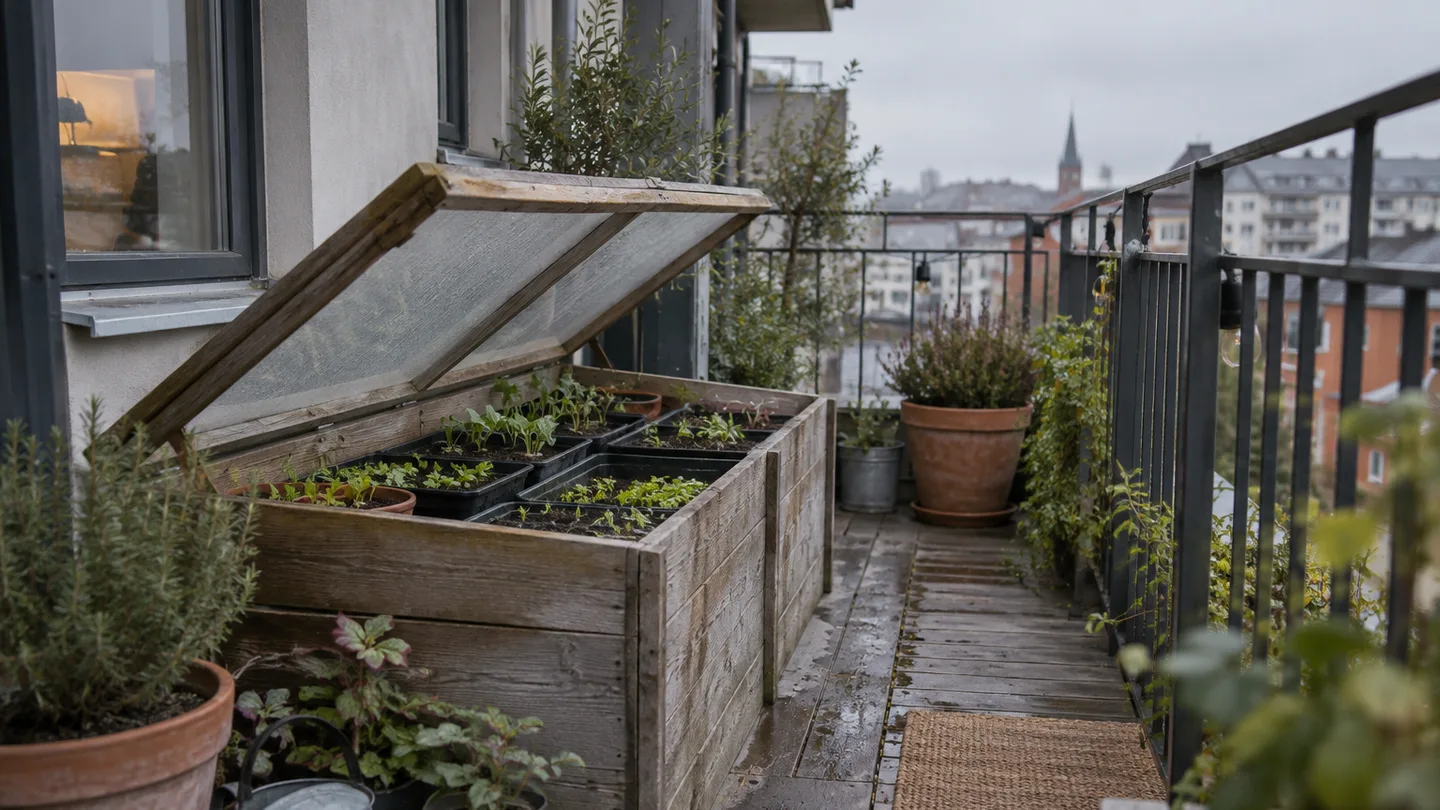
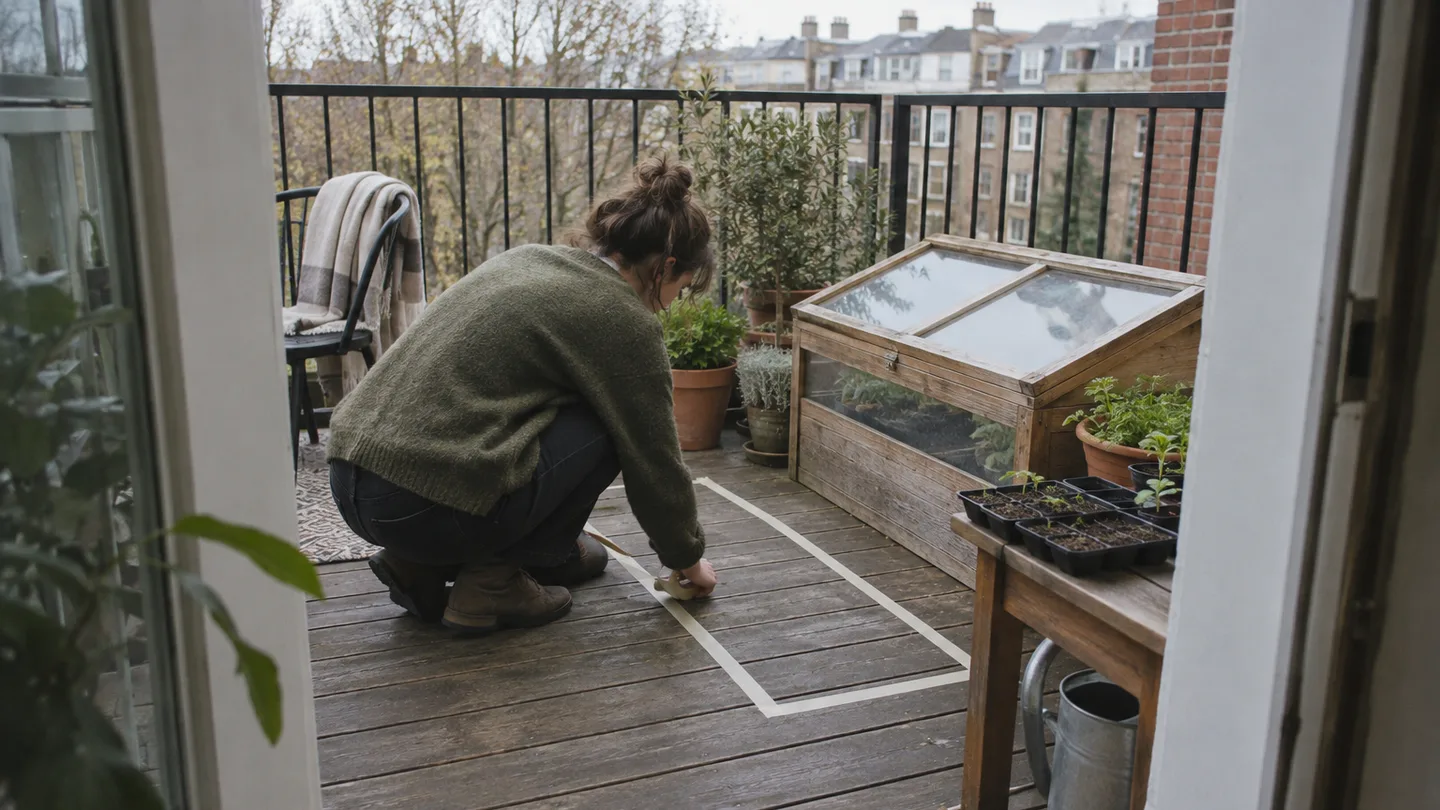
Measure the footprint, the open lid and the route to the door
Start with the frame’s outside dimensions, then mark that rectangle on your balcony with masking tape. A 60 × 45 cm (24 × 18 in) outline is just an example to help you picture a compact unit, not a recommended or standard size. Check the feet, handles and any lid supports too; they can extend beyond the box.
Next, open the lid as far as it needs to go. A lid that swings into the doorway, catches on an overhang or blocks your only path to the railing may make daily use awkward. Measure the open height and the space the lid sweeps through, not just the closed box.
Then stand where you’ll actually reach in. Can you lift a pot out without leaning over the edge? Is there room to kneel or turn? Leave a route to the door and keep balcony drains clear. If a frame only fits by covering a drain or pinching the walking path, I’d choose a smaller arrangement—or a cover that sits over pots you already own.
For a quick example, tape out a 60 × 45 cm rectangle beside the wall, then place a cardboard panel at the lid’s widest open position. Walk through the doorway carrying a watering can. That simple rehearsal catches fit problems a product photo won’t show.
Choose the frame profile by the plants’ height, not its label
“Mini greenhouse” and “cold frame” are labels, not measurements. Compare the inside floor dimensions and the height from the floor to the closed lid. A product’s outside height can include its base, frame or roof angle, leaving less room for plants than you expect.
| Form | Where it tends to fit | Check before buying |
|---|---|---|
| Clear cover or cloche over existing pots | A few pots or a shallow tray where floor space is tight | Whether the cover can be secured and lifted without tipping pots |
| Low hinged box | Compact greens in low trays, with easy access from above | Internal height at the edges and centre; lid clearance when open |
| Taller mini greenhouse | Seedling pots or plants that need more vertical room | Usable shelf area, ventilation openings and whether shelves block light |
As a planning allowance, allow about 25–35 cm (10–14 in) of internal height for compact greens in low trays, and about 40–60 cm (16–24 in) for taller seedlings. Those are starting ranges, not crop guarantees. Measure from the frame floor to the lid, then subtract the height of each pot or tray. A 20 cm pot leaves much less headroom than a shallow seed tray.
A cover over pots you already have can be the better balcony choice if you want to shelter just a few containers and avoid another large base. A freestanding box makes more sense when you need a shared protected space and can reach it comfortably. My preference is to buy for the plants’ full height and the lid’s working space, not for the most impressive outside dimensions.
Sunlight sets the limit on how much warmth you gain
A cold frame warms most usefully when direct sun reaches its cover. Walls, deep balcony overhangs and opaque rail panels can block that light; transparent cover material cannot make up for sun that never gets to it. Check the actual spot through a clear day, noting when direct sun reaches the floor or the proposed frame position and when it disappears.
About 4–6 hours of direct sun is a useful planning target if you want meaningful daytime solar warming. It is a target, not a switch that guarantees growth. With only 1–2 hours, I’d count wind and rain shelter as the more dependable benefit and keep winter growth expectations modest. A frame can protect leaves from exposure while still sitting in a spot too dim for plants to grow well.
Look for the sun-facing side where you live: broadly, that is often the south-facing side in the Northern Hemisphere and the north-facing side in the Southern Hemisphere. Nearby buildings can change the answer, so a direct-sun log beats guessing from compass direction. If you’re still working out your balcony’s light, a careful sunlight audit across the day is worth doing before you choose a location.
A cold frame buffers exposure; it does not heat plants overnight
Think of an unheated cold frame as a windbreak with a chance to collect daytime warmth, not as a heated room. On a sunny day, the enclosed air and surfaces can warm; after sunset, the frame has no heat source to replace warmth as the air and structure cool. How much protection it offers depends on the cover, gaps, wind and the weather outside.
That makes it useful for holding hardy greens through changeable weather or giving seedlings a gradual, sheltered step before they move to a more exposed position. It can also keep driving rain and gusts off tender foliage. But it cannot promise a frost-free night, and it cannot create enough light for reliable midwinter harvests when the balcony is shaded.
Don’t choose plants on the assumption that “inside the frame” means safe. Match the crop to your local conditions, and be ready to move vulnerable pots indoors or use another appropriate protection method when a cold spell is forecast. If you’re planning to keep a particular crop through winter, a guide to overwintering pepper plants can help you decide whether that crop’s needs suit your space.
The useful distinction is simple: shelter changes exposure; it does not change the season. I’d rather use a frame to make a hardy crop’s conditions less harsh than to treat it as a substitute for heat or sunlight.
Use a thermometer: about 10°C (50°F) is a practical venting cue
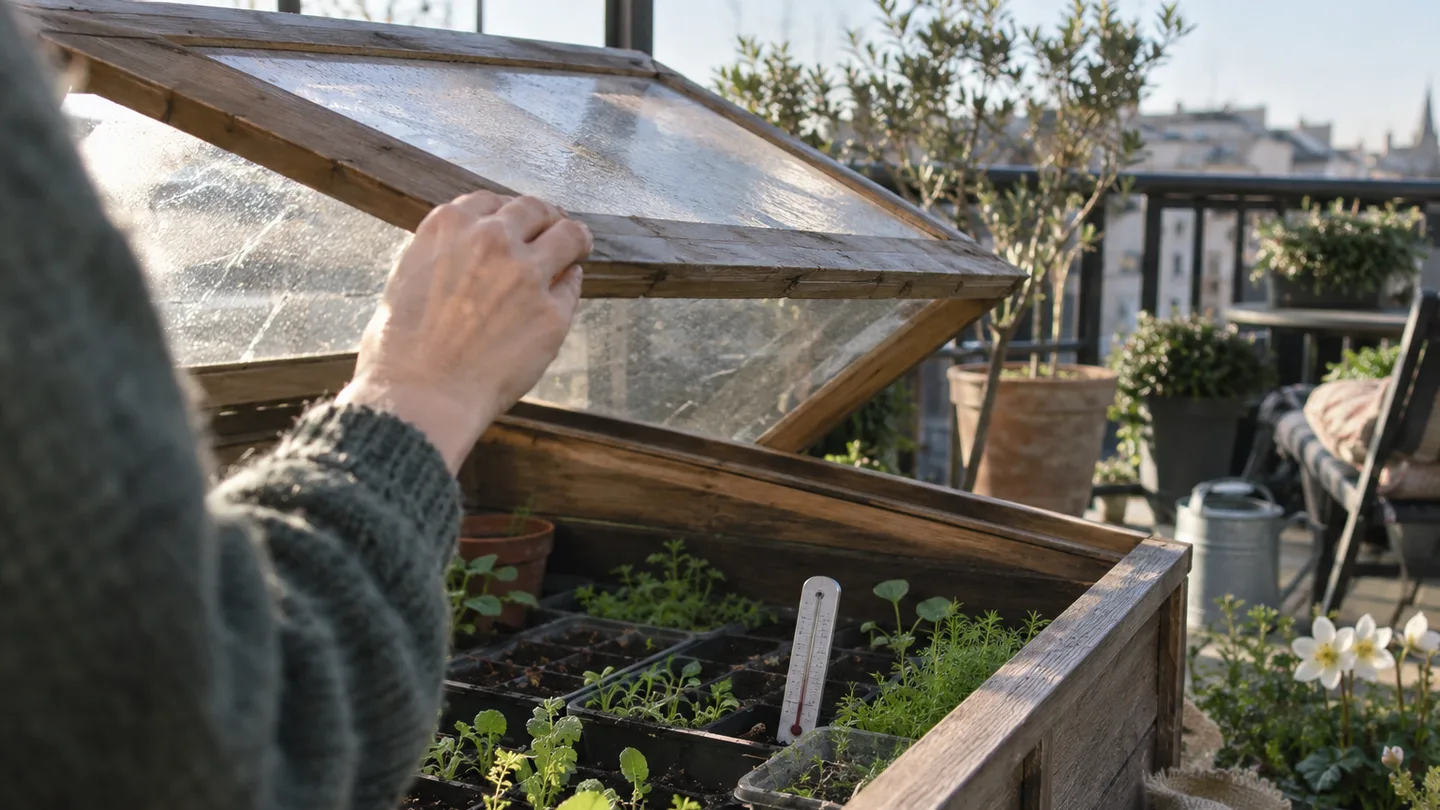
A sunny cold frame can warm faster than the balcony air, so don’t wait for the outside weather to feel hot before checking inside. Put a thermometer at plant height, out of direct contact with the cover and away from a sunlit wall. A minimum–maximum thermometer is useful because it records both the daytime high and overnight low between checks.
As a practical starting cue, begin opening the lid as the inside air approaches about 10°C (50°F). If the temperature keeps climbing, open it farther. Close the frame before evening temperatures fall, while avoiding a sudden all-day seal-up the next sunny morning. This is a routine to test, not a universal crop limit: species, plant stage, wind and the frame’s design all affect the right response. Public extension guidance on cold-frame ventilation is a sensible place to check local growing advice.
For the first sunny day, check the thermometer more than once rather than assuming a morning reading will hold. Note the high, how far the lid was open and what the plants look like. Limp foliage or a stuffy, overly warm interior tells you to ventilate more promptly next time; a low overnight reading reminds you that daytime warmth did not carry through the night.
Check balcony load, wind and drainage before adding weight
Don’t estimate balcony capacity by looking at the frame’s size. Add up the frame, containers, growing mix and any water that can collect or remain in trays. One litre of water (about one US quart) adds roughly 1 kg (2.2 lb); wet growing mix and saturated pots also weigh more than a dry bag or empty container suggests.
That arithmetic tells you what you’re adding, not what your balcony can safely carry. I can’t infer a safe load limit from a photo or a building’s age. Ask building management for the relevant balcony load guidance, and get qualified advice if the permitted capacity or an installation is unclear. Don’t drill into the structure or attach a frame to a railing unless the responsible building guidance allows that method.
Wind is a separate problem. An empty, light frame can shift or act like a sail, especially if its lid catches a gust. Use only a restraint method that is permitted for your balcony and does not damage the building; keep the lid secured when it is shut, and avoid placing a top-heavy unit where it could fall. If the frame feels unstable when empty, adding pots is not a safe fix.
Make sure water can drain from the pots and the balcony without being trapped under the frame. Choose materials with clear information about their coatings and intended use around edible plants; if a treatment or glaze is unknown, don’t let edible leaves or fruit rest against it. For the plants themselves, remember that a cover excludes much of the rain: you’ll need to check moisture rather than assume a shower watered the pots. The guide to how often to water potted plants in winter is a useful companion, but the frame creates its own sheltered conditions.
Set it up as a ventilated shelf, then test the microclimate
Arrange the pots so you can lift the ones at the back without crushing foliage at the front. Leave a little air space between containers and make sure leaves won’t be pressed against the lid when it closes. Put taller pots where they won’t shade everything else, and keep the thermometer near the plants you most need to protect.
Before trusting the frame with seedlings, test it on a sunny day with the pots in place. Check the internal temperature as it warms, practise opening the lid, and look again before evening. The test won’t predict every cold snap, but it will show whether this position overheats, stays cool or is awkward to ventilate. Keep a short note of the high and low readings; a single sunny afternoon is a useful first check, not a full seasonal record.
Check moisture by feeling the mix in each pot rather than following a fixed calendar. A sheltered pot misses rain, while a small container can still dry faster than a larger one. Pot material, wind and the amount of sun all change how quickly it loses water. If the surface is dry, check below it before watering; if the mix is still damp, wait and check again. The frame reduces some exposure, but it doesn’t make watering automatic.
My judgment call: treat a balcony cold frame first as a weather screen that may collect helpful daytime warmth. That expectation keeps the purchase useful even on a shaded balcony, and it prevents you from relying on an unheated box for protection it can’t promise.
Before you order, tape out the proposed footprint today. Mark the lid’s open position, walk the route to the door, and check the spot for direct sun. If any of those three checks fails, change the location or the frame size before spending money.