Edema in Plants: Why Leaves Blister and What to Change
If a leaf has raised, water-soaked bumps that later turn tan and corky, edema in plants is a strong possibility—and the marks won’t smooth away after you change the watering. The spots aren’t contagious; the useful sign of improvement is healthier new growth.
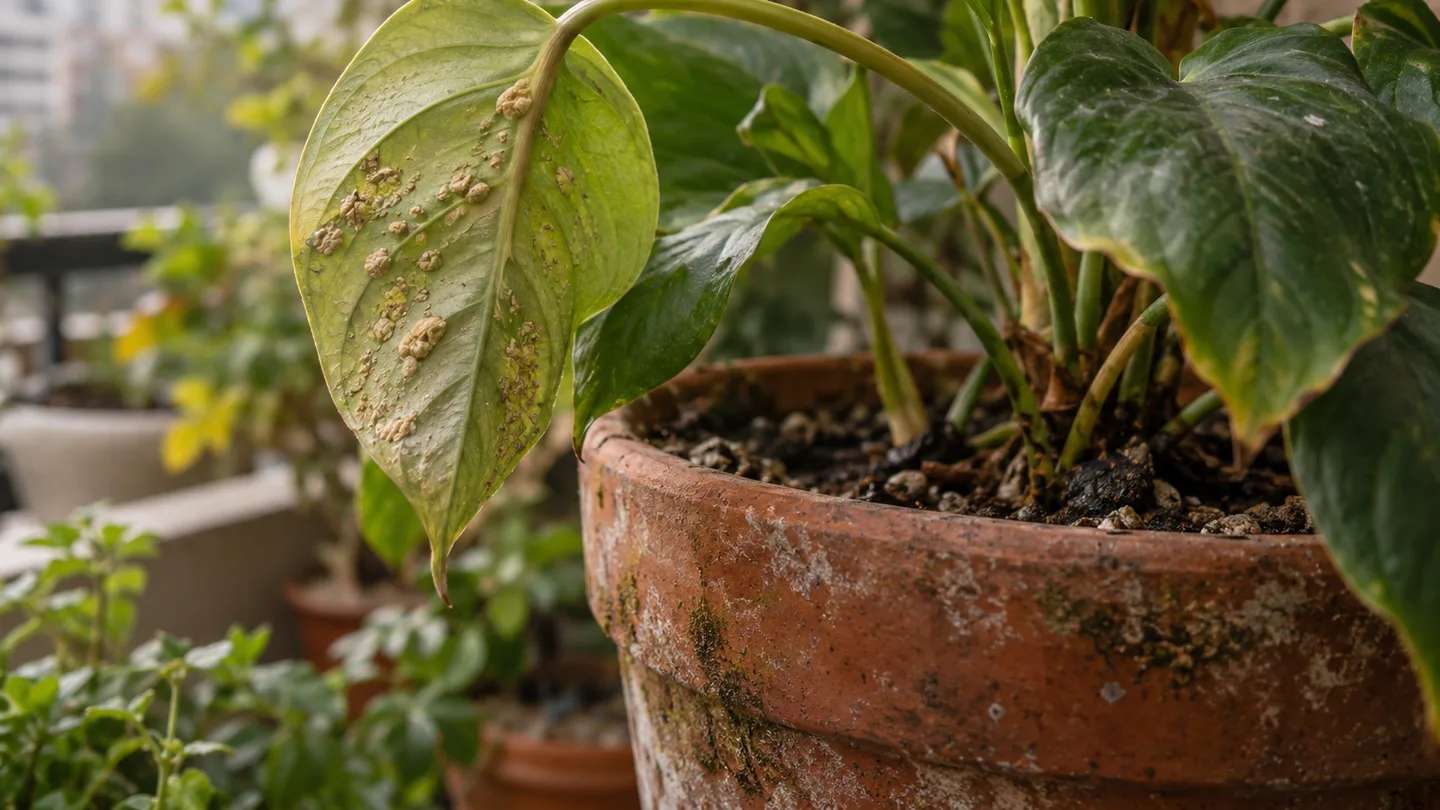
Raised leaf blisters usually point to a water-balance problem, not an infection
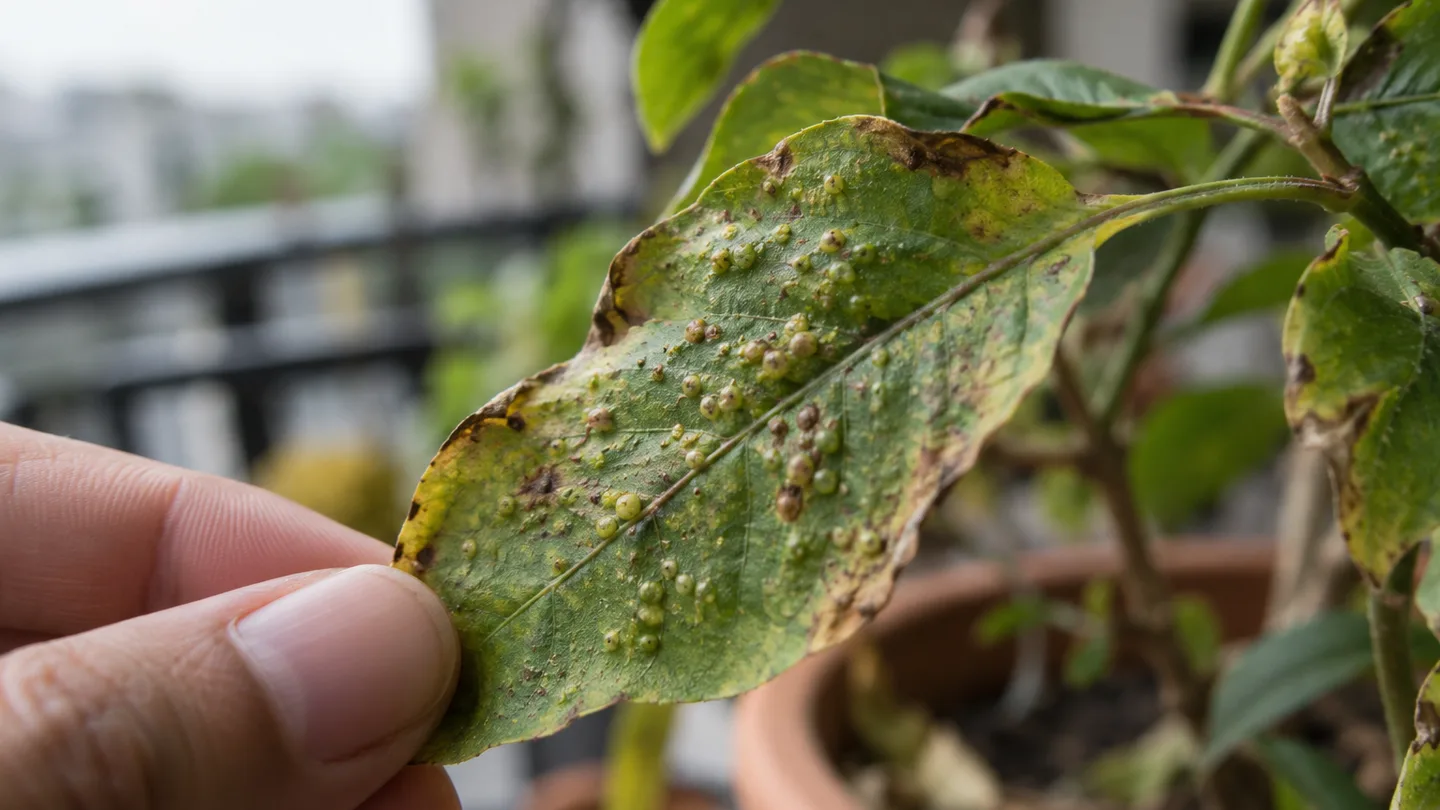
Edema, also written as oedema, is a water-balance disorder in plant tissue. It can show up as small raised blisters, often on the underside of leaves. Early spots may look pale or water-soaked; older ones can become tan, brown, or rough and cork-like. On some plants the damage is subtle, while on others several bumps cluster together.
That appearance is a clue, not a diagnosis by itself. Pests, disease, and physical damage can also mark leaves, so check both surfaces before changing the care routine. Edema is not an infection that moves from one pot to another. If several plants develop similar marks, look for a shared condition—such as the same dim corner or watering habit—rather than assuming one plant passed it along.
There’s one expectation worth setting early: existing blisters are damaged tissue. They may dry or darken, but don’t expect them to flatten and turn green again. I judge a change by what the next leaves look like, not by whether an old mark disappears.
Inside the leaf: roots take up water faster than leaves can release it
Leaves release water vapour through tiny openings in their surfaces. That loss, called transpiration, helps draw water from the roots and through the plant. If roots take up water faster than the leaves can release it, pressure can build in leaf cells. Some cells swell and may rupture; the resulting injury can look like a blister and later become corky.
That chain explains why edema is associated with wet potting mix, but “overwatering” is an incomplete diagnosis. Water uptake and water loss are affected by several conditions at once. A plant may be using water slowly because light is weak, the air is still, or temperatures are cool, while its mix remains moist. A pot that holds a large volume of mix can also stay wet longer than a smaller one in a similar spot.
Think of the problem as a mismatch, not a magic moisture reading. The same watering amount can be reasonable in a warm, bright, breezy position and excessive in a cooler, dimmer one. There isn’t one soil-moisture, temperature, or humidity cutoff that identifies edema across every plant species and pot setup.
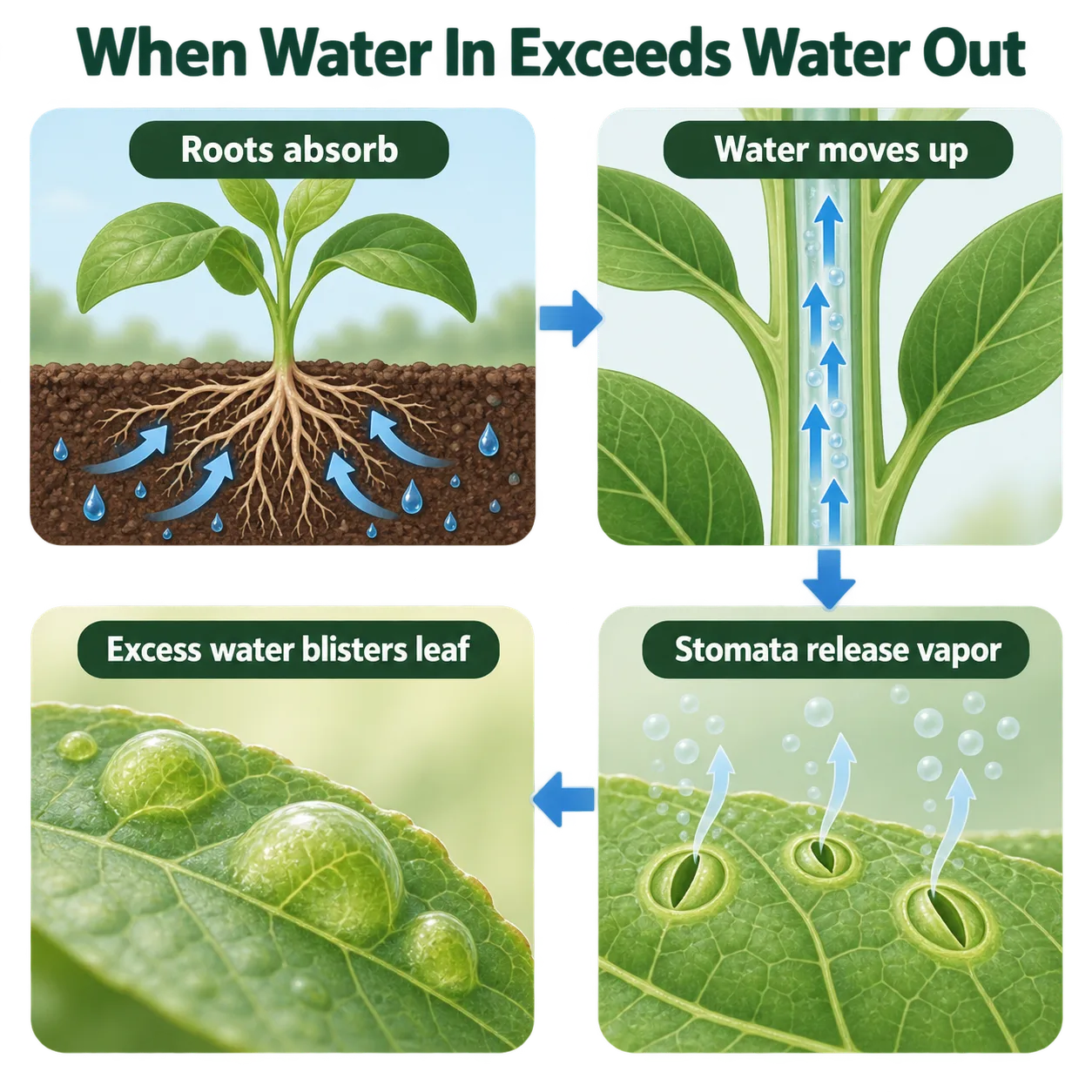
That’s why I don’t reach first for a calendar or a moisture gadget. I ask what has changed in the plant’s surroundings, then check whether the mix is still holding water when the plant is using little of it.
Check both leaf surfaces before changing your watering routine
When I’m diagnosing a blistered pot, I start with the underside of a leaf, not the watering can. Turn over a marked leaf and look closely for insects, shed skins, fine webbing, or sticky residue. Then inspect the upper surface and a few unmarked leaves. This simple order helps separate a raised patch in the leaf from a pest sitting on it or feeding through it.
Edema is more plausible when bumps seem to be part of the leaf tissue, especially if they’re raised, water-soaked at first, and later rough or corky. Pest damage may include visible insects or webbing, or a pattern of fine stippling or scarring. A leaf-spot disease may make flat, spreading, or haloed marks; it can’t be ruled in or out from colour alone. Sun scorch tends to affect exposed areas after a change in light, while general root stress may come with wilting or yellowing as well as spots.
Keep the conclusion provisional. One isolated brown mark, a leaf’s colour, or the fact that the pot feels wet doesn’t settle the diagnosis. Note which leaves are affected, whether the spots are raised or flat, and whether new marks appear. If you find pests, identify them before choosing a treatment; if a mark spreads or has a distinct border, compare it with reliable plant-disease guidance rather than treating it as edema by default.
A quick note on your phone is enough: plant, date, leaf age, spot location, and what the pot felt like. Check the plant again in a week or two. That interval is a useful observation window, not a promise that every plant will produce a fully formed replacement leaf by then.
Low light, cool nights, and humid air can change what counts as too much water
Light gives a plant energy to grow and affects how quickly it uses water. When light drops, water use may slow; cooler conditions can slow it further. Humid, still air can also reduce the rate at which water leaves a leaf. None of those conditions alone proves edema. Together, though, they can leave a pot wet for longer than your usual routine assumes.
Container details matter too. Plastic generally loses less water through its sides than unglazed clay, and a larger pot usually contains more mix to dry. These are tendencies, not a schedule: sun, wind, plant size, mix, and drainage all change the result. A balcony pot in full sun can dry differently from the same pot against a shaded wall, even on the same day.
Before you change several things at once, write down what you can observe: approximate hours of direct or bright light, whether nights have become cooler, and whether the air feels unusually damp or still. If you have a thermometer or humidity meter, record its readings and where it sits. Don’t treat a single reading as a universal threshold; use it to compare the plant’s conditions over time.
My practical judgment: follow the pattern, not a single number. If symptoms appeared after moving a plant to a dimmer spot while keeping the same watering rhythm, adjust the rhythm to that spot before buying a fan or repotting. If the mix remains soggy and the drainage hole is blocked, solve that first.
Change the dry-down, not the calendar
For many foliage plants, checking the top 1–2 inches (2.5–5 cm) of mix is a useful starting point. Push a finger into the soil; don’t judge by the surface colour alone. If that layer is still damp, wait and check again rather than watering automatically. This is a starting check, not a universal instruction to let every plant dry to the same depth.
Shallow-rooted plants may need a shallower check. Succulents often need a more substantial dry-down than moisture-loving foliage plants. A small pot can change quickly; a deep container can remain moist below a dry-looking surface. When in doubt, check at more than one depth or use a clean wooden skewer to see whether mix clings lower down. Learn more in how much to water container plants and how often to water potted plants outdoors.
When it is time to water, wet the mix evenly and let excess water drain freely. Check that drainage holes are open, and don’t leave the pot sitting in runoff for hours. A saucer that stays full can keep the lower mix wet even after the surface seems to have dried. Empty trapped runoff after watering, unless you’re deliberately using a setup designed to draw water from below.
A fixed every-few-days routine can miss the conditions that matter. A windy afternoon, a cloudy stretch, a move indoors, or a change in pot size can alter how quickly the mix dries. A better habit is to check the pot, water when the plant and mix call for it, and make the next check sooner when the weather or location changes. For a second reference, compare your observations with university extension guidance on physiological edema in houseplants.
Make light and airflow changes gradually; leave marked leaves alone
Start with the clearest problem. If the mix is staying soggy, correct the watering decision and confirm the drainage holes work. If the plant is in unusually low light, move it toward a brighter suitable location in stages. Don’t take a shade-acclimated plant and place it straight into intense midday sun; a sudden jump in exposure can add scorch damage and make the leaf clues harder to interpret.
Gentle air movement may help a still, humid spot dry more evenly, but a strong fan aimed directly at foliage can create a different stress. Improve the room or balcony’s general air movement if needed; don’t use airflow to compensate for a blocked hole or a pot that is continually standing in water.
Pruning is optional. You can remove a badly damaged leaf if it is mostly dead, in the way, or simply bothering you. Cutting off marked leaves doesn’t correct the water balance, and there’s no need to strip a plant of leaves that are still functioning. Clean your snips between plants if you’re also investigating possible disease.
Then give the plant time to show its response. During the next few weeks, inspect new growth for fresh blisters and compare its condition with the older leaves. If new leaves continue to develop marks despite a more suitable dry-down, return to diagnosis: pests, disease, root damage, or another stress may be involved. A change in routine is a useful test, not a guarantee.
A balcony-pot routine that lowers the odds of edema returning
Before each watering, use the same short sequence: check the mix below the surface, confirm the pot can drain, and look at the plant’s newest growth. Empty runoff from a saucer. If you have several pots, group plants by similar light and water needs where practical, so one plant’s schedule doesn’t dictate care for a very different neighbour.
Recheck your assumptions after a change in weather, location, or season. A plant moved from a sunny balcony to an indoor sill may use water more slowly. A spell of wind or heat may speed drying. Rather than keeping a date-based schedule unchanged, take the pot and plant as they are today. This is the useful distinction behind any guide to how often to water container plants: frequency depends on the plant’s conditions, not just the day of the week.
For example, picture a leafy plant whose pot is still damp several days after watering, now sitting in a cooler corner than before. You find raised, corky bumps on the lower leaf surfaces but no webbing or insects. The sensible first move is not to spray it or remove every marked leaf. Check the drainage hole, stop watering while the mix remains moist, and move it gradually toward appropriate brighter light. Then watch the next leaves. If fresh growth is clean, that supports the idea that the changed conditions helped; if new damage continues, reopen the diagnosis.
Edema itself doesn’t spread between pots, but similar growing conditions can produce similar symptoms. Damaged leaf tissue may remain unattractive, so don’t use the old spots as your scorecard. I’d rather keep one marked but useful leaf than prune heavily before I know whether the plant is improving.
If you want another perspective on distinguishing physiological damage from insects, compare your notes with horticultural society guidance on diagnosing leaf damage and pests. On your next watering, check the soil below the surface and make sure runoff can escape. When the next flush of leaves opens, look underneath before deciding whether the adjustment worked.
Frequently Asked Questions
Can plant edema spread to nearby plants?
No. Edema is a physiological water-balance problem, not a contagious infection; nearby plants can develop similar symptoms if they share the same growing conditions.
Can I eat leaves that have edema?
Edema itself is not an infectious disease, but damaged tissue may be unappealing; identify the plant and any other possible cause of the spots before deciding whether to eat it, and discard leaves that are decayed or contaminated.
Does edema mean my plant has root rot?
Not by itself. Edema can occur when uptake exceeds water loss, while root rot involves damaged roots; check for persistently wet mix, drainage problems, and declining roots or stems rather than diagnosing root rot from leaf blisters alone.