Growing Citrus in Containers: Pot Size, Watering and Winter Care
A small grafted citrus can start in roughly 10–15 litres (2.6–4 US gallons) of mix; an established dwarf tree commonly needs about 40–60 litres (10.6–15.9 US gallons). The harder decision comes before the pot: a tree that fits the balcony but has no bright winter position is a common setup for leaf drop after the move.
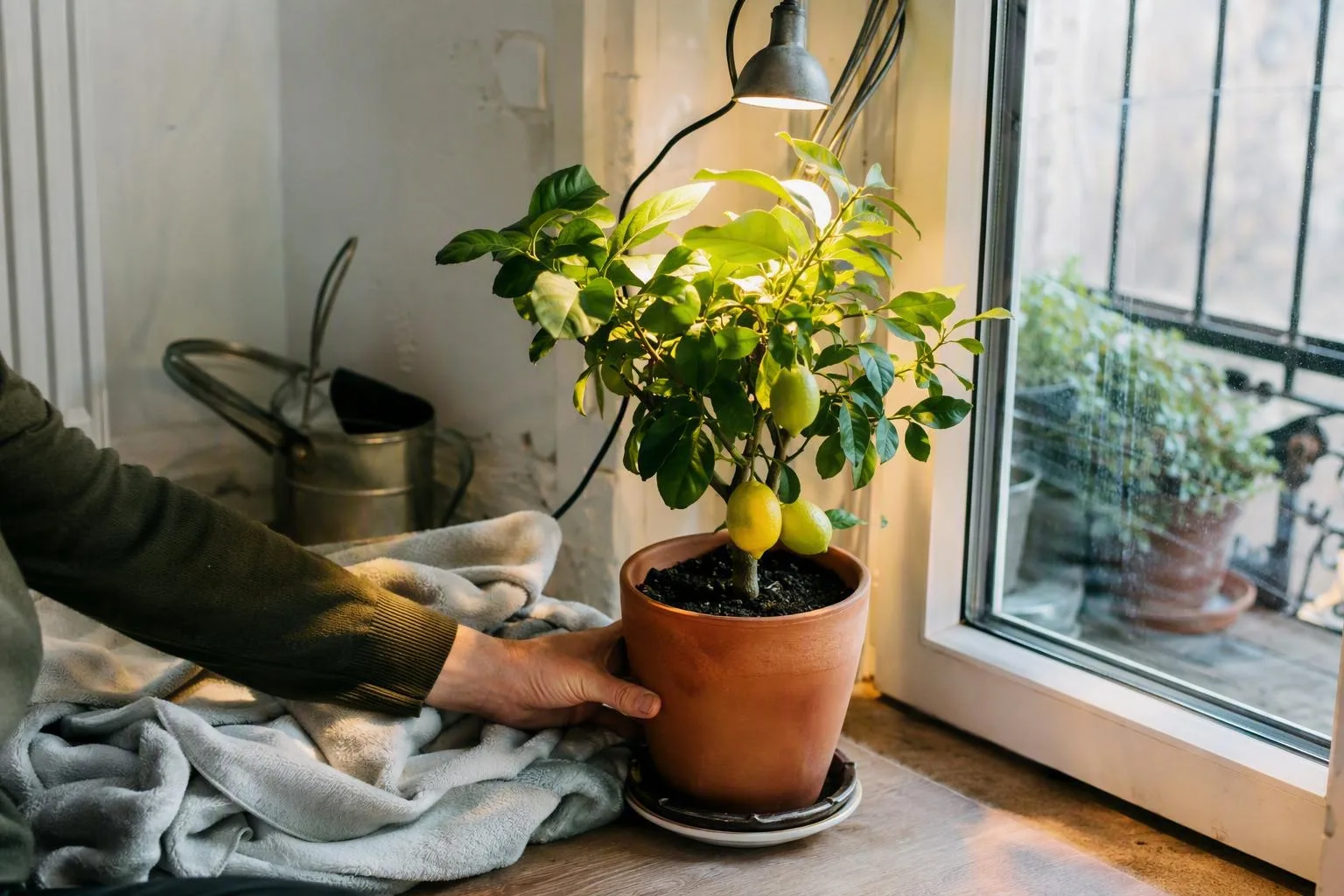
My pre-purchase check is blunt. I put a chair or empty box where the tree would stand indoors, mark the footprint, and look at that spot in the morning, around midday and again in the afternoon over several clear days. If the winter position offers only one or two hours of direct sun, I budget for a grow light or choose citrus as a foliage-and-fragrance project rather than expecting a dependable bowl of fruit.
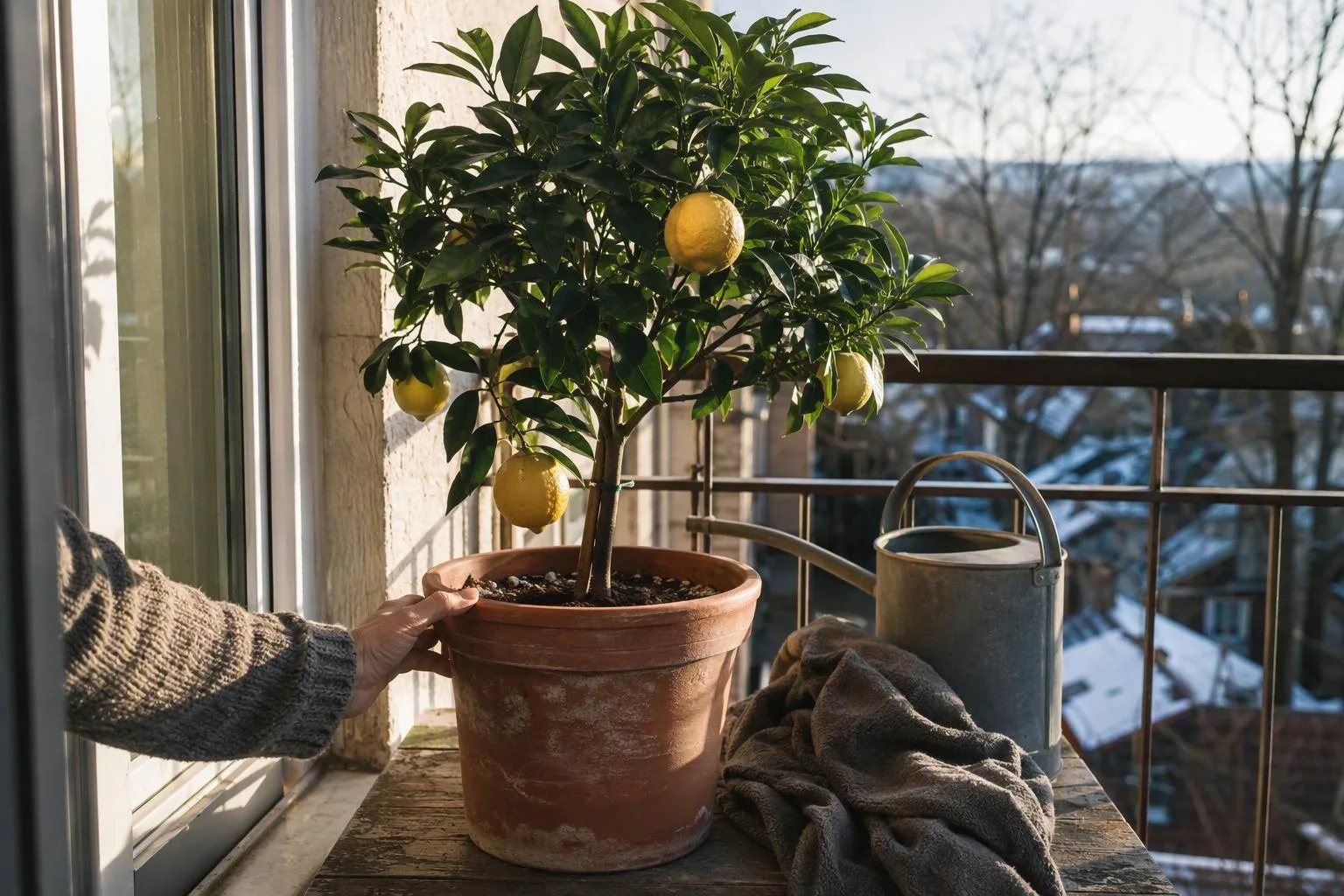
Before you buy: match the tree to your winter light
For growing citrus in containers, the variety and rootstock matter as much as the pot. A grafted nursery tree gives you a known variety on a selected root system, so its eventual size and fruiting behaviour are more predictable than a seedling’s.
Lemons are popular because they can flower and fruit over a long season, but vigorous trees soon outgrow a small container. Limes usually want a warm, bright position and are poor candidates for a cold, dim windowsill. Mandarins and satsumas can be more manageable as patio trees, while kumquats often suit container growing because they tolerate a somewhat cooler winter position. Calamondin is another practical indoor choice, although its small fruit is sharply flavoured rather than a direct substitute for a sweet orange.
Dwarf means smaller than a standard tree. It does not mean permanently miniature, maintenance-free or happy in a coffee cup. Rootstock, pruning, light and root volume all influence the finished plant. A dwarf citrus may still become a substantial, top-heavy tree that needs a stable pot and a place protected from strong wind.
One or two hours of direct sun can keep a citrus tree alive, especially if the rest of the day is bright, but it is a weak fruiting setup. I’d plan on roughly six hours of strong direct light for regular flowering, with closer to eight hours giving a better margin. If your balcony has only a short sun window, buy the tree for the pleasure of growing it, then treat fruit as a bonus unless you can add suitable supplemental lighting.
Use the one-size-up rule for the pot
Measure the rootball, not the height of the foliage. The next container should usually be only about 5–10 centimetres (2–4 inches) wider than the rootball at its widest point. These are useful starting ranges for a healthy young tree:
| Tree stage | Approximate rootball diameter | Pot volume | US gallons |
|---|---|---|---|
| Small nursery tree | 15–20 cm (6–8 in) | 10–15 L | 2.6–4.0 gal |
| Young established tree | 20–27 cm (8–10.5 in) | 20–30 L | 5.3–7.9 gal |
| Mature dwarf citrus | 30–40 cm (12–16 in) | 40–60 L | 10.6–15.9 gal |
The one-size-up rule prevents a small rootball from sitting in a large reservoir of unused mix. That extra mix can stay wet after the roots have taken what they need, particularly in cool weather or indoors. The result is not simply slower drying; it is a mismatch between the amount of wet soil and the amount of root activity.
To estimate the volume of a straight-sided cylindrical pot, use:
litres ≈ 0.000785 × diameter in centimetres × diameter in centimetres × height in centimetres.
A cylinder 35 cm wide and 35 cm tall works out at about 34 litres (9 US gallons). A tapered pot sold as 35 cm wide may hold less because its base narrows, and the usable volume is lower again once you leave headspace below the rim. Use the manufacturer’s stated volume where it is available; otherwise, treat the calculation as an upper estimate. For a broader comparison of container sizes, the container size chart for vegetables is still useful, even though citrus has a different root and canopy pattern.
Weight deserves a separate calculation on a balcony. Water weighs approximately 1 kilogram per litre, so a 50-litre pot can contain about 50 kilograms (110 pounds) of water alone after a thorough watering. Add wet mix, the container and a tree with a heavy canopy. I’d place a large citrus near a load-bearing wall or a location approved for the balcony, rather than assuming a large decorative pot is harmless because it looked manageable in the shop.
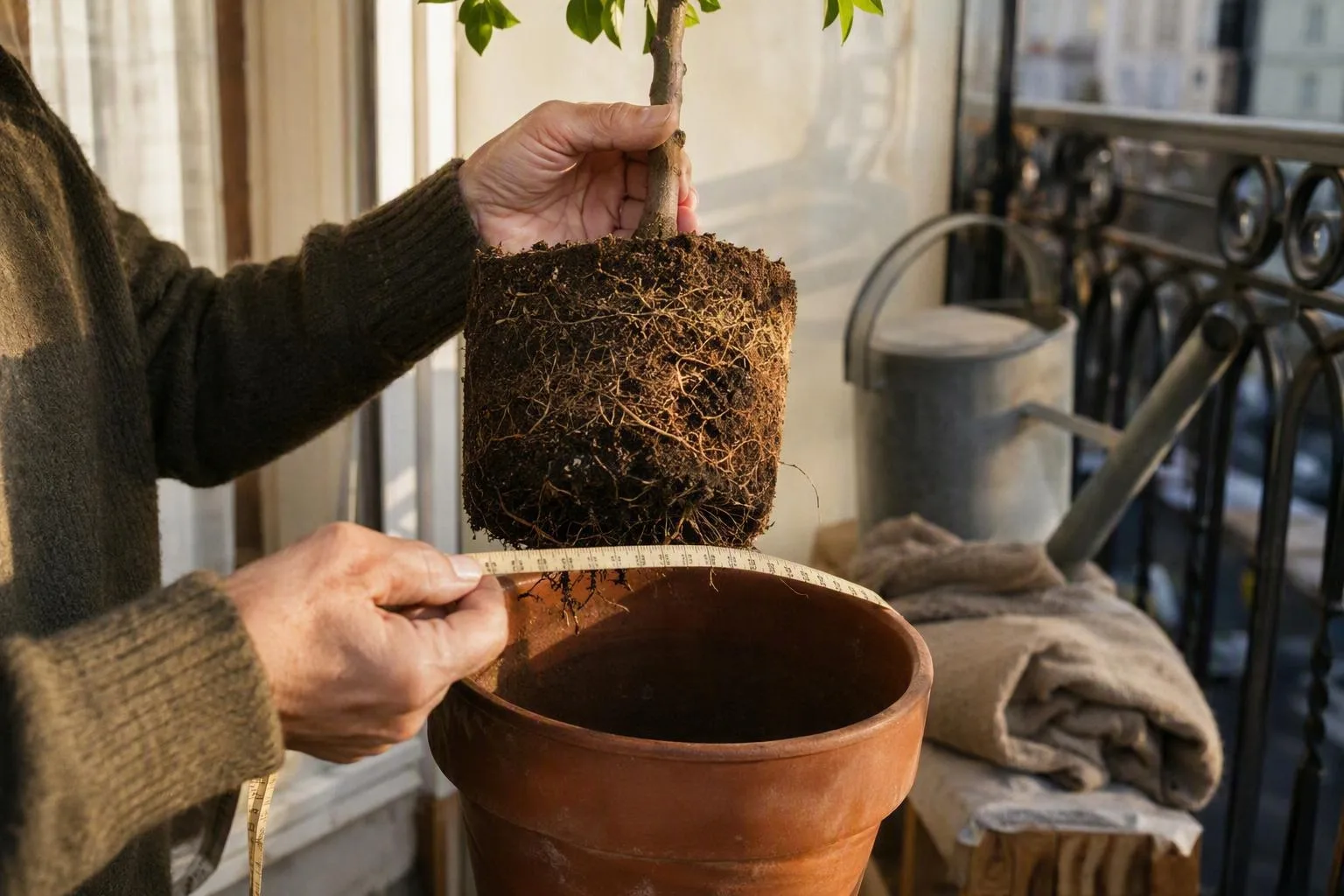
Build a root zone that drains without staying wet
Use a commercial container mix, not soil dug from a garden bed. Garden soil can settle into a dense mass in a pot, reducing the air spaces that roots need. I look for a mix that stays open after watering and includes a coarse ingredient such as bark, perlite or pumice. If a bagged mix turns pasty, collapses into a hard lump when squeezed or remains wet for many days, I’d increase the aerating fraction at the next repot rather than watering around the problem.
This is where the perched water table matters. In plain language, water drains through the mix until it reaches a point where the fine particles and the drainage opening can no longer release it quickly. The lowest part of the mix can therefore remain saturated above the hole, even when water is visibly running out below.
Gravel in the bottom does not remove that wet zone. A layer of coarse stone beneath finer mix creates another texture boundary; it can move the saturated layer upward instead of making the entire pot drain more freely. Put the drainage hole at the bottom, keep it open, and let the mix itself provide the root zone. The explanation in container gardening soil is useful if you want to see the same drainage principle applied to smaller edible containers.
I require an unobstructed opening at the base. Several smaller holes can work, provided they are not sealed by a saucer, plastic film or compacted mix. A saucer should catch runoff, not hold the pot in standing water. Terracotta generally loses moisture through its porous sides and can need more frequent watering; plastic and glazed pots hold moisture longer. That is a watering difference, not a reason to choose one material for every balcony.
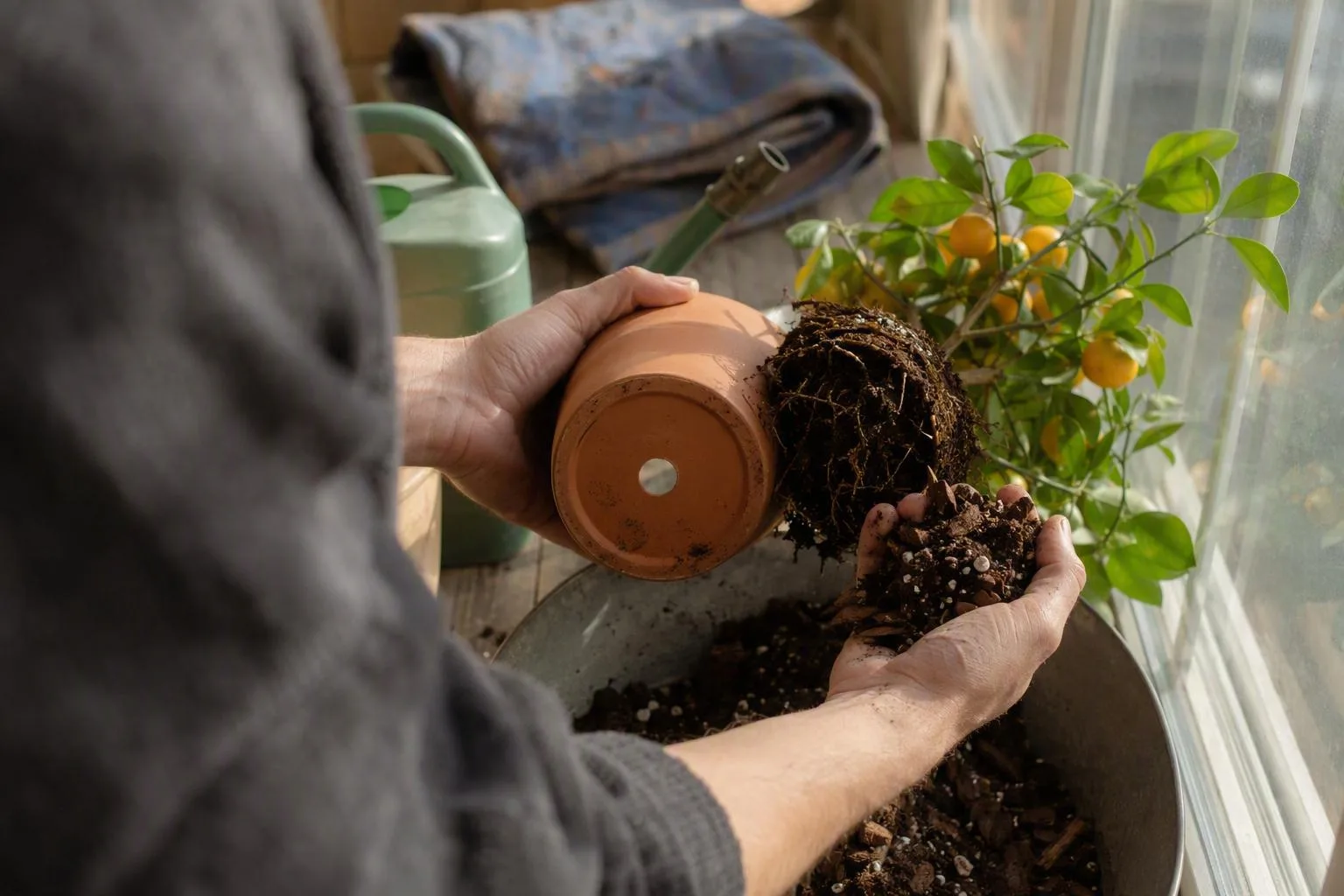
Plant it high, settle the mix, and stop
Planting depth is one of the few citrus decisions I don’t treat casually. The trunk should not disappear into the new mix, and the graft union—the swollen or angled join where the fruiting variety was attached to the rootstock—must remain clearly above the surface.
- If the drainage opening is broad, place a piece of mesh over it so mix does not fall out. Don’t seal the hole with a solid shard.
- Add enough mix to set the rootball at the same height it was growing before. Letting the tree sit low and planning to uncover the trunk later is a poor sequence.
- Slide the tree out and inspect the roots. Tease a tightly circling outer layer gently if needed, but don’t make routine root pruning part of a normal pot-up.
- Backfill around the rootball without stamping the mix down hard. Firm it only enough to remove large air gaps.
- Leave about two fingers of headspace below the rim. This gives water somewhere to collect before it enters the pot rather than spilling over the edge.
- Water slowly until runoff exits the drainage holes. If the mix shrinks away from the sides, pause and water a second time so the original rootball becomes evenly wet.
Burying the trunk or graft union keeps that tissue damp and deprives it of the dry-air boundary it was growing with, which creates a rot risk. If the fresh mix already contains starter nutrients, wait before feeding. The tree has enough immediate nutrient access; adding more at planting can raise salt concentration around newly disturbed roots.
Water by what the rootball feels like
A calendar is a poor watering tool for citrus. The same plant can need water almost daily in a small plastic pot on a hot, windy balcony and only every third day in a larger glazed pot in part shade. Indoors in cool, low light, it may go a week or longer. Those are planning examples, not a schedule.
I use this decision path:
- Check the top 2–5 cm (1–2 inches) of mix with a finger or wooden stick. Then lift the pot if you can do so safely, or compare it with how heavy it felt just after watering.
- If that upper zone is still damp and the pot feels heavy, wait. Look again the next day or two rather than adding a small splash.
- If the upper zone is dry and the pot feels noticeably lighter, water the whole rootball slowly. Pause when runoff first appears, then give it another pass if water has been racing down the sides.
- Empty the saucer after drainage has finished. If the pot is sitting in water, the bottom of the rootball cannot get the air it needs.
Drooping leaves alone don’t tell you whether the tree is thirsty. Dry-root droop usually arrives with a light pot and dry mix, while overwatering is more plausible when the mix is wet, the pot remains heavy, drainage is poor or the root zone smells sour. Yellowing can occur in either situation because damaged roots cannot supply the leaves normally. Check moisture, smell and drainage before choosing a remedy.
On a hot balcony, check more often rather than automatically watering more deeply every day. On a cool indoor windowsill, the slow loss of water is the main reason a summer routine causes trouble. A full soak followed by a proper dry-down is more useful than repeated surface sprinkles, which can leave the centre of a dense rootball dry while the outside stays wet.
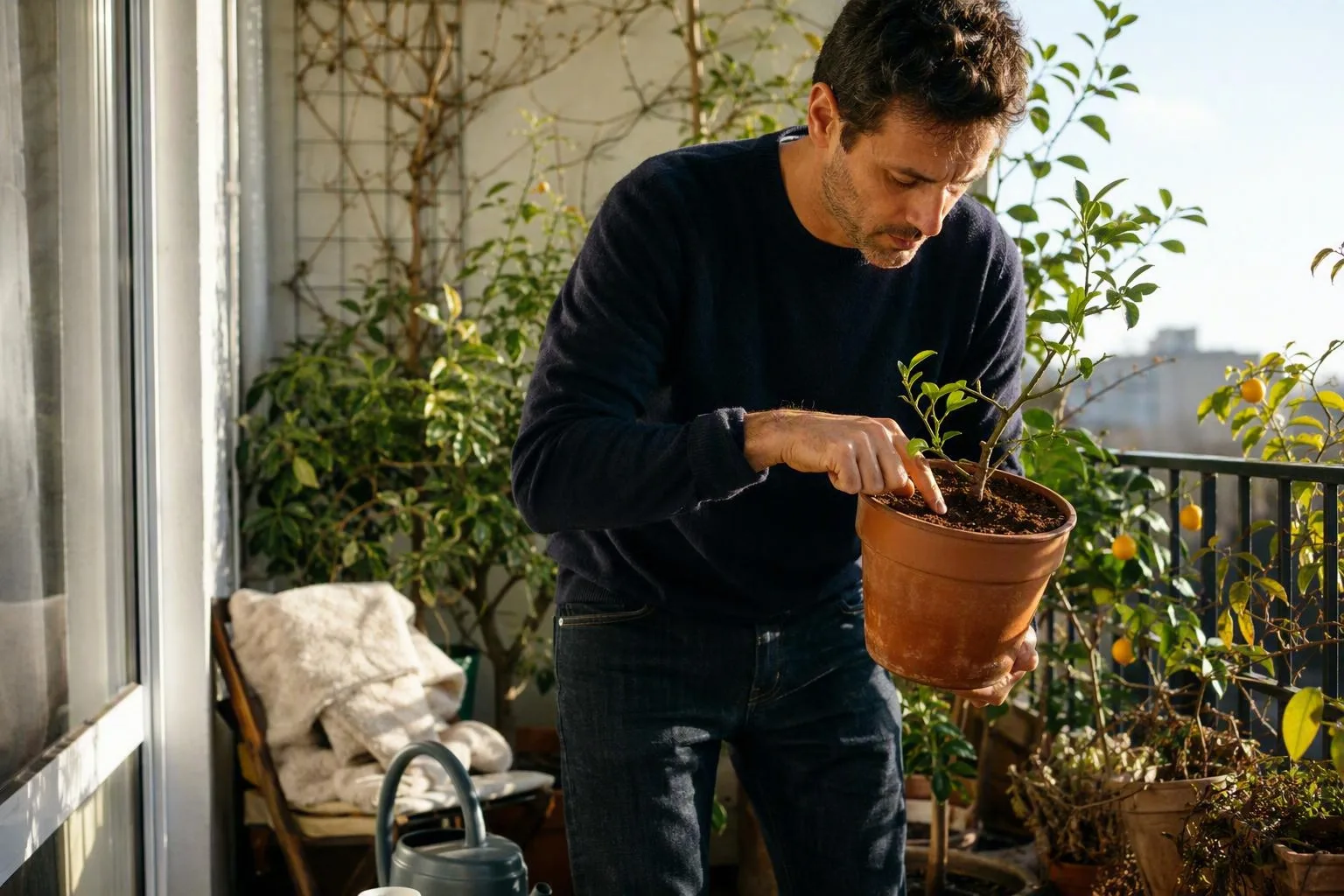
Feed the new growth; do not chase fruit with fertilizer
A container has a finite nutrient supply, and repeated watering carries soluble nutrients out through the drainage holes. During active growth, use a citrus-labelled fertilizer or a balanced feed made for container plants at the product label rate. A controlled-release product can reduce feeding reminders; a dilute liquid feed every few weeks gives you more control over how much the tree receives.
Water the mix first, then feed a hydrated tree. I would not feed a plant that is wilted from drought, sitting in water or recovering from a root disturbance. The roots are already under stress, so a concentrated nutrient solution can add another problem.
Yellow leaves are not a fertilizer diagnosis by themselves. Root stress, low light, pests and a genuine nutrient shortage can overlap in appearance. Look at whether the newest leaves or the oldest leaves are changing, inspect the undersides, and check the mix before adding anything.
Prune lightly to keep the canopy balanced and remove shoots that emerge below the graft. Those shoots belong to the rootstock and can grow vigorously, diverting water and nutrients from the grafted variety. Heavy nitrogen feeding can also push soft leafy growth when your actual goal is flowers, so I’d rather correct light and watering before increasing fertilizer.
Give flowers enough light to become fruit
Flowering and fruiting are a light budget problem before they are a pollination problem. A citrus tree receiving only one or two hours of direct sun may stay green, but it has less energy available for repeated flowering and for holding developing fruit. For reliable fruiting, position it for roughly six to eight hours of strong direct light when possible. If the brightest window cannot provide that, use a suitable grow light according to its instructions and keep the timing consistent.
Rotate the pot gradually so one side does not remain permanently shaded, but don’t make large position changes every few days while flowers are open. Many commonly grown container citrus can set fruit without a second tree. Indoors, gently brushing open flowers can help distribute pollen, but weak light, drought, heat and sudden movement can still cause flowers or tiny fruit to drop.
A young tree may produce no fruit in its first season, and an established well-lit dwarf is better planned as a few fruits to a few dozen than as a dependable grocery supply. That is a planning range, not a promise: variety, tree age, rootstock, pollination conditions and the length of the good-light season can move the result considerably. My judgment is that one productive pot is worth growing for flavour and interest, but it rarely earns its floor space as a food-production project alone.
The indoor move is a four-week process, not a single day
Tender lemons and limes should be moved before frost and before night temperatures repeatedly approach roughly 7–10°C (45–50°F). The exact trigger depends on cultivar, wind exposure and how quickly your local weather can turn colder. Kumquats and some mandarins tolerate cooler conditions better, but a container still has less root insulation than ground soil and should not be left to freeze.
For a practical four-week process:
Three to four weeks before the likely move
Choose the brightest indoor position, check that the floor can carry the pot, and inspect stems and leaf undersides for scale, mites and whitefly. Look for bumps, fine webbing, pale speckling or sticky residue. Wash the foliage with a gentle stream of water if the plant tolerates it, remove obvious pests, and don’t bring an uninspected tree directly beside houseplants.
About one week before the move
Use a sheltered outdoor position for part of the day if the tree has been in harsh sun or wind. This is less about making the plant love the house and more about reducing the abrupt change in temperature, airflow and light. Plan a separate area where you can observe the tree while you rule out pests.
On moving day
Inspect again, clean the pot and branches, and bring the tree in during a mild part of the day rather than after the first cold night. Put it at the brightest window available. If that window is dim for much of the day, add a grow light rather than compensating with extra water or fertilizer.
During the first two to four weeks indoors
Expect the watering interval to lengthen as light, airflow and temperature fall. Test the mix before watering and keep the saucer empty. A warm, dim room is particularly awkward: the tree is still warm enough to lose leaves, but the light is too weak to replace them. Some leaf drop after a sudden move does not prove the tree is dead; persistent wet soil, pests or bare new shoots need a closer diagnosis.
Humidity can help with dry indoor air, but it cannot replace light or healthy roots. A humidifier may be useful if the room is genuinely dry, while a pebble tray under a pot should not be treated as a cure for poor drainage. For a specific second reference on indoor citrus, I’d use the University of Minnesota Extension's growing citrus indoors page rather than relying on a generic houseplant rule.
In spring, reverse the process. Move the tree outdoors to bright shade or filtered light first, then increase direct sun over several days to a week. Putting a tree that has spent months behind glass straight into strong midday sun can scorch leaves even if the same outdoor spot was ideal the previous autumn.
Read the symptoms before you reach for more water
Use the symptom and the root-zone evidence together. Change one main variable at a time, then give the tree several days to show whether the diagnosis was sensible.
| What you see | Check first | Likely reading | First fix |
|---|---|---|---|
| Yellow leaves | Mix is wet and pot is heavy | Root-zone stress or poor drainage is possible | Stop watering, check holes and let excess water drain |
| Yellow leaves | Mix is dry and pot is light | Underwatering or a dry central rootball is more likely | Re-wet slowly in two passes, then reassess |
| Sudden leaf drop after moving indoors | Light, temperature and pests | Adjustment stress, low light or an infestation may be involved | Keep conditions steady and inspect before feeding |
| Sticky leaves or small bumps | Stems and leaf undersides | Sap-sucking pests such as scale or whitefly are possible | Isolate, wash the plant and identify the pest before treatment |
| Curled or crisp leaves | Dryness, heat and wind | Water loss may exceed root uptake | Move from the harshest exposure and water the full rootball |
| Flowers or tiny fruit drop | Recent move, drought, heat, light and fertilizer | The tree may be aborting growth it cannot support | Stabilize light and moisture rather than adding feed |
| Split fruit | Watering history | A sudden change in fruit swelling can split the skin | Avoid severe dry-down followed by flooding |
| Fast shoots below the graft | Where the shoot starts | Rootstock growth is taking over that section | Cut it off cleanly at its origin |
Harvest by the variety’s mature colour, expected size, aroma and slight give rather than by a calendar alone. Fruit that is green because it is immature needs more time; fruit that is fully coloured but still firm may need another check. Citrus generally changes less after picking than fruits that continue to ripen off the plant, so taste one when the visual signals line up before removing the whole crop.
Three side decisions worth settling
Do indoor citrus trees need a second tree? Usually not for common self-fertile container types. If flowers are open indoors, a soft brush can move pollen between flowers, but light and plant stress are often the larger limits on fruit set.
Can you grow one from a supermarket seed? You can grow the seedling, but it may not reproduce the parent fruit and can spend years in a juvenile phase. A grafted nursery tree is the more predictable choice if compact fruiting is the goal.
Can you use a decorative pot with no drainage hole? Use it as a cachepot instead: keep the citrus in a draining nursery pot inside, remove that inner pot for thorough watering, and let it drain before returning it. A sealed decorative pot is not a substitute for a drainage hole.
Before the weekend, choose the winter position and measure its usable light. Then buy the pot only after measuring the rootball, check the drainage opening, and write down how heavy the freshly watered container feels. In one week, check that the mix has dried partway down, the leaves are holding their colour and no pest is hiding beneath them.
Frequently Asked Questions
Do indoor citrus trees need a second tree for pollination?
Most commonly grown container citrus are self-fertile, so a second tree is usually unnecessary; gentle hand-pollination can help indoors, but light and plant stress are often the larger limits on fruit set.
Can I grow a citrus tree from a supermarket seed?
You can, but a seedling may not reproduce the parent fruit and can remain juvenile for years; a grafted nursery tree is the more predictable choice for a compact container harvest.
Can I keep a citrus tree in a decorative pot with no drainage hole?
Do not plant directly into a sealed pot; use it as a cachepot with a draining nursery pot inside, and remove that inner pot for thorough watering and saucer drainage.