Growing Vegetables in Pots vs Ground: Which Is Better?
A full-size tomato gets a different start in 20–30 litres (5–8 US gallons) of growing mix than it does in open ground; a 30 cm (12 in) pot that looks generous may still fall short of that root volume. For growing vegetables in pots vs ground, my short answer is simple: suitable, well-drained ground usually wins for root space and steadier moisture, while pots win when soil, space, access or mobility is the real problem.
That answer depends on what better means. Ground has the higher harvest ceiling. Containers offer tighter control over the root medium, easier inspection and the ability to move a plant out of wind, cold or a bad patch of soil.
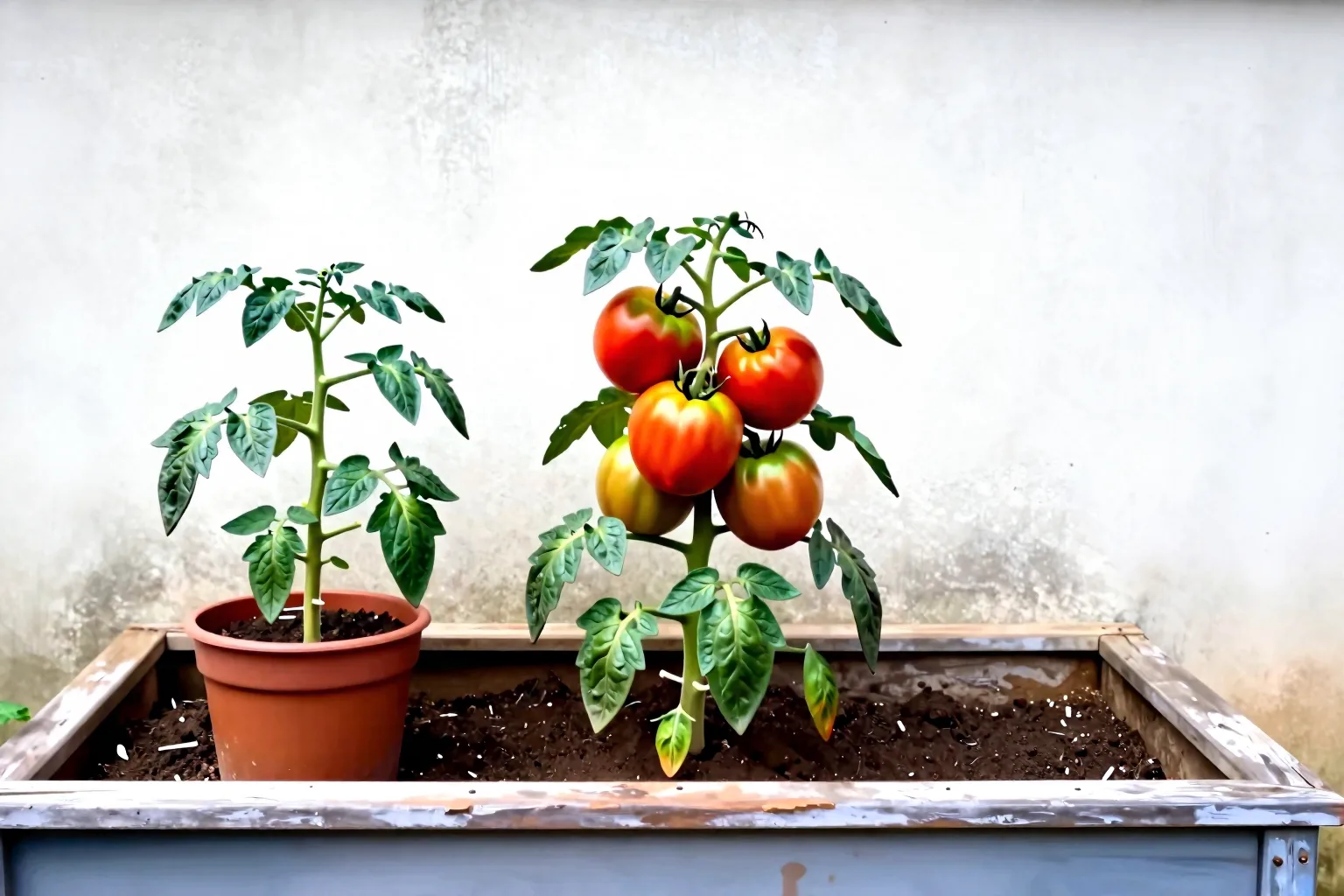
The short answer: choose ground for volume, pots for control
If you have a sunny patch of ground with reasonable drainage, reliable water and no major root competition, put vigorous crops there first. The plant can explore soil beyond the small space you would be able to provide in a pot. That gives a tomato, cucumber, squash or potato more room to build roots and leaves without asking you to refill a small moisture reservoir several times a day in hot weather.
A pot is the better answer for a balcony, rented property, contaminated or badly compacted soil, and any plant that needs to move into shelter. You can replace its growing medium instead of repairing an entire bed. The trade is direct: the boundary is yours to control, but every litre of that boundary dries, warms, drains and loses nutrients on its own schedule.
For a small garden, I’d judge the methods by four things: how much light the crop receives, how much root volume it needs, how easy it is to water, and whether the site is safe and accessible. A pot is not a smaller version of the ground. It is a different root environment with a useful mobility advantage and a recurring maintenance bill.
Before you choose, test the site you actually have
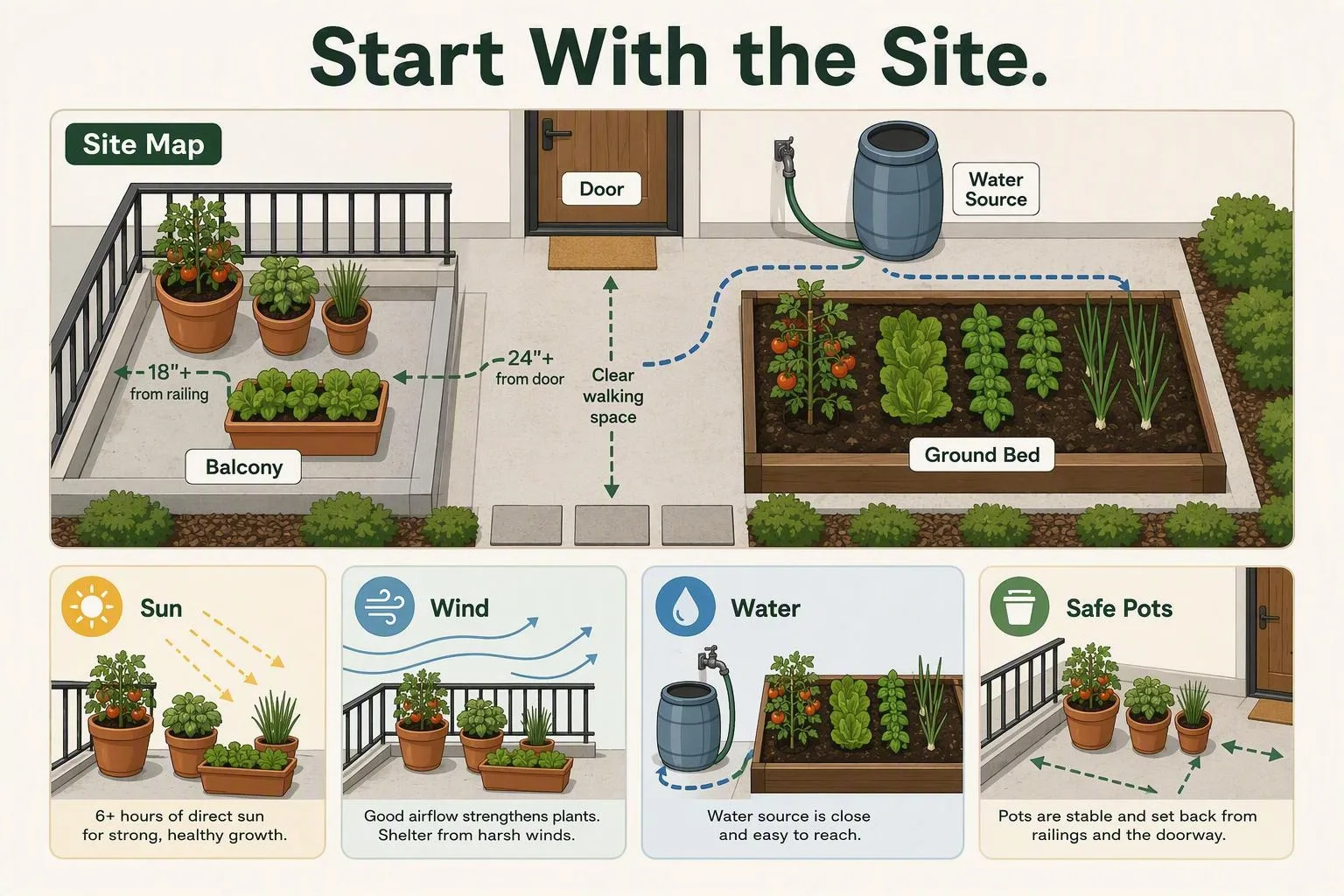
Start with the site, not the seed packet. A container cannot add sunlight, remove wind from a balcony or make a weak railing suitable for heavy wet pots. The first inspection should tell you whether the real problem is light, soil, water, weight or access.
Mark the useful sun
Watch the proposed growing area through a full day and mark direct light at several points, not just the brightest patch at lunchtime. Direct sun is light reaching the leaves without a building, railing, tree or neighbouring wall blocking it. Note when the shadow arrives, how far it moves and whether the sunny patch is on the floor, a ledge or a railing.
One or two hours of direct sun can support a modest planting of lettuce, some herbs, spring onions and radishes. It limits tomatoes, peppers, cucumbers and squash because those crops must build a substantial canopy before they flower and set useful fruit. Moving a plant from ground to a pot changes the roots; it does not create missing light. Use How much sun do vegetables need on a balcony? as a companion check before buying fruiting crops.
Then check the work around the plant
- Wind: mark the exposed edge. Wind increases water loss from leaves and can turn a tall plant, support and pot into a tipping hazard.
- Water: trace the route from tap to plant. If the route crosses stairs or a narrow doorway, a few larger containers will be easier to manage than many small thirsty ones.
- Surface: count the pot, wet mix, support and mature plant together when checking the balcony, rooftop or patio. Ask the landlord, building manager or local authority about restrictions before concentrating heavy containers in one place.
- Access: leave room to inspect leaf undersides, harvest without brushing through the plant, and move a pot safely before frost.
A strip of masking tape on the floor makes this audit concrete. Mark the sunniest footprint, the path to the tap and the position where a trellis would stand. If the tape leaves no space to kneel, turn a watering can or carry a pot out, the layout is already too crowded.
Consider a 2 m × 0.6 m balcony with 90 minutes of direct sun, a tap near the door and strong wind at the railing. A sensible first plan is a couple of shallow boxes for greens and radishes, a pot of chives or parsley near the accessible side, and no full-size tomato. The crop list is being shaped by light and labour before any soil is purchased.
A pot’s litres, not its diameter, set the root limit
Capacity matters more than the headline diameter. Two pots labelled 30 cm (12 in) can hold different amounts if one is tapered, thick-walled or shallow. Measure the inside width and usable depth. For a straight-sided cylinder, multiply radius × radius × depth × 3.14 using centimetres, then divide by 1,000 to estimate litres. A 30 cm-wide and 30 cm-deep cylinder works out at about 21 litres (5.5 US gallons); a tapered pot with those outside dimensions holds less.
The table gives planning floors for one plant or a modest cluster. These are not guarantees. Variety, climate, watering access and the shape of the container can move the answer upward. A crop with a small root system can share volume more successfully than a tall fruiting plant, while a deep container gives better anchorage than a shallow tub with the same number of litres.
| Crop | Starting volume | Useful soil depth | What the target covers |
|---|---|---|---|
| Leafy greens | 5–8 L (1.3–2.1 US gal) | 15–20 cm (6–8 in) | A small cut-and-come-again planting |
| Radishes | 5–8 L (1.3–2.1 US gal) | 15–20 cm (6–8 in) | A loose, shallow root run |
| Carrots | 10–15 L (2.6–4 US gal) | 25–30 cm (10–12 in) | Short or medium-rooted varieties |
| Bush beans | 10–15 L (2.6–4 US gal) | 20–30 cm (8–12 in) | A compact planting with nearby support |
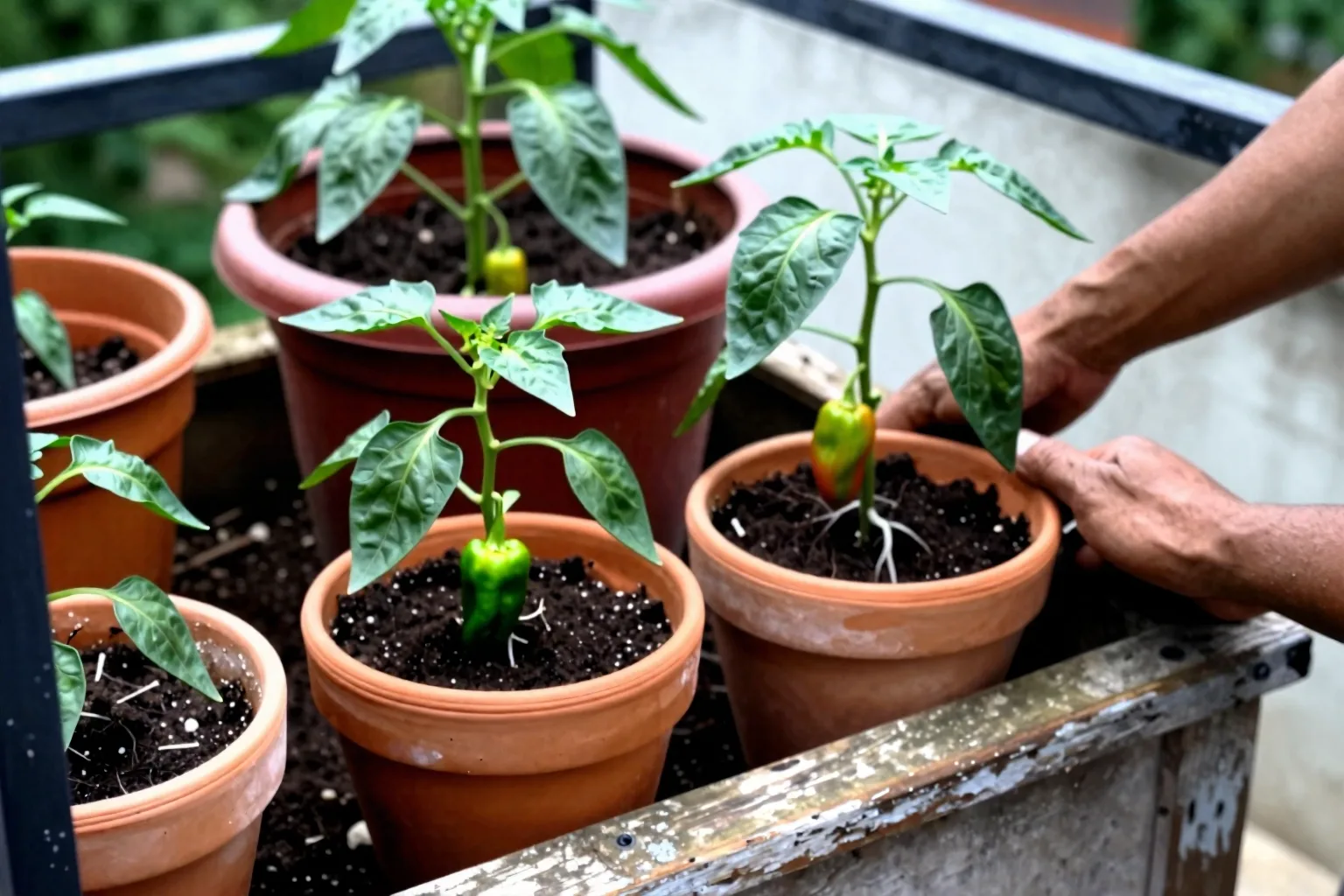
| Peppers | 15–20 L (4–5.3 US gal) | 25–30 cm (10–12 in) | One mature plant with room to anchor |
| Patio tomato | 15–20 L (4–5.3 US gal) | 30 cm (12 in) | One compact or determinate plant |
| Full-size tomato | 20–30 L (5.3–7.9 US gal) | 30–40 cm (12–16 in) | One plant with a stake or cage |
| Cucumber | 20–30 L (5.3–7.9 US gal) | 30–40 cm (12–16 in) | One trained plant with frequent checks |
That is why a 12-inch pot may suit a pepper but fall short for a large tomato. The tomato carries more leafy growth, a heavier crop and a taller top that needs anchoring. Roots fill a small volume sooner, the reserve of available water shrinks, and the container becomes easier to tip. A shallow 20-litre tub is not an automatic substitute for a 20-litre deep pot: the litres match, but the root shape and stability do not.
Do not fill a large container with gravel and count the displaced space as extra root volume. Gravel adds weight and takes up room. The fine potting mix above a coarse layer can hold a saturated zone at the texture boundary, while the mix still drains poorly as a root environment. Put the useful volume into a suitable mix with an open drainage hole. How much soil does a vegetable container need? Pot sizes in litres covers the volume calculation in more detail.
Watering exposes the biggest difference between the two methods
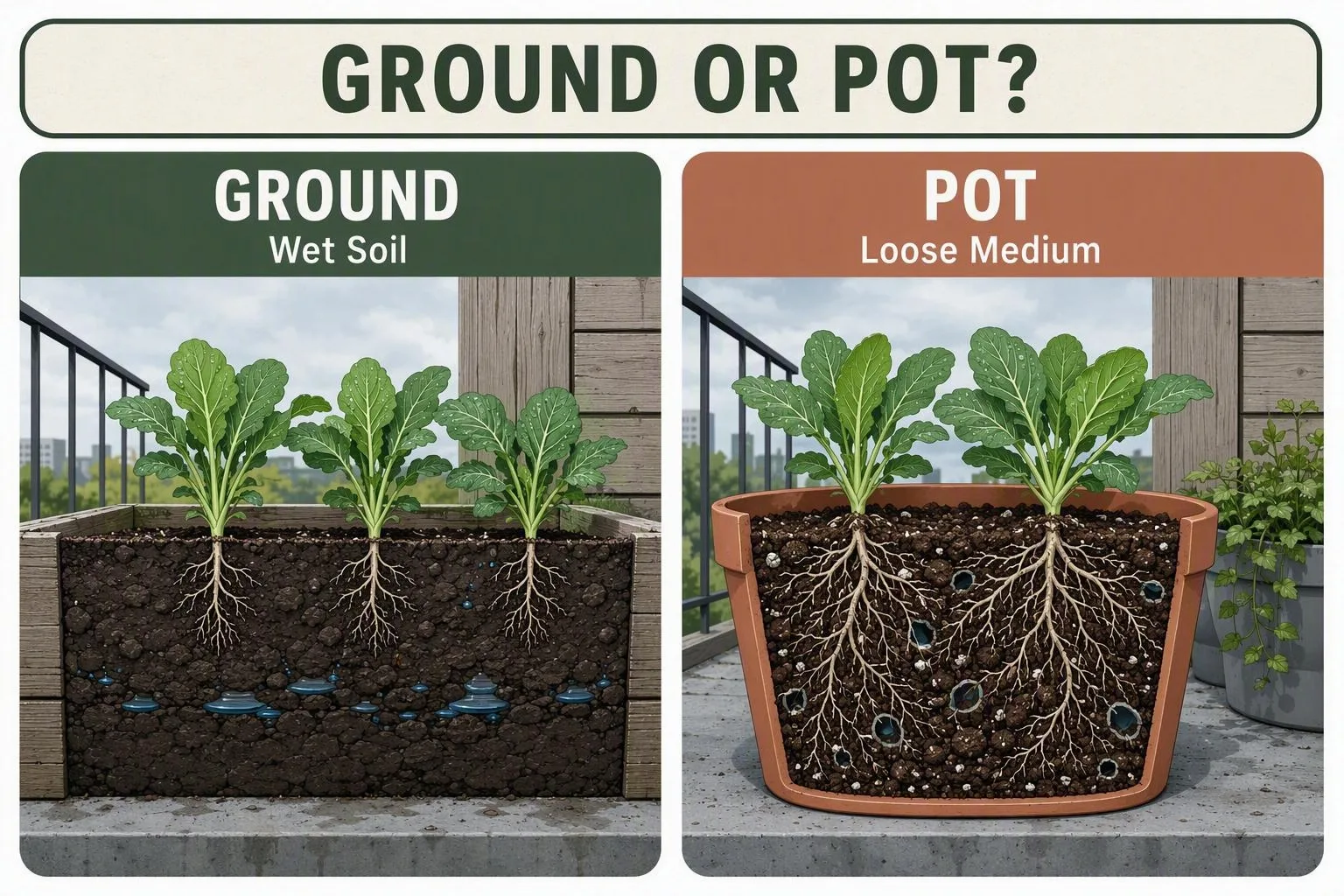
Ground soil connects the plant to a larger reservoir around and below its roots. A pot contains a finite plug of mix with exposed sides, a warm surface and a drainage hole at the bottom. Once that plug is dry, there is no surrounding soil for the roots to explore. Ground still needs watering during dry spells, but the change from moist to stressed takes place across a larger volume.
A perched water table is a saturated layer that remains above a pot’s drainage holes because water is held at the lower boundary of the mix. In plain terms, the top can look dry while the bottom stays wet. The reverse problem also occurs: the surface feels damp while water has slipped down a gap beside the pot wall, leaving much of the root ball dry. Drainage holes let excess water leave; they do not make every part of the pot equally moist.
Use this checking order
- Push a finger or slim wooden stick several centimetres into the mix, away from the stem. In a shallow tray, check gently because the full root zone is close to the surface.
- Feel the mix and, if the pot is safe to handle, lift or tilt it slightly. A very light pot with dry mix needs attention even if the leaves are still upright.
- Water slowly over the whole surface. Pause if water runs straight down the edge gap, then continue in smaller passes until a little drains from the holes.
- Empty standing water from a saucer after drainage has finished. A blocked hole or permanently full saucer should not become the hidden watering system.
In a plastic pot on a sunny, windy balcony, begin with a daily moisture check. In a glazed pot in part shade, check after two or three days. These are starting points rather than a calendar. Hot paving, a large canopy, pot width and the crop’s growth stage can bring the next check forward.
Underwatering leaves the mix dry, the pot light and the plant limp; the mix can pull away from the wall. Overwatering can also leave a plant limp, but the mix stays wet and lower leaves may yellow while growth slows. Soft stems, a sour smell or darkened roots strengthen the overwatering diagnosis, but no single leaf symptom proves the cause. Check the root zone before adding more water or feed. Keep How to water container vegetables during hot weather nearby during a heatwave.
Soil and feeding: one reservoir versus regular refills
Ground soil provides a larger mineral and organic-matter reservoir, but that reservoir is not automatically fertile. A bed can be compacted, depleted, alkaline, acidic or slow to drain. More root room inside a poor soil profile is not much of a bargain.
For pots, use a purpose-made potting mix rather than lifting ordinary garden soil into a container. Container mix is built to retain water while leaving air-filled spaces after drainage. Fine garden soil settles against itself inside a pot, reducing those spaces and making the surface harder to wet evenly later. The practical comparison is set out in Potting soil vs garden soil for containers.
Use this order: choose the mix for the crop, fill the pot to two fingers below the rim, settle it with water without pressing it hard, plant, water the root ball through, then begin feeding after active growth is established and the product label’s timing allows. The order matters. Dry mix can repel water around a new root ball, while hard compression removes the air spaces roots need. Extra fertiliser cannot repair a container that is too small or continually waterlogged.
Repeated watering carries dissolved nutrients out through drainage holes, so feeding becomes part of container care rather than a one-time addition. Ground nutrients can also be lost or locked up. For a bed, test before adding lime or fertiliser instead of diagnosing fertility from one pale leaf; moisture, roots, temperature and pests can produce similar colour changes.
Containers move with the weather; ground buffers it
Soil in the ground is connected to a much larger mass. A pot has a small root volume and exposed sides, so its mix responds quickly to a hot wall, cold air or a sharp night. Dark paving adds heat around the container, and a balcony edge exposes leaves to drying wind from more than one direction.
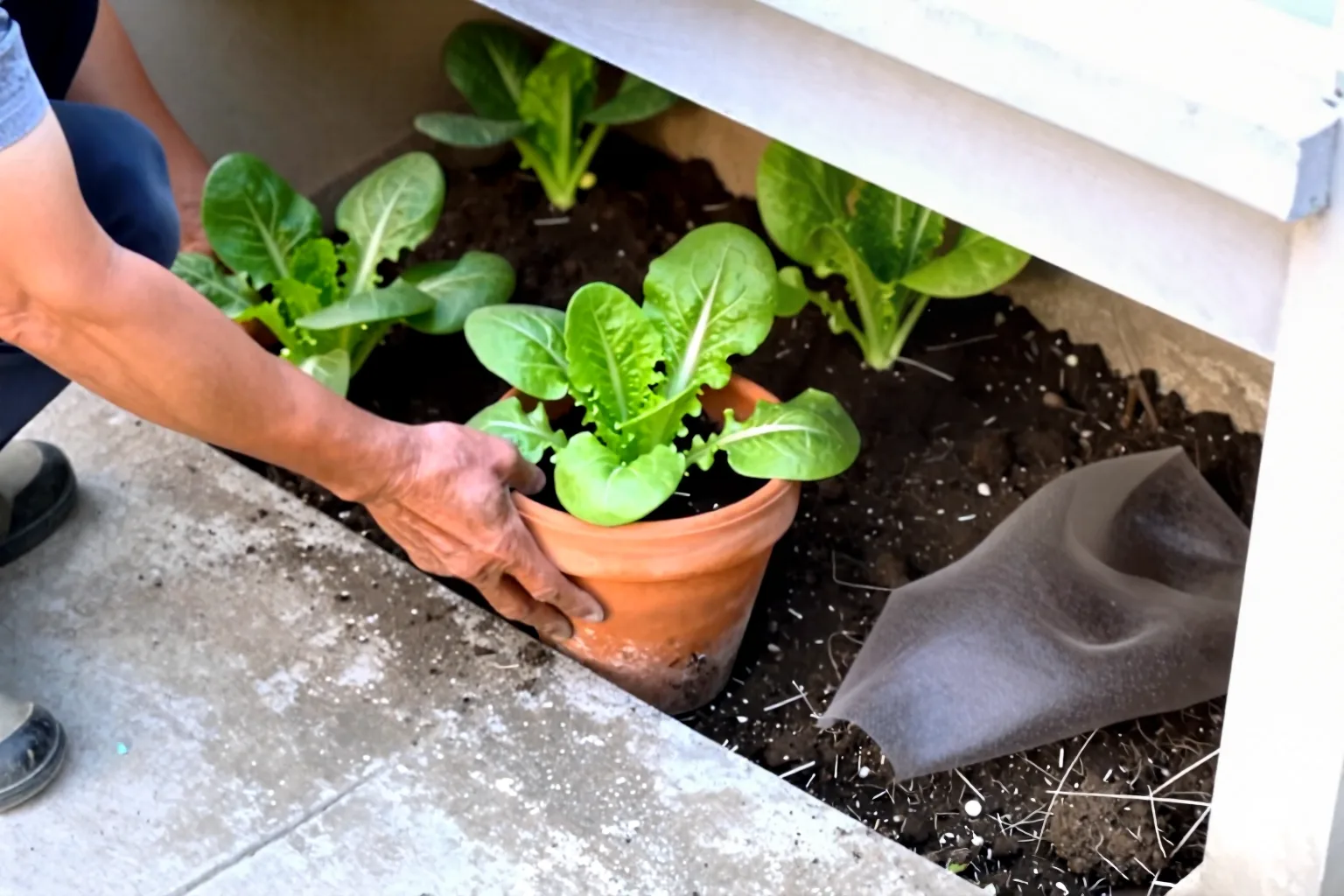
Ground is the steadier option on a suitable site. Pots are the adaptable option. A pepper can move away from a cold wall, seedlings can gather beside a sheltered door, and a tomato can go under cover before a frost. Mobility has a cost in time and lifting, so it earns its place when the plant really needs protection, not merely because the pot is easy to move.
Moving a container helps only if the new position still supplies enough light. A sheltered corner that is dark for most of the day may stop the stress while also stopping useful growth. Keep the plant close to its measured light zone, and use shelter to reduce wind or rain exposure rather than automatically choosing the shadiest location.
Pests, disease and plant support follow different rules
Pots make inspection and isolation easier. A suspicious plant can be moved away from the rest, its surface cleared and its mix replaced at the end of the season. That control is valuable, but a pot does not prevent aphids, whiteflies, caterpillars or fungal disease. Leaves still need checking, particularly on the undersides and around new growth.
Ground crops bring a different set of jobs: weeds, tree-root competition, compacted areas, soil-borne disease and slugs in damp conditions. Their larger root systems and lower centre of gravity make a vigorous plant less dependent on a small container wall for stability, but the bed is harder to isolate if a soil problem appears.
Install stakes, cages and trellises before roots fill the container or while the plant is still small. Pushing a support through a mature root ball can cut roots, and attaching a large sail-like canopy to a light pot can tip the whole unit. Secure a tall support to the container only if the container is heavy and wide enough; otherwise anchor the trellis independently and train the plant to it.
Crop-by-crop: where each vegetable usually performs better
The best method changes with the crop’s root demand, spread and response to movement. Compact or determinate varieties are more practical in pots than vigorous indeterminate forms. In the table, a pot recommendation assumes the root volume, light and watering access match the crop; the ground recommendation assumes the soil is usable rather than merely available.
| Crop | Usual advantage | Why | Conditions for the other method |
|---|---|---|---|
| Lettuce and herbs | Pots for small spaces and clean access | They fit shallow boxes and can be kept close for cutting. | Ground is better for succession plantings if the soil stays evenly moist. |
| Radishes | Either method | They need loose, shallow soil and finish before a large canopy develops. | In pots, use at least 5–8 L (1.3–2.1 US gal) and keep the mix evenly moist. |
| Carrots | Pots when ground is stony or compacted | A container gives control over depth and texture. | Ground needs a deep, loose root run; choose short or medium-rooted varieties in smaller pots. |
| Bush beans | Ground for quantity; pots for a compact planting | Plants are productive in groups but still need moisture and support. | Use 10–15 L (2.6–4 US gal) for a modest planting and keep it near a support. |
| Peppers | Pots when mobility matters | One plant fits a 15–20 L (4–5.3 US gal) container and can be moved from cold exposure. | Ground needs full light, warm soil and a site where the plant can remain undisturbed. |
| Patio or cherry tomatoes | Pots for compact varieties | A determinate or patio plant matches a 15–20 L root zone better than a sprawling vine. | Ground is the easier route for vigorous varieties, with a cage or stake installed early. |
| Cucumbers | Ground if trellis space is available; pots if vertical training is possible | The plant’s spread can occupy more space than its roots. | Use 20–30 L (5.3–7.9 US gal), steady moisture and a strong trellis from the start. |
| Potatoes | Ground for a larger planting; pots for the hilling experiment | A container keeps the crop contained and makes harvesting accessible. | Use a large, well-drained container and add mix around growing stems as they extend. |
| Squash | Ground | Its leaves and runners consume floor space even when root volume is adequate. | Try only a compact bush type in a very large container, around 40–60 L (10.5–15.9 US gal), with room for the leaves. |
Potato hilling means adding more mix around the lower stems as the plant grows, leaving the newest leaves above the surface. It is not simply filling a pot once and waiting; the crop needs enough height and volume to receive those additions without burying the foliage or trapping water around the stem.
A well-sized pot can produce a useful crop, but it is not a miniature bed. Harvest is constrained by container volume, light and the number of watering mistakes the plant can tolerate. That makes a single pepper, a compact tomato or a box of greens a sensible use of limited space; a sprawling squash in a small pot is a poor exchange even if the seedling looks healthy at purchase.
Four cases where ground is the wrong answer
In-ground growing is not automatically superior just because it is traditional. Four site problems can reverse the choice.
- Unknown or potentially contaminated soil: If a site has an uncertain history, pause before planting edible crops. Use a clean, purpose-made food-growing container while you arrange appropriate local testing or advice. Do not treat a layer of compost on top as proof that the soil below is suitable.
- Persistent waterlogging: If the bed stays saturated after rain, roots lose access to air. A container with an open hole and a free-draining mix gives a more controllable root zone, provided the pot is not left in standing water.
- Severe compaction: Hard ground restricts root penetration and makes water run across the surface or down cracks. A pot replaces that profile immediately; a ground bed needs the compaction addressed rather than hidden beneath a thin mulch layer.
- Tree roots or paving competition: Established roots can occupy the same shallow zone vegetables need, while paving reflects heat and leaves little planting room. A container separates the crop from those competitors, though it creates a new watering job.
Treated timber is not automatically suitable for edible crops, and a decorative container with an unknown glaze should not be assumed food-safe. Choose a vessel sold or clearly described for growing food when the material is uncertain. For region-specific crop and irrigation examples, consult University of Minnesota Extension’s container vegetable guidance. For questionable urban soil, EPA’s lead-safe gardening guidance is a useful starting reference before you grow food there.
A hybrid plan usually beats a winner-takes-all choice
A raised bed is the middle option: it provides more root volume than a pot, but that volume remains finite, and its exposed sides can let the mix warm and dry faster than unrestricted ground. It is useful when the soil is poor but a balcony is not available; it is not a way to ignore water access or weight.
When both methods are available, allocate crops rather than choosing one system for everything:
- Put vigorous tomatoes, cucumbers, potatoes and squash in suitable ground when there is full light, good drainage and enough room.
- Reserve pots for herbs, greens, peppers, compact tomatoes, carrots in hard ground and plants that need moving.
- Use containers for early starts that can move into the best light, then transplant only if the ground is ready and the plant will not be held back by cold soil.
This arrangement also divides the work. Ground reduces the frequency of moisture checks but brings more weeding and less control over the root medium. Pots simplify access and soil replacement but demand regular watering, feeding, staking and occasional lifting. The best plan is the one that fits the time and water route you will still have in midsummer.
Make the decision with a one-week site test
For the next seven days, mark direct sun in the morning, midday and late afternoon. Note the windy edge, the heat from nearby walls or paving, and whether water can reach the site without a risky carry. After rain, inspect the proposed ground for standing water and press a finger into it to judge whether the surface is merely damp or compacted below. Measure the usable container footprint, including the space needed to walk, harvest and move a pot. Check landlord, rooftop or building restrictions before bringing home wet mix.
By the weekend, your site check and pot inventory should give you a buying decision: ground for vigorous crops if it is sunny and drains well; containers if soil or access is the obstacle; or a small hybrid plan if both spaces pass. Buy one crop that matches the measured light, one correctly sized pot or prepared patch, and enough suitable mix to fill the root zone. Do not spend on several undersized pots until the first watering route and the plant’s actual space are working.