Hand Pollinating Squash Plants in Pots: A 5-Minute Guide
A squash plant can make plenty of flowers and still give you no zucchini if the female blossom opens after the bees have gone or the pollen is washed into a damp clump. Hand pollinating squash plants is usually a five-minute job, but the useful part is catching the flower during its short morning window.
I check at sunrise or within the first one to three hours after a blossom opens. I find the male flower, move its dry pollen onto all three lobes of the female stigma, then leave the plant alone. The transfer is quick; identifying the right flowers and keeping the root zone steady are what decide whether the tiny fruit continues growing.
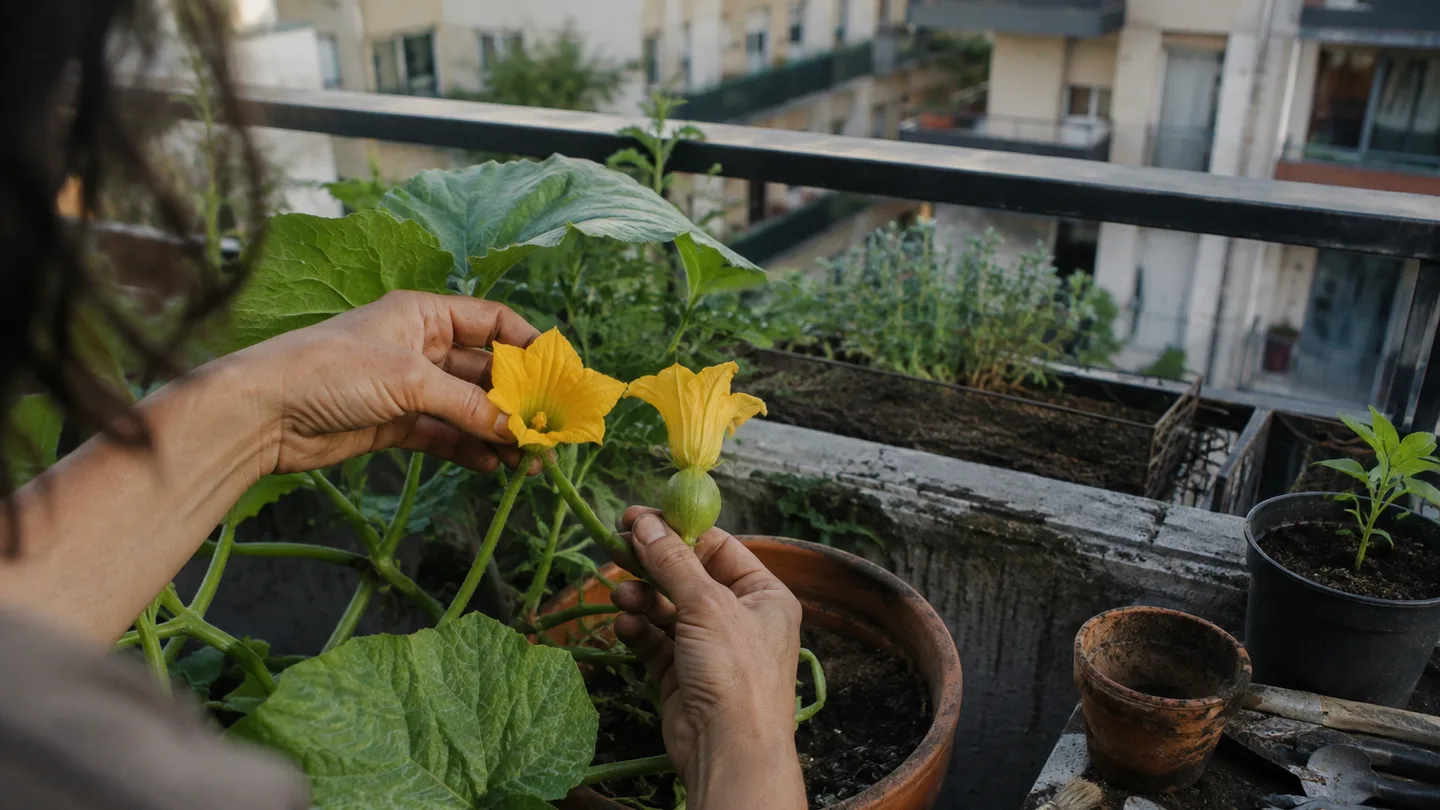
Find the five-minute window: male versus female squash blossoms
For the summer squash I grow in containers, I treat the early morning as the main pollination window. Squash blossoms often open wide enough to work with in the morning, then close, wilt or become difficult to handle later in the day. A flower that has already folded shut is a poor candidate for reopening and pollinating by force.
Look at the stem first. A male flower usually sits on a slender stem with no swollen baby squash behind the petals. Inside, the pollen-bearing part is called the anther. It looks like a raised, slightly ridged structure covered with loose yellow pollen.
The female flower has a swollen ovary directly behind the petals. That small swelling is the immature squash, not just a thick stem. Inside the flower is a stigma with three lobes. Those lobes are the surfaces that need to receive pollen.
That distinction matters because brushing pollen onto a male flower will not set fruit. If I am unsure, I follow the stem back toward the plant. The flower with a miniature squash behind it is the one I want to pollinate.
Balcony plants can need more help than squash growing beside a busy garden. A railing, wall or screened balcony can reduce insect access, and male and female flowers may not open on the same morning. Hand pollination does not create flowers that are missing, but it gives an open female blossom a better chance when a bee has not visited.
Container size adds another limit. For a compact summer squash, I plan on roughly 19–38 litres (5–10 gallons) of potting mix. That is my practical working range, not a universal law for every cultivar. In a smaller pot, the plant has less root volume to draw from, dries faster and has less room to recover from a hot or windy day. A stressed plant may abort a flower even when pollen was transferred correctly.
There is also a useful distinction if you are thinking about seed saving. My practical understanding is that pollen from a compatible squash plant can affect the next generation grown from saved seed, while the squash swelling now is judged by whether the current flower received pollen. I treat those as separate questions: eat the fruit developing this season, and think about pollen sources before saving seed for a future crop.
The transfer itself: one male flower, one three-lobed stigma
I use either the male flower itself or a small, clean paintbrush. The flower method is faster when a fresh male is open beside the female. The brush is handy when the male and female flowers are awkwardly positioned or when I want to use one male flower on more than one female. In both cases, dry, loose pollen matters more than the tool.
My five-minute sequence
- Inspect the flowers. Work in the morning while the petals are open. Confirm that the target flower has a swollen ovary behind it and a visible three-lobed stigma inside. If the petals are closed and the centre is wet, I leave that flower and look for a newly opened one.
- Choose a fresh male flower. Pick one with an anther carrying loose yellow pollen. If the anther looks slick, clumped or washed clean, it is not the best source for the job. A dry flower from the same plant is usually the simplest choice.
- Expose the anther. Pinch or fold the male petals back gently. I do not pull the flower against the female ovary. The goal is to reveal the pollen-bearing surface without shaking the pollen onto the soil or crushing the blossom.
- Touch the pollen to the stigma. With the male flower, lightly roll or dab the anther across each of the three stigma lobes. I make sure all three receive visible pollen rather than making one heavy swipe in the centre.
- Leave the female flower alone. Do not keep rubbing after the pollen has transferred. Close the petals only if the flower is exposed to heavy rain or a rough breeze, and do so without tying the blossom tightly around the swelling fruit.
With a paintbrush, I first touch the bristles to the male anther. Then I touch the brush lightly to each stigma lobe. A brush that is wet from washing, rain or morning condensation can pick up a paste instead of loose grains, so I use it dry. I also avoid sharing a brush between different squash types if I am trying to keep saved seed predictable.
In my own balcony setup, my first missed flower was easy to misread. I found a female blossom at breakfast with a damp centre, and I had watered over the plant the previous evening. I tried to work with it anyway, but the blossom was already closing and the pollen did not move cleanly. The next morning I waited for a fresh male flower, folded back its petals and used the anther directly on a newly opened female. That changed my routine: I now check the flowers before watering overhead, rather than blaming the plant as soon as one tiny squash drops.
The delicate part is the female flower. The swollen ovary behind it is the fruit you are trying to keep growing. Do not squeeze it, twist the stem or drag the petals across the stigma. A light touch is enough because the aim is contact with the pollen-bearing surface, not force.
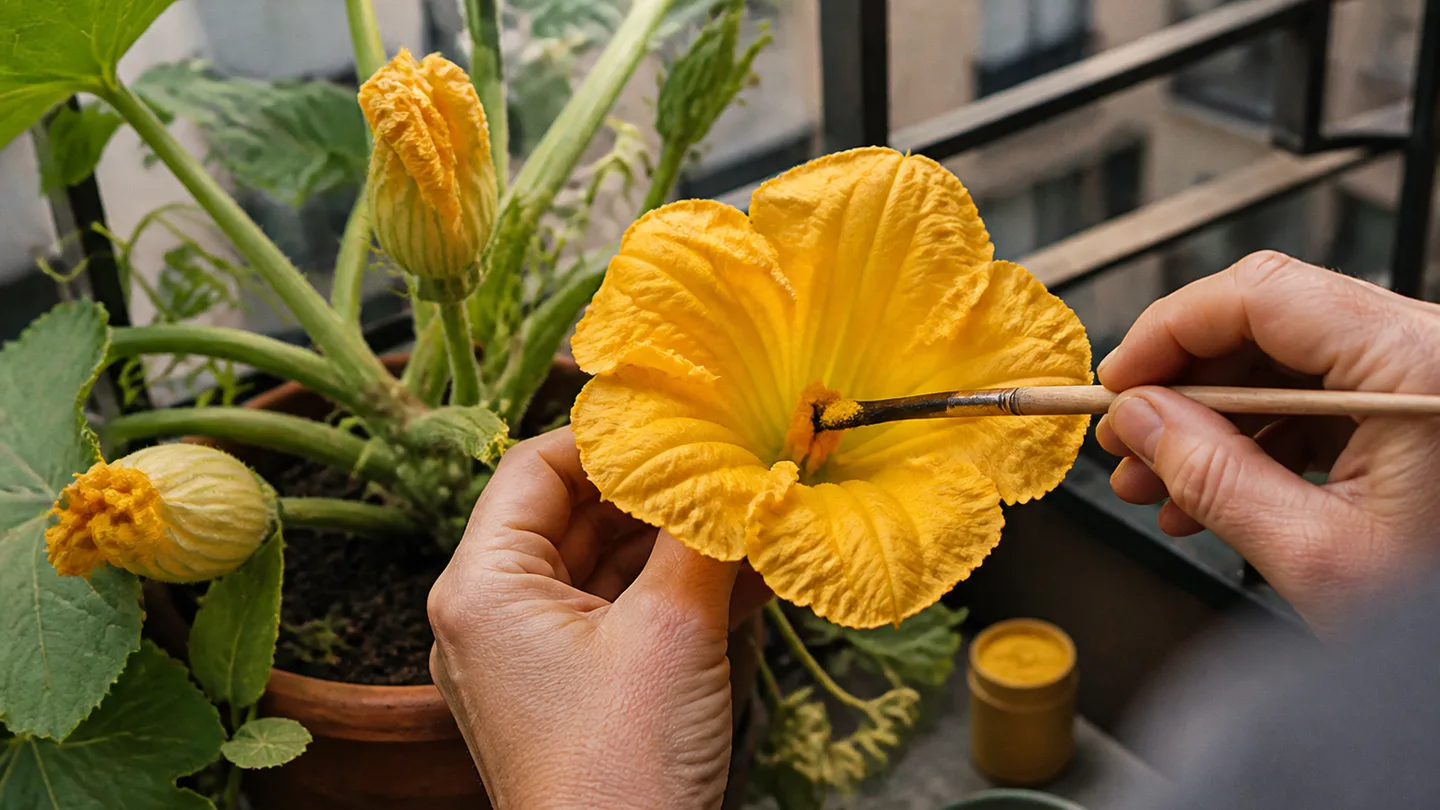
If no male flower is open that morning, I do not substitute a closed blossom and hope for the best. I check again the following morning. Squash plants can produce male and female flowers on different schedules, especially while they are young or under stress. A missing male flower is a timing problem, not proof that hand pollination has failed.
For a small balcony crop, this is the whole job: identify the female, find a dry male, touch pollen across the three lobes and stop handling the flower. The five-minute promise is realistic for the transfer itself. It is not a promise that every flower will become a harvest, because water, heat, root space and plant health still have a vote.
When pollination is not the real problem in a pot
A dropped squash flower is a symptom, not a diagnosis. I check the pollination first, but then I check the pot. A flower can receive pollen and still abort if the plant cannot maintain steady growth through a hot, dry or waterlogged spell.
| What I see | What I check first | What I change |
|---|---|---|
| No male flower is open | Whether the plant has more buds forming | Check again at the next sunrise rather than using a closed flower |
| Pollen looks wet or clumped | Rain, condensation or overhead irrigation | Wait for a dry blossom and water the mix at soil level |
| The plant is limp in heat or wind | Moisture below the surface and exposure around the pot | Water thoroughly, shelter the pot from harsh wind and check it again later |
| The mix is either bone dry or sour-smelling and saturated | The top 2.5–5 cm (1–2 inches) of mix and the drainage holes | Correct the watering pattern and clear blocked holes before pollinating more flowers |
| Flowers form but the plant stays weak | Pot volume, light, root crowding and feeding | Improve the container setup rather than adding pollen to every problem |
For watering, I use my finger rather than a fixed calendar. I feel the top 2.5–5 cm (1–2 inches) of mix. If that layer is dry and the pot has open drainage, I water slowly until some water exits below, then let the pot drain. In a plastic pot in full sun and wind, I may check again later the same day. In a larger glazed pot with less afternoon exposure, the next check may be the following day or later. The weather and pot material change the answer.
Checking the surface alone is not enough after a heavy watering. A blocked hole can leave the lower mix saturated while the top looks dry. That is why I lift the pot slightly, look for a clear drainage path and pay attention to smell and leaf posture. Overwatering and underwatering can both produce limp leaves, but a persistently wet, heavy pot points me toward drainage before I add more water.
Insufficient root volume creates a similar trap. A squash in a cramped pot may wilt quickly, recover briefly after watering and then struggle again as the leaves and fruit demand more water. Feeding can matter too, but I do not use fertilizer to compensate for a pot that cannot hold enough mix or a plant that is being alternately flooded and dried.
If you are deciding whether squash deserves that space, compare it with crops that make better use of a small container in Easy fruits and vegetables to grow in pots. The list in 30 best vegetables to grow in buckets is also useful when your balcony has more pots than floor area. My judgment is that one healthy squash plant is worth the room only if you can give it a large container, regular checks and a way to support leaves and stems without blocking the walkway.
For a broader diagnosis, I would check your local extension service's cucurbit flower guidance and your local extension service's guidance on squash flower opening and pollinator activity. Local weather, cultivar and balcony exposure can shift the timing, so I use general advice as a starting point rather than a rigid appointment.
Read the next 48 hours and decide whether to try again
After hand pollinating squash plants, I watch the female flower and the small fruit behind it rather than inspecting the petals repeatedly. My working expectation is that a successful flower stays green while the young squash remains firm and begins to enlarge over the next 24–72 hours. That is a projection, not a guarantee; severe heat, root damage or another stress can interrupt the process even after pollen reaches the stigma.
An unsuccessful blossom commonly turns yellow, softens or shrivels before dropping. Sometimes the tiny squash grows a little and then stops. That pattern points me back to the whole plant: I ask whether pollen was dry, whether all three stigma lobes were touched, and whether the pot swung from very dry to saturated.
One failed flower is not enough evidence to condemn the plant. Squash produces new blossoms, and a single morning may simply have offered the wrong combination of open flowers, dry pollen and manageable weather. I repeat the process on each newly opened female flower rather than reopening a blossom that has already closed.
My three-way decision path
- The fruit is swelling. Stop touching the blossom. Keep the mix evenly moist, protect the pot from a sharp drying wind and let the fruit develop.
- The flower is yellowing or has dropped. Check whether the stigma received dry pollen, then inspect the pot moisture and drainage. Try again on the next fresh female flower.
- No female flowers appear. There is nothing to pollinate yet. Look at the plant's general condition, wait for the next morning and avoid treating a run of male flowers as a pollination failure.
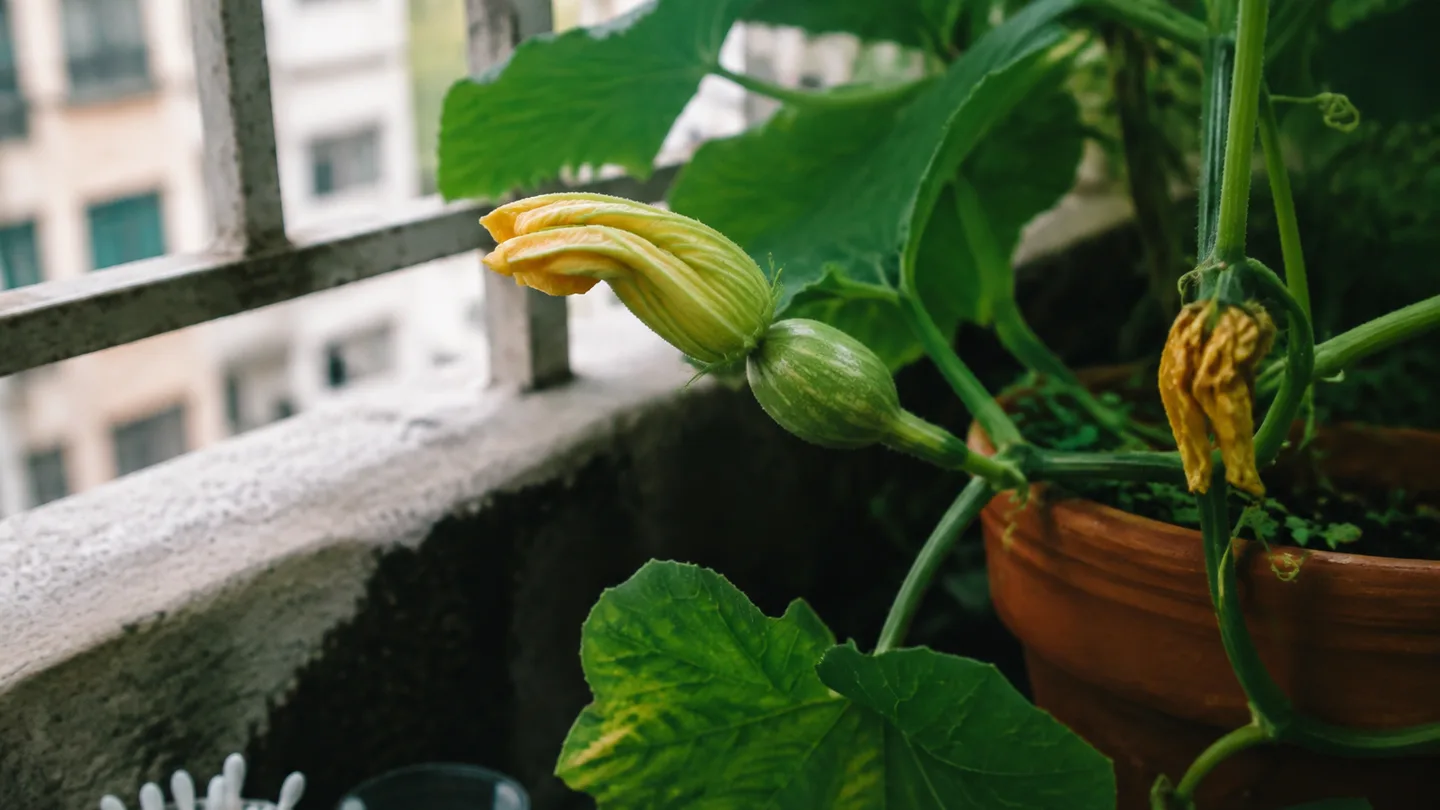
My simplest record is a note on my phone: date, whether a male and female were open together, and what the female flower looked like the following day. I do not need a spreadsheet. The note helps me separate a one-off missed flower from a repeated pattern caused by rain, heat, blocked drainage or a pot that dries too quickly.
Remember the order: look for the right flower, transfer dry pollen across all three stigma lobes, then check the root zone. If the fruit stays green and firm, leave it alone. If the blossom collapses, use the next sunrise as your next attempt rather than trying to rescue the old one.
Before you finish today, put the pot where you can inspect it at first light, check that the drainage holes are open and feel the top 2.5–5 cm of mix. Tomorrow morning, pollinate the next open female blossom before watering overhead, then leave a short note about what you saw.