How Often to Water Potted Plants in Hot Weather: 3 Checks
How often to water potted plants in hot weather? Check ordinary pots every morning. A 5-litre (1.3-US-gallon) terracotta pot in full sun may need a second check and watering the same day; a 30-litre (7.9-US-gallon) plastic tub can go two or three days when the mix is still damp around the roots.
The useful answer isn't a calendar date. I’d decide from three things in order: moisture at root depth, the pot’s watered-versus-dry weight, and what the plant is doing at that time of day.
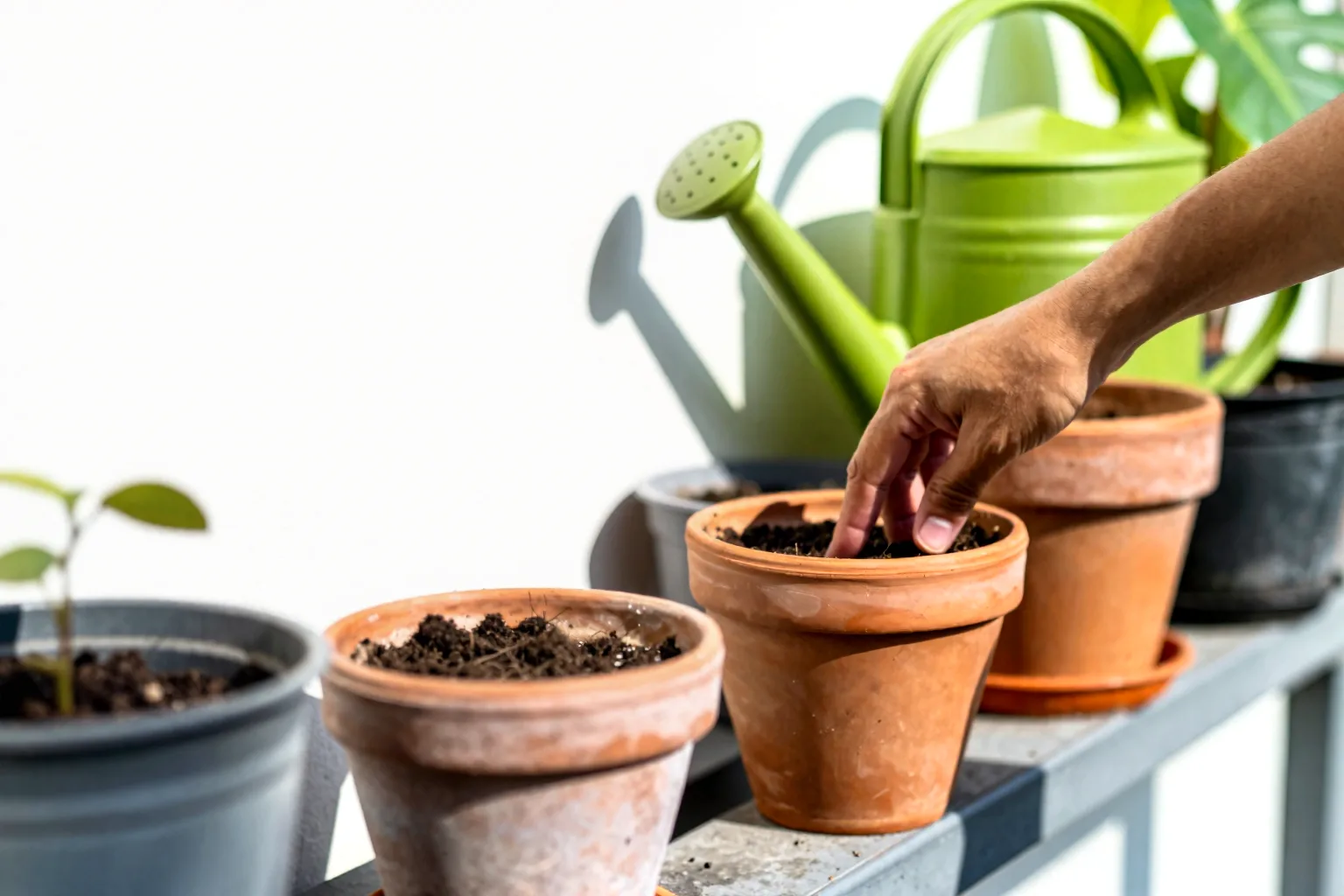
The short answer: check hot-weather pots every day, then water by the root zone
For ordinary containers filled with potting mix, make a morning inspection your default in hot weather. That doesn’t mean every pot needs water every morning. It means you look before the day’s heat and wind have turned a borderline pot into a wilted one.
Heat increases water loss in two ways. Moisture leaves the exposed surface and, to a lesser extent, the walls of some pots. The plant also loses water through its leaves, a process called transpiration. A garden bed can draw on a large surrounding volume of soil; a container has the finite amount of mix inside it.
That is why a small pot on a sunny, windy balcony can cross from damp to dry between breakfast and late afternoon, while a large container in a sheltered corner still feels heavy two days later. Humidity can slow evaporation, but a leafy or fruiting plant may continue using water quickly. Treat both the weather and the plant’s size as part of the check.
Self-watering pots belong to a different routine because their reservoir can supply the mix from below. Newly planted containers also need separate attention: the small original root ball may dry while the surrounding mix still looks wet. Check those pots in more than one place rather than applying the interval for an established plant.
The 3 checks that tell you whether a pot actually needs water
Run the checks in this order; each one corrects a misleading clue from the one before it. You’re trying to find out whether water is available where the roots are, not whether the surface looks pale or a leaf happens to droop.
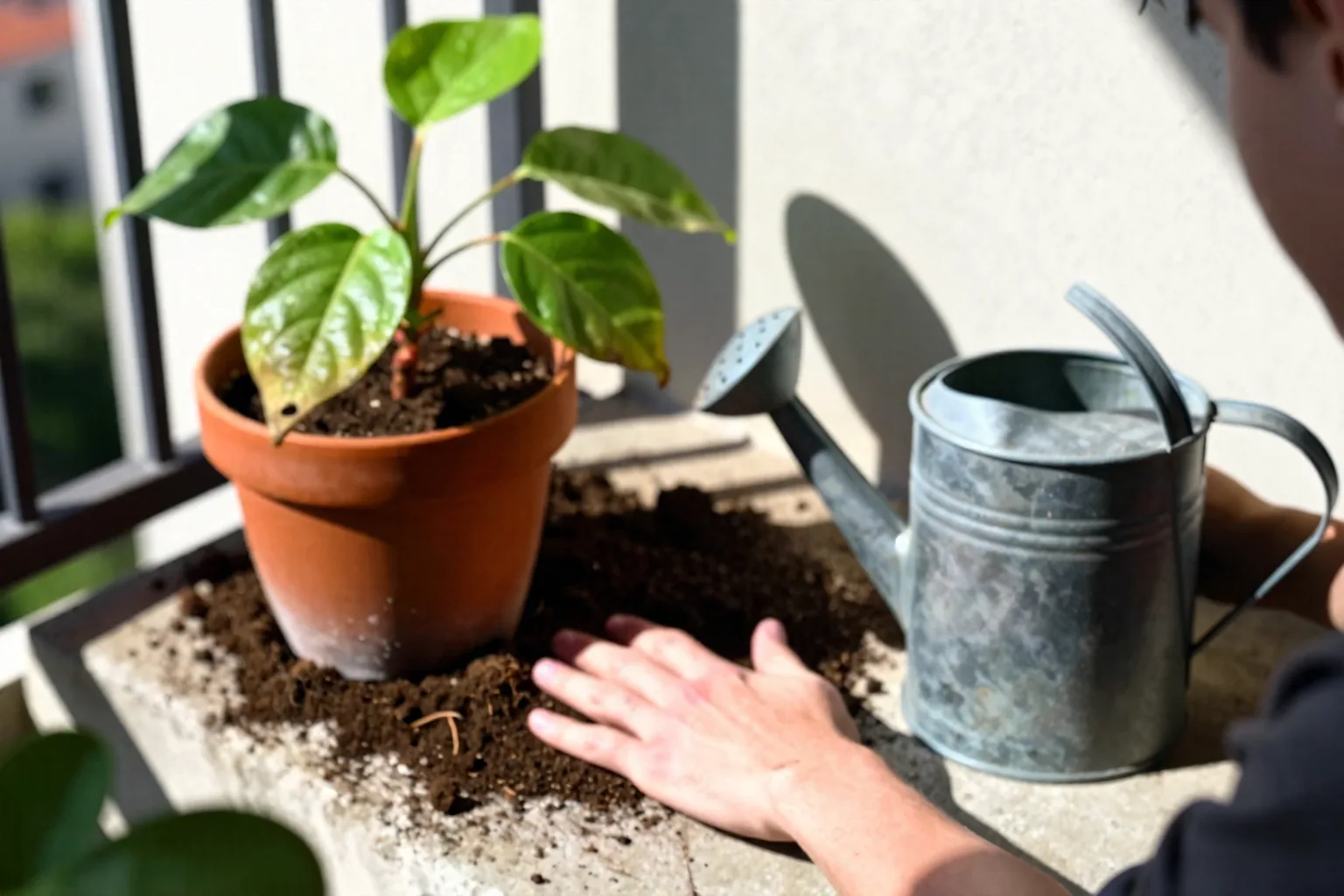
- Probe the mix at root depth. Put a finger, wooden skewer or narrow plant label into the mix rather than judging the crust on top. For many established pots, check roughly 2–5 cm (1–2 in) below the surface. Use the shallower end for shallow-rooted herbs and salad crops; in a deeper container with a large plant, check farther down if the top layer is dry but the plant still looks firm. Test two spots, because a pot can be wet beside the stem and dry near the wall, or the reverse.
- Use weight as a second reading. Water gives a pot noticeable mass, then that mass falls as water drains away or is used. If the container is small enough to move safely, lift it from the base or tip it slightly and remember how it feels just after a thorough watering. A light pot with dry mix at the probe depth is a strong reason to water. Don’t lean over a balcony rail with a heavy ceramic pot; use the probe and the drainage check instead.
- Read the plant in context. Compare its morning condition with its late-afternoon condition and with the mix. A plant that sags only during the hottest part of the day but firms up by morning can be experiencing heat stress even when the root zone is damp. Persistent wilt in the morning, paired with dry mix and a light pot, points much more clearly toward thirst. Leaves are evidence, not an automatic watering instruction.
Use this decision rule: dry at root depth plus a light pot means water slowly. Damp mix plus a heavy pot means don’t add water just because the leaves look tired; inspect heat, wind, roots and drainage. If the readings disagree, probe a second location and deeper into the container before changing the schedule. Root-zone moisture and pot weight should override a dry-looking surface or a single afternoon wilt.
A 5-litre terracotta pot and a 30-litre plastic tub do not keep the same schedule
These are useful starting bands for ordinary containers, not promises. The check interval can stay daily even when the watering interval is longer, particularly during a heatwave.
| Container volume | Hot-weather checking routine | Possible watering interval | Conditions that shorten it |
|---|---|---|---|
| Under 10 L (2.6 US gal) | Check every morning; inspect again late afternoon in sun or wind | Daily may be necessary; twice in one day is possible during extreme heat | Terracotta, black surfaces, exposed balcony, leafy or fruiting crop |
| 10–25 L (2.6–6.6 US gal) | Check every morning | Often every 1–2 days once established | Small plant in a hot spot can still dry daily |
| Over 25 L (6.6 US gal) | Check every morning at first; keep checking after hot, windy days | May hold for 2–3 days if the root zone remains damp | Dense roots, strong wind, afternoon sun, high leaf area or fruit load |
The table is a starting point, not a promise.
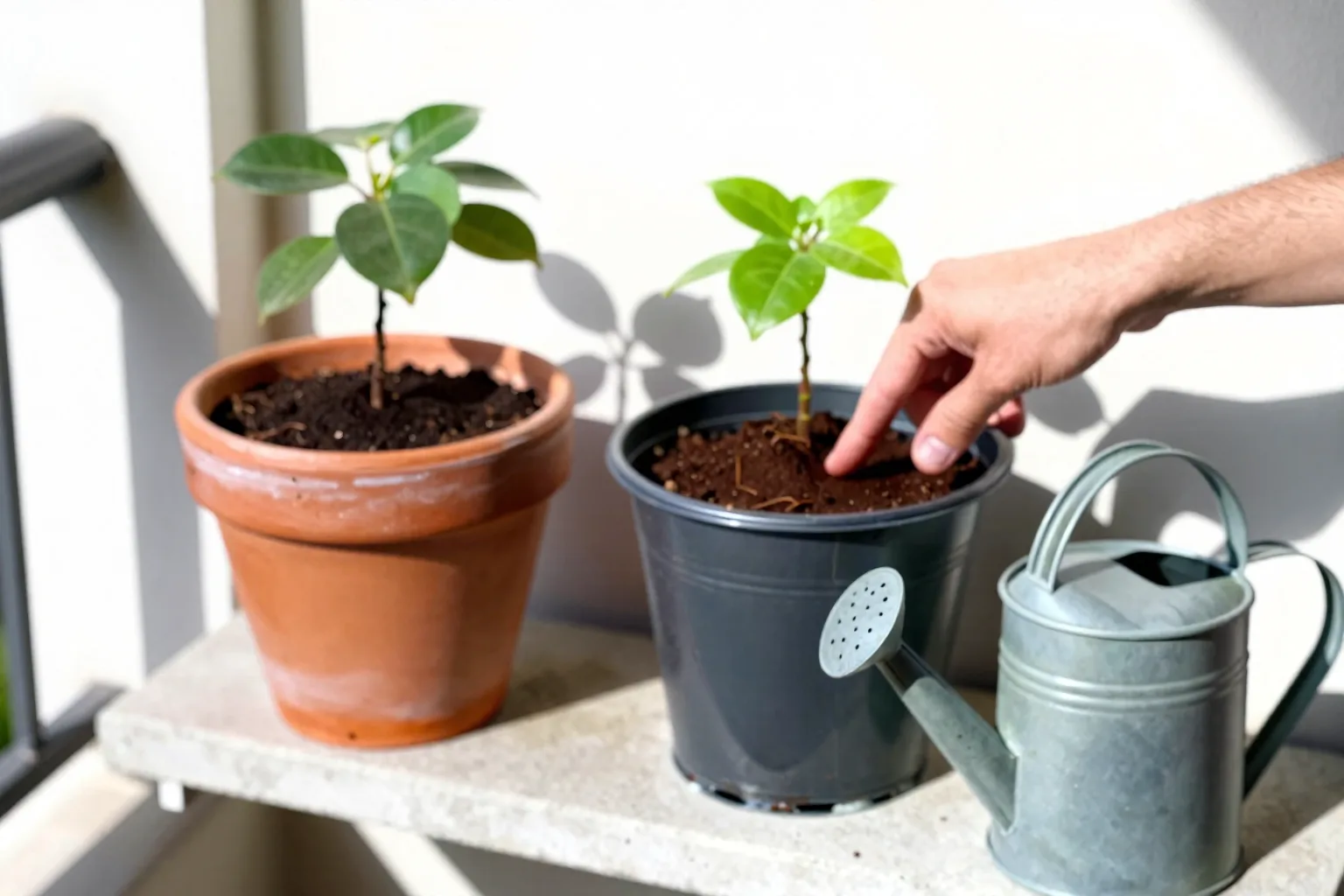
Material changes the result because terracotta is porous: some moisture can move through the pot wall and evaporate. Plastic and glazed ceramic block most of that wall loss, so they often hold moisture longer under the same conditions. That doesn’t make a plastic pot drought-proof. A large plant can fill the available mix with roots, and a dark container in reflected heat can warm the root zone and increase demand.
Wind is another schedule-flipper because it replaces the humid air next to leaves and the mix with drier moving air. Afternoon sun, low humidity and a fruiting crop push the interval shorter. A recently transplanted root ball can also behave differently from the surrounding mix, so probe both before assuming the entire container is equally wet.
If you’re choosing a pot rather than rescuing one, start with the crop’s root volume. How much soil does a container vegetable need? is the better question than how many times a week you want to water, because an undersized pot creates a maintenance problem before the weather arrives.
Water in passes, not one fast splash
Once the three checks say the root zone is dry, water thoroughly enough to wet the mix evenly. A fast splash at the stem can run through one channel and leave much of the root ball dry, especially after potting mix has shrunk away from the container wall.
- Start with a slow, even pass. Apply water around the surface, not in one concentrated spot. Move the spout or watering can so the whole root area receives some moisture.
- Pause when the first water reaches the drainage holes. Give the mix a few minutes to absorb water and expand back toward the pot wall. If the surface was very dry or water immediately ran down the sides, don’t assume the job is finished.
- Repeat the pass. Water again more slowly, watching whether the surface begins to accept water instead of shedding it. A second pass is usually more useful than increasing the force of the first one.
- Confirm, then drain. Probe again in a second spot or compare the pot with its watered weight. Empty a full saucer after drainage for ordinary potted plants; leaving the base submerged keeps the lower mix saturated and limits the air available around roots.
Morning is my default because the plant gets water before the strongest heat arrives, and the surface has much of the day to dry if a little foliage becomes wet. Evening watering is a reasonable fallback when the root zone is dry or a plant cannot wait. Water the mix rather than spraying the leaves, and don’t postpone a genuinely wilted plant with dry mix just to follow a morning-only rule.
A thin mulch layer can slow evaporation from the surface, but it cannot correct a small pot, blocked holes or a root ball that has dried into channels. If water keeps bypassing the mix, use How to improve drainage in pots without using gravel to inspect the holes, saucer and potting mix rather than adding a layer of stones.
Read the symptom before you reach for the hose
Hot-weather symptoms overlap, so check the container before treating the leaf. These are the next actions I’d take for the common patterns.
- Wilt only in the afternoon, then recover by morning: Probe the mix before watering. If it is damp at root depth and the pot still feels heavy, treat the timing as a heat-stress clue. Move a portable pot away from reflected afternoon heat or strong wind, then check again the next morning.
- Wilt persists from morning onward, with dry mix and a light pot: Water in two slow passes. If the plant remains limp after the mix has been rewetted and the pot has gained weight, inspect the root ball, drainage and recent transplanting instead of adding repeated shallow splashes.
- Yellow leaves, soft stems or weak new growth in wet mix: Don’t answer this symptom with more water. Check whether the saucer is full, whether holes are open and whether the mix is staying saturated. The useful comparison is How to tell whether a potted plant is overwatered or underwatered, because wilt can occur at both extremes.
- Water drains instantly but the container remains light: Probe in several places. Shrunken mix can pull away from the sides and form a gap, while a water-repellent dry patch can send water straight to the drainage holes. Rewet with slow passes and reassess the weight rather than congratulating yourself on fast drainage.
A heatwave turns a sensible schedule into a moving target. Grouping pots can reduce their exposure to drying wind, and temporary shade during the harshest reflected afternoon heat can protect a portable plant, but I wouldn’t put a sun-loving crop in deep shade for several days without checking how its light needs change. Keep the pots where they receive suitable light, then reduce the extra heat or wind if you can.
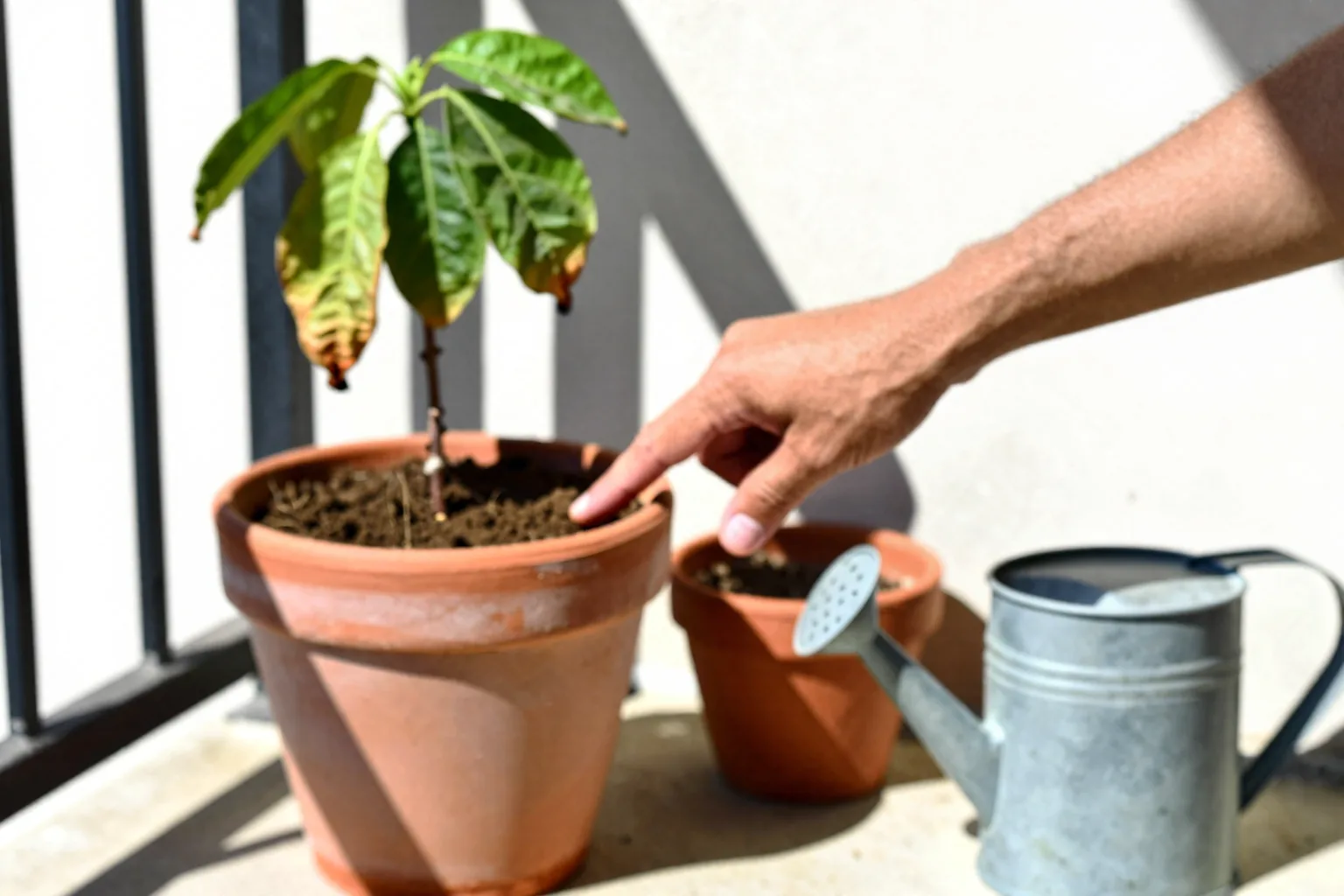
Run a simple 48-hour balcony audit before changing the routine:
- On the first morning, probe the root zone, note whether the pot feels light or heavy, and water only if the moisture and weight checks agree.
- Late that afternoon, inspect the leaves and the surface. If the mix is still damp, record afternoon wilt as a symptom rather than watering automatically.
- Repeat the root-zone and weight checks the next morning. Shorten the interval only when the pot is actually crossing from damp to dry before the next check.
For a short absence, test any capillary mat, reservoir or temporary wind protection before leaving; How to water balcony plants while away for a weekend covers that separate problem. A moisture meter can add a useful comparison, but in coarse, bark-heavy mix I’d treat it as supporting information and compare it with a probe, pot weight and morning plant condition.
If you want a second reference for the mechanism, compare the method with University extension guidance on container irrigation, soil-moisture checks, and root oxygen. For symptom language, botanical garden guidance on heat stress versus drought symptoms in container plants is a useful outside check, especially if a plant stays wilted after the mix is moist.
Tomorrow morning, choose one small pot and one large pot on your balcony. Probe each at root depth, feel the weight, and write down what the leaves look like before the heat begins. Check the same two pots again late in the day; those two observations will give you a more honest watering schedule than a reminder set for every second day.
Frequently Asked Questions
Should I water potted plants at night in hot weather?
Morning is the best default because it gives foliage and the container surface time to dry, but evening watering is reasonable when the root zone is dry or the plant cannot wait. Water the mix, not the leaves, and do not leave the pot standing in a full saucer.
How can I keep balcony pots watered while I am away for a hot weekend?
Test a deep soak, grouping, temporary wind protection, capillary mat, or reservoir system before leaving. A system that has not been tested can overwater one pot and leave another dry, so use the same root-zone and weight checks when you return.
Do moisture meters work for potted plants?
Treat a meter as supporting information rather than the sole decision, especially in coarse bark-based mixes where readings can vary within the same pot. Compare its reading with a probe at root depth, pot weight, and the plant's morning condition.