Sunscald on Tomatoes: How to Spot It and Protect Your Fruit
Sunscald on tomatoes usually starts as a pale, bleached patch on the side facing open sky, then may turn tan, papery, or cracked. On a balcony, the trigger can be a sudden gap in the leaves, not just a hot afternoon; restoring shade around the fruit is more useful than pouring extra water into the pot.
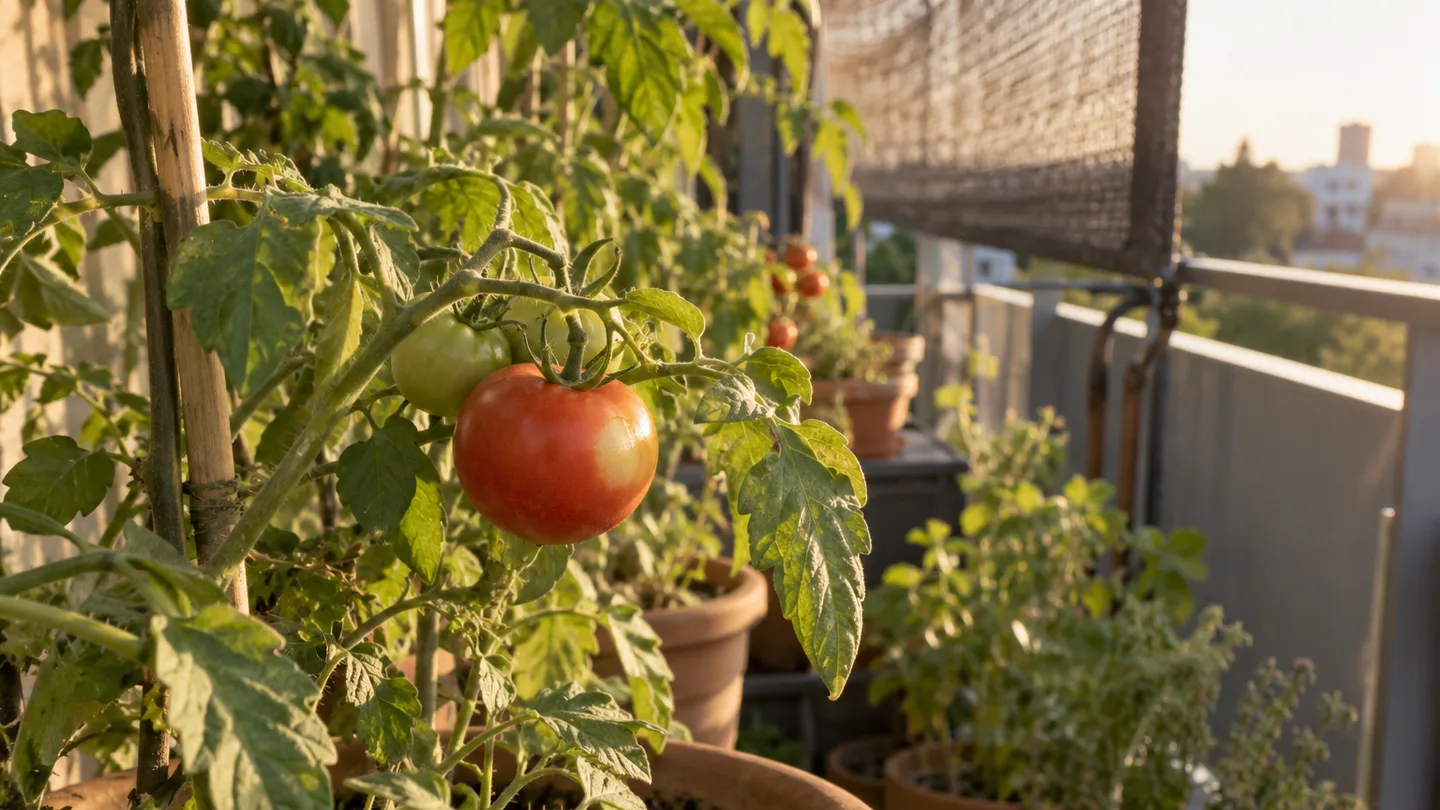
The pale patch on the sunny shoulder: identifying sunscald before it turns papery
Look first at where the mark sits. Sunscald commonly begins on the exposed side or shoulder of a fruit that was shaded before a leaf or branch moved. Early on, the skin looks bleached white, cream, or yellow. As the spot dries, it can become tan and papery; a badly damaged area may crack or sink.
That pattern is different from blossom-end rot, which starts at the flower end—the end opposite the stem—and often looks dark, sunken, and leathery. Location is a useful clue, not a perfect test: more than one problem can affect a tomato at once, and other fruit damage can also darken or soften. If you are comparing symptoms, the site’s guide to blossom drop tomatoes covers a separate heat-related problem: flowers failing before they set fruit.
For sunscald, ask: was this patch exposed to direct sun, and does the rest of the fruit remain firm? A bleached mark on the newly exposed side fits the pattern better than a dark mark confined to the blossom end. Soft, spreading decay or visible mold points beyond a simple sun injury.
Here is a worked balcony scenario, not a report of a trial: in late July, a grower has a determinate ‘Patio Choice Yellow’ tomato in a five-gallon (19 L) black plastic pot. After a lower leaf is removed, one fruit cluster that had been shaded is plainly exposed on the afternoon-facing side. If a pale patch appears there, the timing and location make sunscald a reasonable first suspicion. The useful response is to shade the cluster and check the plant, not to assume every blemish has the same cause.
Bright exposure, sparse leaves, hot fruit: the chain that causes sunscald
Leaves act as a screen between the sun and fruit. When that screen thins, direct rays reach the tomato skin; the exposed surface heats while the shaded side does not receive the same direct load. If the exposure is strong and prolonged, the affected tissue can be injured and later dry into the pale or papery mark described above.
Warm weather raises the concern, but air temperature alone cannot diagnose sunscald. Treat days around 90°F (32°C) and above as a risk cue when they coincide with bright direct sun and exposed fruit, not as a magic cutoff. A plant can face intense sun below that reading, while a hot day without direct exposure does not automatically mean the fruit will scorch.
Risk can rise after hard pruning, leaf loss from disease, or a plant that has become sparse under stress. The timing matters: a cluster that has sat under foliage may be abruptly uncovered by one removed branch or a snapped stem. When you prune, look through the plant from the sun-facing side before cutting. The question is not whether the plant looks tidy; it is whether the fruit will be left bare during the brightest part of the day.
Balconies add awkward angles. Sun can arrive from the side and reflect from a pale wall or paving, so a plant that seems shaded from above may still have an exposed shoulder. Check the fruit at the time the balcony gets its strongest sun rather than judging the spot from a morning glance.
Keep a living canopy over the fruit: pruning and support choices that matter
Keep healthy leaves that shade fruit, especially on the side that gets the hardest afternoon sun. Remove diseased or badly damaged leaves when needed, and prune with a reason—airflow, access, or removing a problem branch—not simply to make a container tomato look neat. A sparse plant may be easier to inspect, but that neatness can cost the fruit its protective screen.
Support the stem without forcing it into a sharp bend. Tie it loosely enough that the stem can thicken, and check that a cage or stake is not pulling a fruiting branch away from the canopy. If you are deciding which plant shape to expect, determinate vs indeterminate tomatoes explains why growth habits affect how you plan support and pruning.
My editorial judgment is to avoid pressing a leafy canopy against a hot wall or metal rail. A close surface can reduce air movement and add reflected or conducted heat right where the plant is already exposed; leaving a small gap gives you room to inspect the leaves and keeps the plant from being pinned against that surface. This is a practical precaution, not a claim that every wall or rail will damage a tomato.
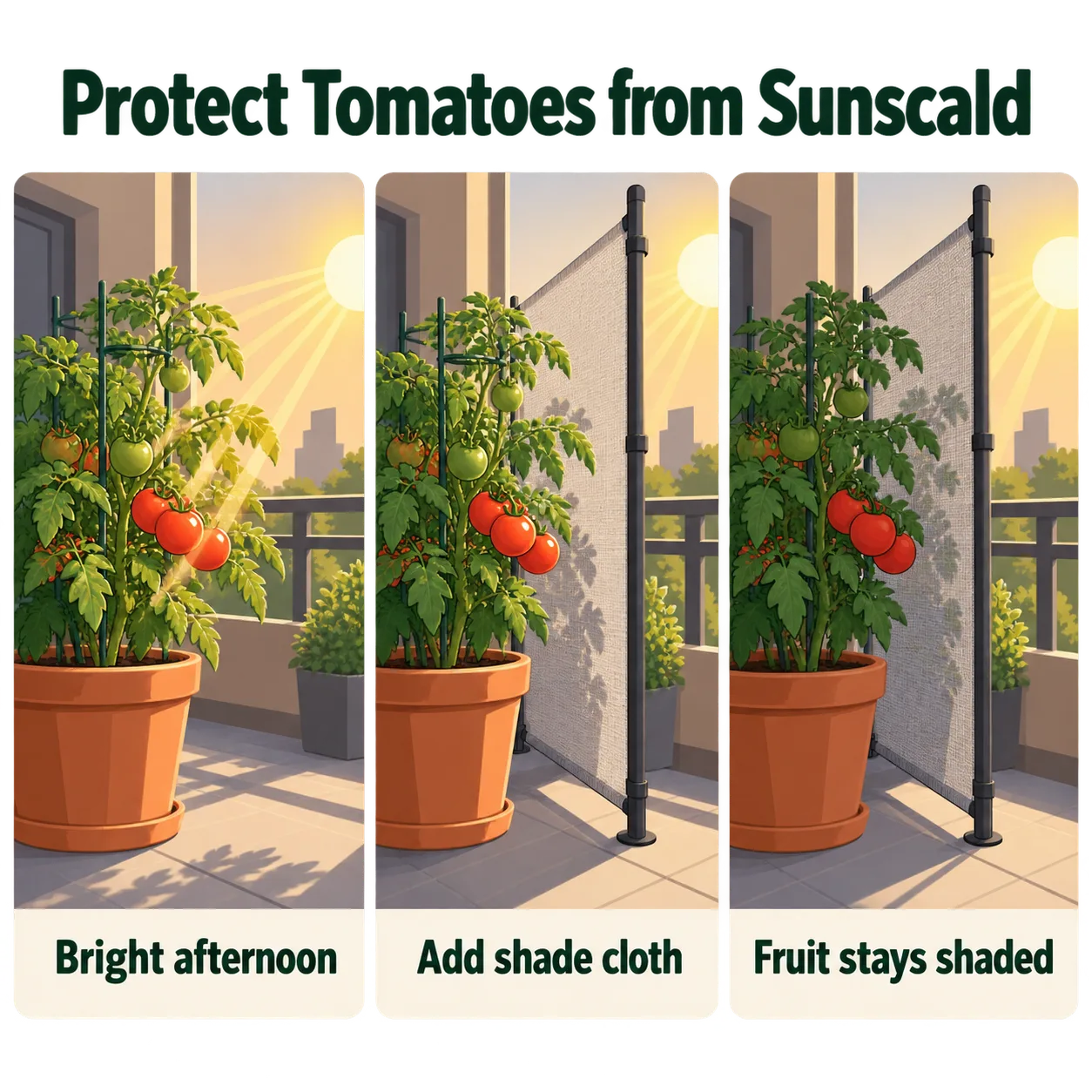
For a short spell of intense exposure, shade cloth can help. As a starting point, I’d choose cloth rated around 30% shade, then consider 40% if fruit remains exposed through strong afternoon sun. Treat those as trial settings, not universal prescriptions: the right amount depends on the balcony’s sun, heat, wind, and how much light the plant already receives. Secure the cloth so it does not flap into stems, and keep it from sealing the plant in.
More shade is not automatically better. A screen that blocks too much of the plant’s available light can make it harder for the plant to support continued growth and fruiting. If the leaves sit in shade for much of the day already, prioritize a short afternoon screen or a movable barrier rather than covering the whole plant from morning to evening. The practical goal is to shade exposed fruit during the harshest window while leaving the canopy bright for the rest of the day.
A heat-wave plan for balcony pots: shade first, then check moisture
When the forecast calls for a bright day near or above 90°F (32°C), start with exposure. Put up a screen on the sun-facing side before the hottest hours, or move the pot to afternoon shade if it is safe to lift and the new spot still suits the plant. A heavy container should not be shifted just to follow a general rule; use a screen if moving it risks a spill, strained back, or damaged plant.
Then check the potting mix. Feel below the dry surface rather than relying on how the top looks: a warm, breezy balcony can dry the surface while deeper mix still holds water. If the root zone is dry, water the mix slowly until excess can drain from the holes. If it is still moist, wait and check again later. Extra water cannot reverse heat injury on the fruit, and waterlogged mix does not provide a useful substitute for shade.
A fixed daily schedule is a poor fit for pots that differ in size, material, wind exposure, and shade. A small pot in a gusty, sunny position may dry sooner than a larger pot sheltered in afternoon shade. Check the actual mix and adjust to the conditions you have; don’t water just because the calendar says it is time.
For example, that five-gallon (19 L) black plastic pot in the worked scenario may warm quickly in direct afternoon sun, but the right response still depends on moisture at the roots. If the surface is dry and the mix beneath it feels moist, add shade and recheck rather than automatically watering. If the deeper mix is dry, water it thoroughly, let it drain, and keep the fruit screened. This separates two problems that can arrive together: exposed fruit needs protection from direct sun, while dry roots need water.
For a diagnostic cross-check, look for university extension guidance on tomato sunscald symptoms. For kitchen handling, consult food-safety guidance on moldy soft produce; neither reference changes the immediate balcony task of keeping newly exposed fruit out of harsh direct sun.
Spotted fruit: what to harvest, what to discard, and what to inspect next
A dry, firm patch that matches the sun-facing exposure pattern may be limited to the damaged skin. You can harvest that fruit and assess it in good light. If the rest is sound, remove the damaged area generously and use the tomato promptly rather than leaving injured tissue to deteriorate on the plant or counter.
Discard fruit with visible mold, soft spreading decay, leaking tissue, or an off smell. Sunscald itself is heat injury, not a contagious infection that jumps from one tomato to another; however, damaged tissue can break down, and a fruit that is rotting is no longer just cosmetically marked. When in doubt about a moldy or decayed tomato, use the cautious kitchen rule and discard it.
Do not confuse a new pale patch with blossom-end rot just because both can leave a blemish. Check where each mark begins, whether it is dry or soft, and whether nearby fruit has the same exposure. If several fruits on the open side show similar pale areas after a bright spell, restore leaf cover or add temporary shade. If damage is soft and spreading, remove the affected fruit and inspect the rest rather than treating the problem as simple sunburn.
After the next hot, bright day, stand beside the pot during the strongest sun and look for fruit newly visible through a gap in the canopy. Tie a loose branch back into place or position a screen before the following afternoon. That quick check is the next job; do it while the fruit is still firm and the exposed patch is only a warning.