When to Start Seeds Indoors: Count Back From Your Last Frost
A 6–8-week seed-starting window before May 15 lands around March 20–April 3. That’s the useful answer to “when to start seeds indoors”—but the date is a planning range, not a command to put every seedling outside on May 15.
I plan from the expected transplant date, then check the crop, the forecast and the space I can actually give the seedlings. On a balcony, a tray can run out of bright, usable room before the calendar says it’s time to plant.
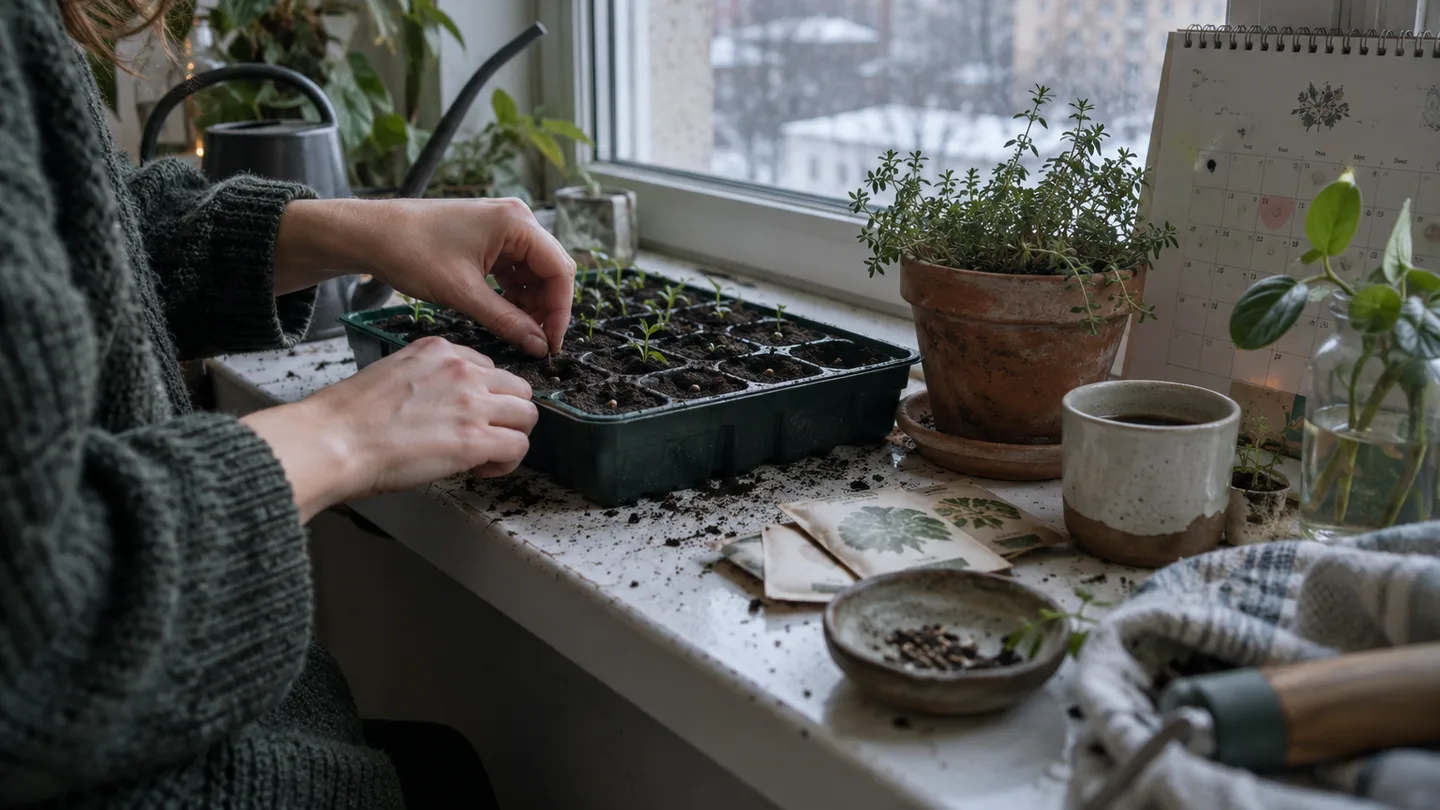
Treat the last-frost date as a planning anchor, not a promise
Look up the average last spring frost date for your area using a local Cooperative Extension spring frost-date calendar or another local climate resource. The word average matters: it describes a planning reference, not a guarantee that the next night after that date will be frost-free. For climate context, you can also check NOAA climate normals or local historical frost data, but use a local source rather than borrowing a date from a nearby city with a different elevation or exposure.
Then ask what you’re growing. Tomatoes, peppers, eggplant, cucumbers and squash are warm-season crops; a late cold snap can set them back, so I treat the frost date as a starting point for deciding when to transplant, not proof that conditions are safe. Many cool-season seedlings, such as cabbage or broccoli, can go out earlier once they’ve been hardened off and local conditions are suitable. The packet and local growing guidance help sort out the crop-specific details.
A balcony can complicate the local picture. A sheltered wall may hold warmth, while an exposed rooftop or a windy corner can feel harsher than a nearby garden. Pots also have less soil around their roots than plants in the ground, so they don’t have the same buffer against quick temperature changes. I use the local frost date to set the calendar, then let the actual forecast and the balcony’s exposure decide whether planting waits.
For the local date, search for your local Cooperative Extension frost-date calendar. A useful second reference is NOAA climate normals or local historical frost data; neither removes the need to check the forecast for the week you plan to plant.
Count back from May 15: the date math behind a 6–8-week start
Start with the date you expect to transplant outdoors. If that’s May 15 and the seed packet says to sow 6–8 weeks before the last frost, count backward from May 15: eight weeks is about March 20, and six weeks is about April 3. In that example, your indoor sowing window is roughly March 20–April 3.
For a date that isn’t easy to count in your head, use a calendar and mark the earliest and latest ends of the range. The early end gives a slower-growing seedling more time; the late end reduces the chance of keeping a fast-growing plant indoors for too long. A packet may instead phrase its timing as weeks before transplanting. Follow that anchor: don’t silently swap “before transplanting” for “before last frost” if your planned planting date is different.
Hardening off is the gradual introduction to outdoor sun, wind and temperature. It usually takes about 7–10 days, but don’t automatically add those days to the packet’s stated indoor-start interval. The interval is a guide to sowing; hardening off is the final transition before transplanting. Put the expected outdoor planting date on your calendar, reserve the preceding week or so for acclimating plants, and count back from the planting date for the sowing window.
In my balcony routine, I write the expected transplant week on the tray label as well as the sowing date. That small distinction helps when I’m looking at a cluster of pots later: a seedling’s age matters, but so does whether it has been acclimated and whether its destination is ready.
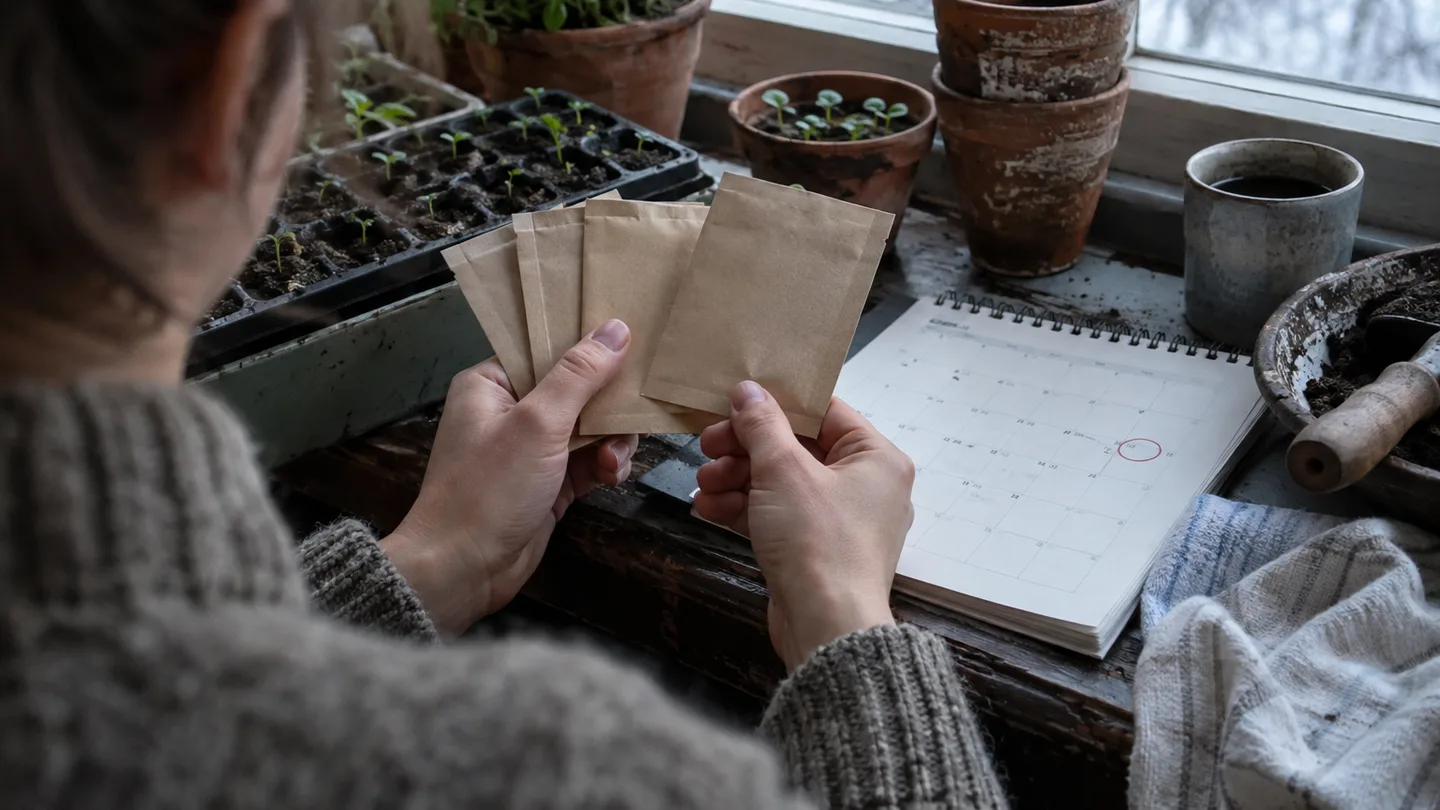
A crop-by-crop calendar: peppers, tomatoes, brassicas and squash
These are approximate guides, not universal cutoffs. Use the packet’s instructions when they differ, especially if it names a specific transplant stage or local timing. For the May 15 example, the windows below show how the usual ranges translate into calendar dates.
| Crop | Approximate indoor start | Before a May 15 transplant | What to watch |
|---|---|---|---|
| Peppers and eggplant | 8–10 weeks before | About March 6–March 20 | They get a longer indoor lead than quick-growing cucurbits; don’t let that become weeks in a cramped cell. |
| Tomatoes | 6–8 weeks before | About March 20–April 3 | Plan enough light and room to pot up if roots fill the starter cell before planting. |
| Broccoli and cabbage | 4–6 weeks before | About April 3–April 17 | These are cool-season transplants; their outdoor timing doesn’t have to follow warm-season crops. |
| Cucumbers and squash | 2–4 weeks before | About April 17–May 1 | They grow quickly and can become awkward to hold in small containers. |
The ranges are a practical starting convention I use for container plans, not a promise that each variety will reach transplant size on schedule. Seed age, warmth, light, and the variety itself can shift the pace. A packet’s directions take priority when they give a different window for the variety you bought.
Not every vegetable earns a place under the grow light. Beans are often simpler to sow directly where they’ll grow: direct sowing avoids an extra transplant step, and beans can be sensitive to root disturbance. If the weather and pot are ready when you want to sow, there may be little advantage to raising them indoors first.
For repeat crops such as suitable leafy greens, you can consider sowing a small new batch every 2–3 weeks while the season and growing conditions allow. That spreads the harvest instead of asking one tray to supply everything at once. It’s a useful balcony trade-off: a little less of one big flush, and fewer pots reaching harvest together.
When the calendar misleads: germination, light and indoor space
Two seed packets sown on the same day don’t necessarily produce equally ready seedlings. Seeds germinate at different speeds, and warmth affects how quickly they sprout and grow. After emergence, light and room matter: a warm spot with too little light can produce stretched stems, while a small starter cell can become crowded before outdoor weather cooperates.
For many seedlings, growers commonly use roughly 12–16 hours of daily light as a practical range, while following the fixture’s own guidance. Watch the plants, not just the timer. If new stems lean or stretch toward the light, bring the fixture closer within its safe operating instructions or improve the light reaching the tray. For a fuller explanation, see how much light seedlings need indoors; if the stems are already long and weak, the guide to leggy seedlings can help you diagnose the next step.
There’s a second clock besides the calendar: container space. If roots are circling the cell, pressing against its sides, or emerging from the drainage opening, the seedling may need a larger pot before it can go outside. That doesn’t mean you should move it up automatically at the first visible root. Check whether the root mass holds the mix together and whether the plant is drying out unusually fast; those signs make a pot-up more useful than simply giving every seedling a bigger home.
Seedlings held too long may become lanky, crowded, or difficult to water evenly. A plant that starts flowering in a small pot is another sign that it may be running ahead of its available space, though flowering alone doesn’t tell you exactly what to do. The useful question is whether you can provide adequate light, root room and watering until outdoor conditions are ready. If not, revise the sowing plan next time rather than starting even earlier.
The final 7–10 days: harden off, then check planting conditions
Don’t move a sheltered indoor seedling straight into full outdoor sun and wind. Over about 7–10 days, increase its outdoor exposure in stages: begin with a protected, shaded spell, then gradually allow more time outside and more direct sun. Bring plants back in or protect them when conditions are unsuitable. The exact pace depends on the weather and the plant’s response; pause or slow down if leaves look scorched or wilted after exposure. The step-by-step guide to hardening off seedlings is useful if you want a day-by-day plan.
Passing the last-frost date isn’t the only check for warm-season crops. Soil temperature is one clue: growers commonly use around 60°F (16°C) or warmer as a tomato planting cue, and roughly 65°F (18°C) for cucurbits such as cucumbers and squash. Treat these as approximate cues, not universal cutoffs; variety, local guidance and the conditions in the actual pot can change the decision. A sunny balcony pot may warm differently from a large garden bed, and the forecast still matters.
Cold-tolerant transplants follow a different path from tomatoes or squash, but they still need to be acclimated before living outdoors. Check the forecast, feel the potting mix and consider the plant’s exposure. If you’re unsure, waiting a few days is usually a more manageable choice than asking a warm-season seedling to cope with a cold night in a small pot.
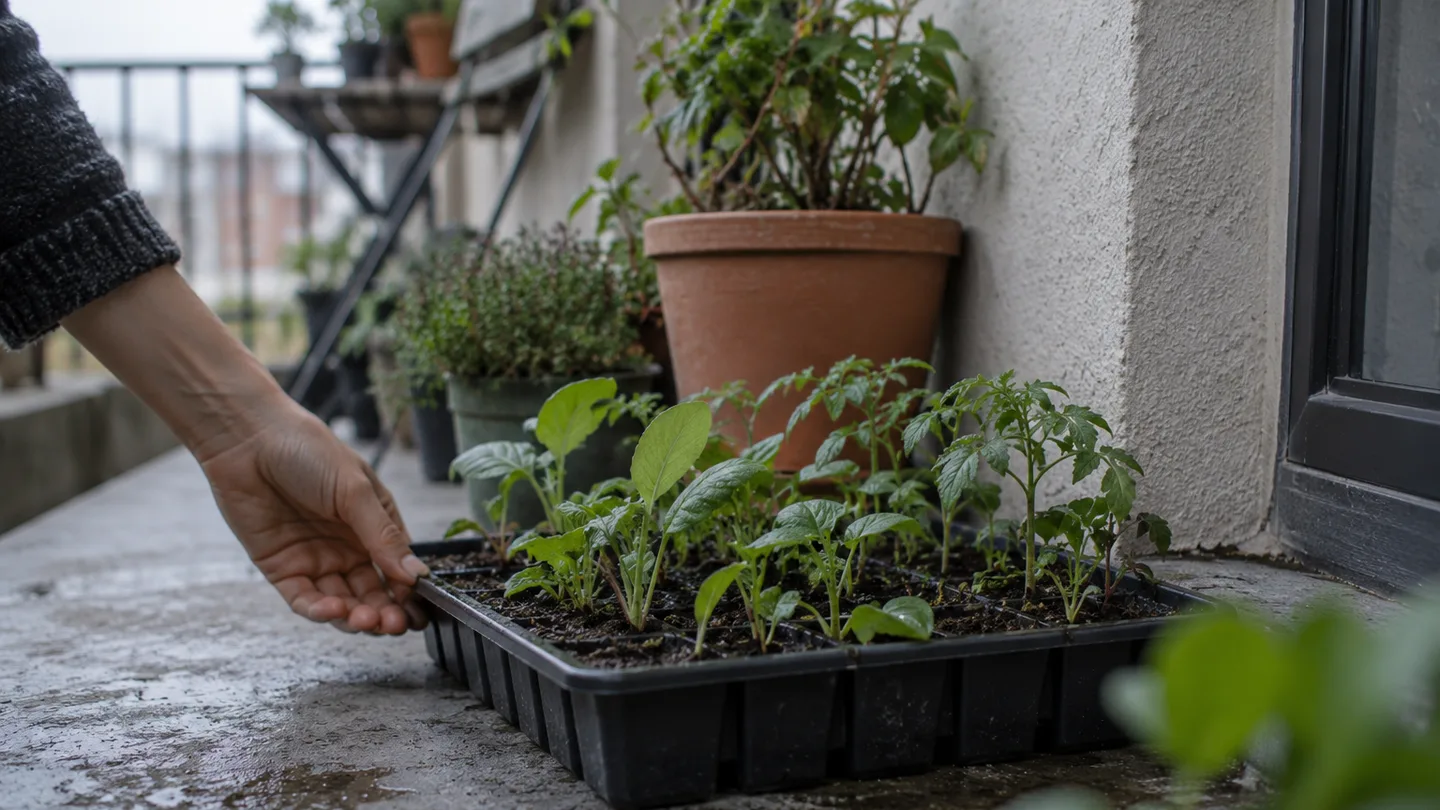
If you’re early or late, change the plan instead of forcing the date
If seedlings are ready before outdoor conditions are, first decide whether they have enough light and space to wait. A root-filled cell can be moved into a larger pot, using fresh potting mix around the root ball and watering it in. That buys room; it doesn’t make a cold forecast safe. Keep the plant where it gets suitable light, and avoid repeatedly moving it into ever-larger containers if the final planting date is close.
If you missed the usual indoor window, don’t automatically sow every crop anyway. For a crop that grows quickly or dislikes being held in a pot, a nursery transplant may be the more practical route if one is available. For crops suited to direct sowing, plant when local conditions are right. Some vegetables can still be started later, but the remaining season and the crop’s days to maturity matter; check the packet rather than assuming a late start will catch up.
For suitable greens, try a small follow-up sowing about 2–3 weeks after the first, provided the season still gives them room to grow. If the first batch is already struggling for light or space, don’t duplicate the same problem with another tray. I’d rather have a few seedlings that fit the balcony than a crowded lineup that all needs attention at once.
This week, find your local frost-date reference, choose the date you realistically expect to transplant, and write both ends of the packet’s sowing window on a calendar. Then check how much bright space you have for the seedlings before you decide how many packets to start.