Growing Pineapple From Top: How Long Until It Fruits?
A pineapple grown from a leafy top usually takes about 2–3 years from planting to ripe fruit: roughly 18–24 months to mature and flower, then another 5–6 months for the fruit to develop. Treat that as a planning range, not a countdown timer; a weak crown, cool conditions, or a dim indoor spot can stretch the wait or keep the plant from flowering.
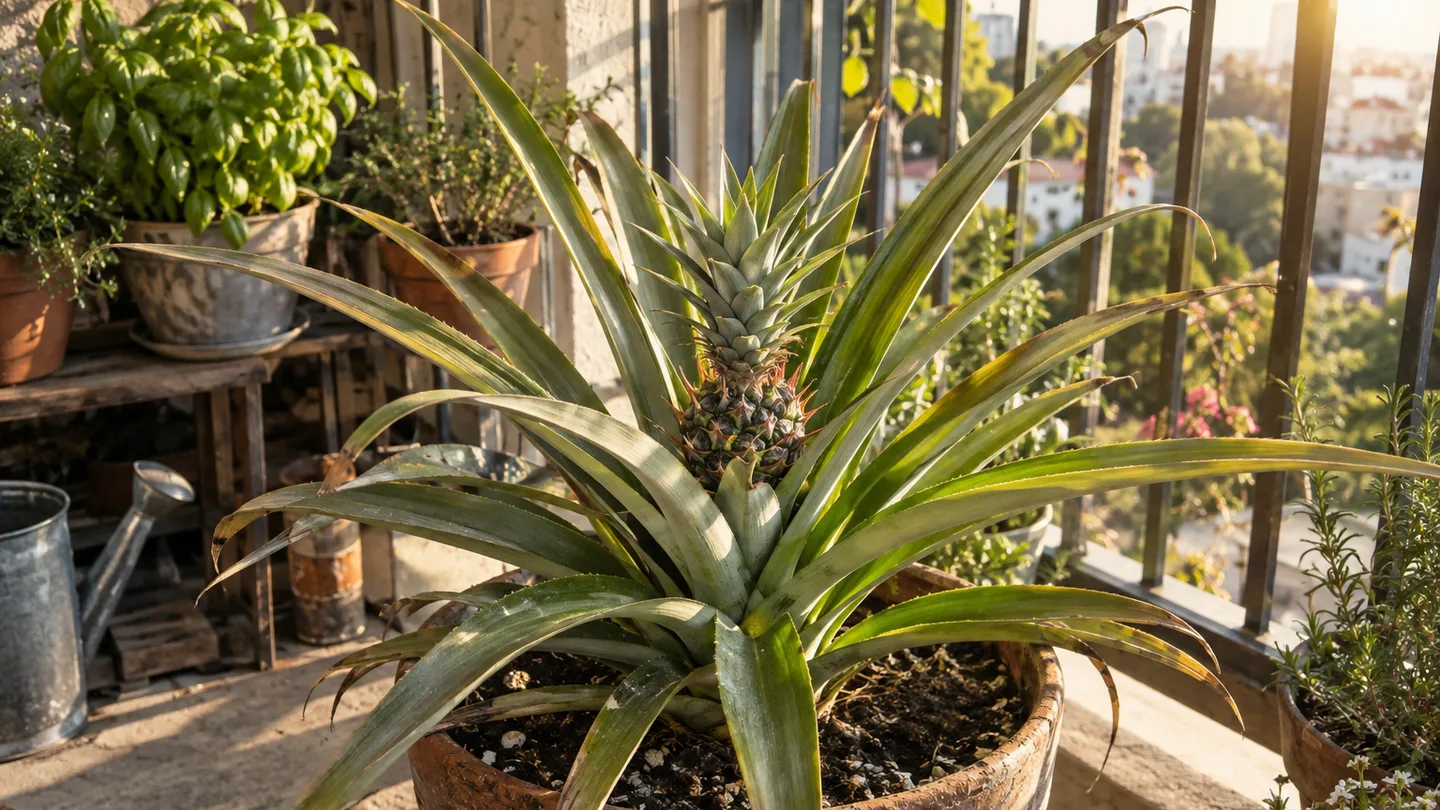
The clock in one line: expect about 2–3 years from crown to ripe fruit
It helps to think of this as two waits rather than one long, mysterious one. First, the crown has to root and build a substantial rosette of leaves. Then it needs to flower. Once a flower head appears, the fruit still has months of growth ahead of it.
| Stage | Working estimate | What to look for |
|---|---|---|
| Rooting and leaf growth | Part of the first 18–24 months | The base stays firm and the centre produces new leaves |
| Maturing before flowering | Often within roughly 18–24 months from planting | A large, established rosette; there is no reliable leaf-count deadline |
| Flower to developed fruit | About 5–6 months | A central flower head followed by a swelling fruit |
Adding the two planning ranges gives about 23–30 months, which is why “around two to three years” is a fair answer to how long pineapple takes to fruit. It is not a promise that your plant will follow a calendar. A crown that takes time to establish has less vigorous growth behind it, while weak light or cool conditions can slow the whole process.
For a balcony grower, the more useful question is whether you can offer enough light, warmth, root room, and time for a mature plant. A pineapple is a satisfying long project, but it is not my first pick if the main goal is fruit quickly. If you’re still choosing a first container crop, compare the commitment with easy fruits and vegetables to grow in pots.
My practical judgment: grow the top if you enjoy the plant as much as the eventual fruit and can give it a bright place for the long haul. If you only have a dim windowsill and want a dependable harvest, choose a different crop and treat the pineapple as a foliage plant instead.
Before the clock starts: root a healthy crown in a fruit-sized pot
Start with a crown whose leaves feel firm rather than limp. Skip one with a soft, dark, or unpleasant-smelling base; those are warning signs that the tissue may already be breaking down. A few scuffed leaves are less concerning than a damaged centre. Remove every bit of fruit flesh from the base, because damp scraps pressed into potting mix can rot while the crown is trying to establish.
Pull off a few of the lowest leaves to expose a short section of stem. You may see small root bumps, but visible roots are not a requirement before planting. Let the cut base dry until it no longer feels freshly wet. The point is to let the wound surface dry, not to leave the whole crown shrivelling on a counter.
Water-rooted or planted straight into mix?
Either route can work, and neither is a shortcut to fruit. Water-rooting lets you see roots form. Keep the leaf base above the water, and refresh the water if it turns cloudy or smells stale. When roots are visible, transfer the crown gently: water-grown roots can be fragile, and tugging or packing soil tightly around them can damage the new growth.
Direct planting avoids that transfer. Set the prepared stem into a free-draining potting mix so the exposed stem is covered but the leaf bases remain above the surface. Firm the mix just enough to hold the crown upright, then water to settle it and let the excess drain away. A crown that rocks in the pot has poor contact with the mix; steady it rather than burying the leaves deeper.
For either method, look for a base that stays firm and a crown that resists a very gentle tug after it has had time to settle. New central leaves are a useful sign that growth has resumed, but they do not mean flowering is close. If the base becomes soft or black and the crown lifts free, suspect rot. Don’t try to save it by burying the damage; restart with a sound crown if you have one.
Choose a pot that can stay with the plant
For a plant you intend to keep as it grows, plan on a container about 30–38 cm (12–15 in) wide, with roughly 15–20 L (4–5 US gal) of potting mix and drainage holes. These are practical targets, not a guarantee of fruit size. A smaller starter pot is easier to handle while the crown roots, but it will eventually restrict a larger plant and may become easy to tip.
Use potting mix rather than dense garden soil. Water needs to pass through the mix and leave through the drainage holes; a layer of gravel at the bottom does not improve that route. Gravel simply takes up part of the container, while the finer mix above it can still stay wet. If you like a decorative outer pot, use it as a sleeve: set the draining grow pot inside, then lift it out to empty collected water after watering.
Here’s the concrete balcony decision I’d make: if I had a crown, a draining nursery pot, and a shallow decorative planter without holes, I’d root the crown in the nursery pot and use the decorative one only if I could lift the inner pot out easily. If I couldn’t, I’d choose another outer pot. A good-looking container is not worth creating a hidden reservoir around the roots.
That small bit of planning also makes later care easier. A mature pineapple’s leaves spread outward, and the plant can become awkward to move. Before filling a large pot, check that its final spot has enough clearance from a doorway or narrow walkway, and that the balcony or rooftop can safely take the weight of a watered container.
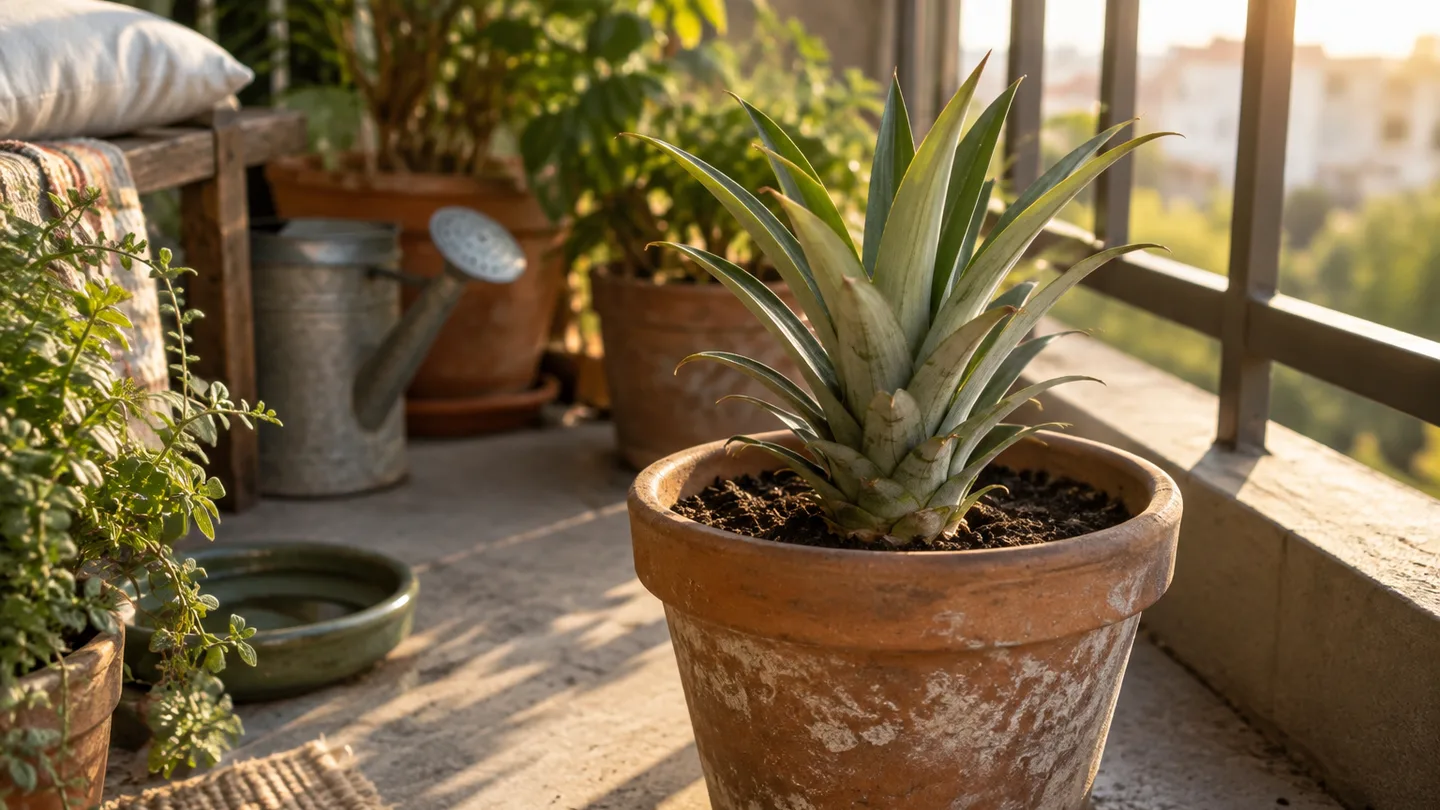
Year one and after: what makes the plant mature enough to flower
After rooting, the pineapple spends its time building a rosette of long, stiff leaves. That rosette is not decoration alone: it is the plant’s working canopy, gathering light and supporting the growth needed before flowering. A handful of fresh leaves is encouraging, but leaf production by itself does not tell you that a flower is imminent. I’d judge progress by the plant’s overall vigour and growing conditions, not by counting leaves against a deadline.
Light is the main practical bottleneck in many homes. Pineapple needs a very bright position to grow strongly. If a spot gets only one or two hours of usable direct sun, I would expect slower growth and would not count on reliable fruiting there. The plant may survive and keep its leaves, but staying alive on a windowsill and developing enough strength to flower are different goals.
Put it in the brightest suitable place you have. If it leans toward a window, turn the pot now and then so growth does not keep reaching in one direction. A plant moved from a dim room into strong direct sun may need a gradual adjustment; sudden exposure can scorch leaves that were not accustomed to it. When there isn’t a bright window, a grow light can help support growth, but it adds equipment and does not make a low-light corner a guaranteed fruiting site.
Warmth matters as well. Pineapple is tropical, so protect it from cold spells, chilly window glass, and drafts that keep it cool for long stretches. A room that feels comfortable to you may still have a cold patch right beside the glass at night. Keep the leaves from pressing against a cold window, and bring an outdoor plant inside before cold weather threatens it. Indoors, the aim is steady warmth and the brightest practical light, not a special temperature number I can promise will trigger a flower.
Water according to the pot, not the weekday. Let the surface begin to dry, then water thoroughly enough to moisten the root zone and allow the pot to drain. A small plastic pot in a hot, sunny, breezy spot will dry differently from a larger glazed pot in part shade. Check the mix with a finger instead of treating dry leaf tips or a dry-looking surface as a complete diagnosis. Mix that stays wet can leave roots short of air; a root ball that repeatedly dries hard can stall growth too.
Feed modestly during active growth with a fertiliser labelled for container plants, following its directions. More feed will not fix inadequate light, damaged roots, or a pot that stays soggy. If growth slows, I’d check the light and drainage before reaching for extra fertiliser. That order is useful because it tackles the conditions that make the roots and leaves work before adding more nutrients for a plant that may not be able to use them.
Think about space before the plant gets large. Stiff leaves can have sharp edges, and a pot on an exposed balcony may catch wind. Leave clearance from a walkway and neighbouring pots. If the container will be heavy once watered, pick a stable location before it becomes difficult to move. Mobility is useful for chasing sun, but only if you can shift the pot without risking a fall or damaging the leaves.
If your site gets just a short patch of sun, treat fruiting as a bonus rather than the expected payoff. For another slow-growing container crop with its own seasonal rhythm, see growing citrus in containers; citrus has different needs, but both projects reward a realistic plan for indoor light and winter care.
From the central flower to a ripe pineapple: the final 5–6 months
When a pineapple is ready to flower, look into the centre of the rosette for a compact flower head. It is not a single large blossom on a long stem. Many small flowers develop close together, and their tissues join as the pineapple forms. Later, the fruit swells above the leaves on a short central stalk. Avoid pulling or bending that stalk as the fruit grows.
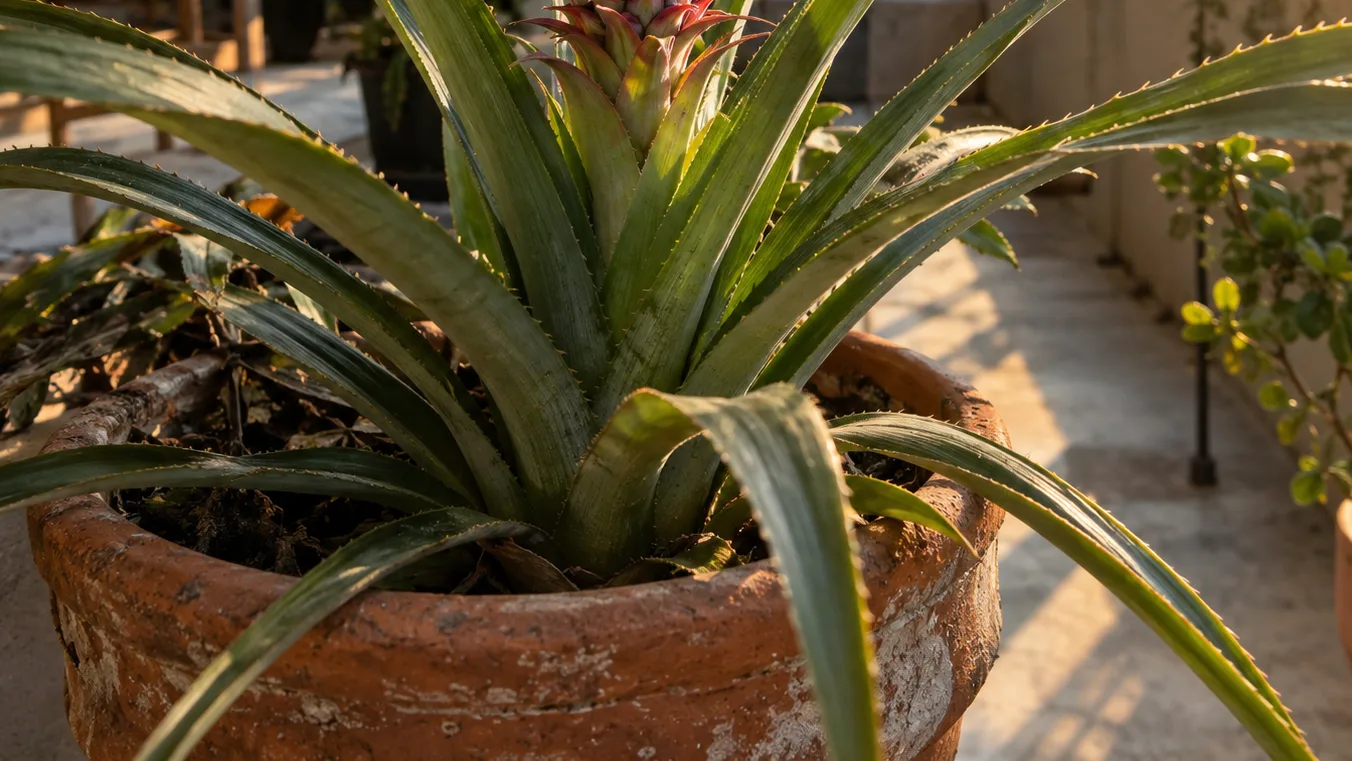
From flowering to a developed fruit, allow about 5–6 months as a planning window. That estimate is not a ripeness test. Fruit colour varies with the pineapple and its growing conditions, so don’t wait for every fruit to become uniformly golden. A greener fruit may still be developing, and colour alone can mislead you.
Instead, look for several signs together: the fruit has filled out, there is a noticeable change in colour, and a sweet smell is developing near the base. Check that the stalk and base look healthy too. If the fruit seems close but you’re unsure, give it more time and reassess rather than harvesting just because the calendar has reached the expected month. A pineapple picked too early will not continue ripening on the counter in the same way it develops while attached to the plant.
You may come across a home method that uses a ripe apple to encourage flowering. The reasoning is that ripening fruit releases ethylene, a plant hormone associated with flowering responses in pineapple. It is commonly described as an optional way to prompt a mature plant, not a reliable way to make a small, weak, or light-starved crown flower on demand. I would not use it to compensate for a plant that has not had the light or time to mature.
Natural flowering is the simpler plan: keep a healthy plant bright and warm, and wait for the centre to form a flower head. The apple method may appeal if a mature plant has been growing well but has not flowered, yet it still cannot guarantee a result. I’d treat it as an experiment for a plant that is already strong, not as a replacement for good growing conditions. Chemical shortcuts are not a requirement for growing a crown at home, and they add complexity that most balcony growers do not need.
For background on the plant’s growth stages and home-growing context, the University of Florida IFAS home pineapple guidance is one useful reference to look up. I’d still use the plant itself, not a general schedule, to decide when the fruit is ready.
When the timeline slips: check light, cold, and the plant’s next growth
If your pineapple has not flowered after roughly 30–36 months, use that point to reassess rather than declaring the plant a failure. It is a prompt to look for a limiting condition, not a cutoff after which fruiting is impossible. Work through the checks in order; changing one practical condition at a time makes it easier to see what helps.
- Small, slow rosette: Start with light. Is the plant in a bright position, or does it receive only a short patch of sun? Move it to stronger light if you can, easing it into intense direct sun rather than exposing it abruptly.
- Growth stalled through a cold season: Check the plant’s location at night, not just during the day. A cold window, draft, or long period outside in chilly weather can slow a tropical plant. Shift it away from the cold source and keep it in a warmer, brighter place.
- Weak base or unstable crown: Recheck the root zone and the planting. A crown that rocks may not be making firm contact with the mix; a soft or dark base may be rotting. Correct the planting if the tissue is sound, but don’t expect damaged tissue to recover just because you add more water or fertiliser.
- Large plant with no flower head: Review the full setup: light, warmth, drainage, and whether the plant has had enough time to build a substantial rosette. Avoid treating a calendar age as proof that it is mature under every indoor condition.
After the first fruit, plan on the original rosette having completed its main fruiting event. It may produce offsets, often called pups, around the base or along the plant. Leave a healthy offset attached while it is small; once it is large enough to handle and has begun developing its own roots, you can separate and pot it carefully. It then needs its own time to grow toward maturity, so an offset is a possible next plant, not an immediate second harvest.
Harvest with the fruit in mind, not just its colour. When it has filled out and you can smell sweetness near the base, look again for a change in colour and a healthy connection to the plant. If the fruit is still small, the scent is absent, and it looks unchanged, wait and check again. Cultivar and conditions affect appearance, so a single visual cue is a poor reason to cut it off.
The honest trade-off is that a pineapple top gives you an inexpensive, unusual foliage plant first and a possible fruit much later. If you have the light and patience, that can be a good balcony project. If not, the plant can still be worth growing for its form, but I would not count on fruit as the reward for keeping it alive.
This week, check the crown’s base for firmness, make sure water can drain freely, and note how many hours of direct sun the spot actually gets. If the plant is still in a tiny starter pot, choose its draining container before the next burst of growth rather than waiting until the rosette becomes awkward to handle.