How Often to Fertilize Container Plants: A Simple Schedule
The practical answer to how often to fertilize container plants is every 7–14 days for an established plant in active growth, using diluted liquid feed only if the label permits it. A fresh, pre-fertilized mix usually gets a pause through its stated feeding period, while controlled-release fertilizer follows its own longer interval rather than a weekly liquid schedule.
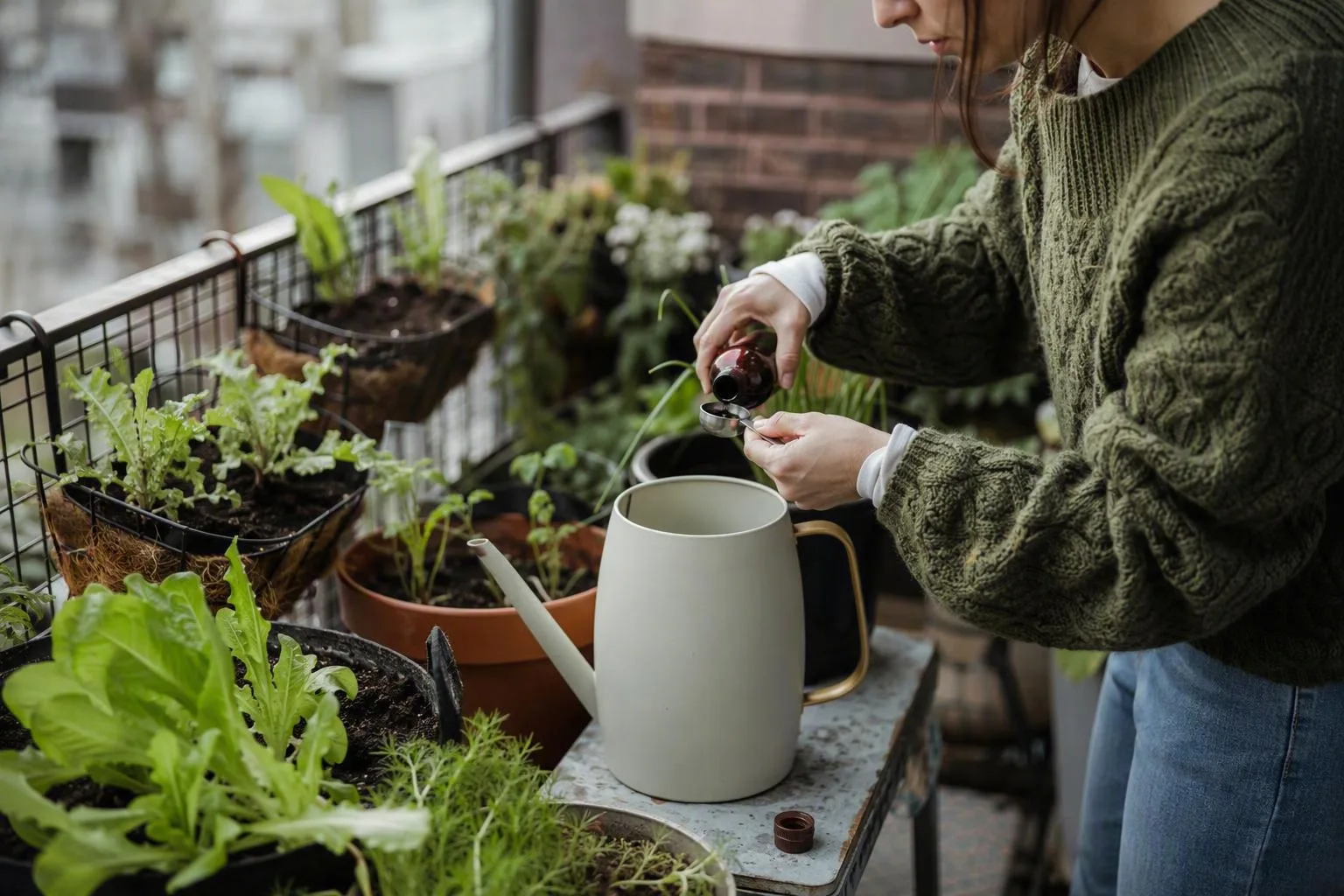
The useful starting point is 7–14 days—not every watering
Here’s the short schedule I’d write on a pot label. Treat it as a starting point, not permission to ignore the product directions or the plant’s condition.
| Situation | Starting interval | What changes it |
|---|---|---|
| Established plant in active growth | Every 7–14 days with diluted liquid feed | Use half label strength only where the label allows it; slow growth means waiting longer. |
| New plant in fresh pre-fertilized mix | Wait through the stated feeding period, often 4–6 weeks | Some mixes state 3 months or longer, so the bag’s wording wins. |
| Controlled-release fertilizer | Often every 8–16 weeks | Follow the label’s release period; don’t convert it into weekly liquid feeding. |
| Dormant, wilted or heat-stressed plant | No normal-calendar feeding | Restore healthy growth and root-zone moisture first. |
The interval tells you when to consider feeding. It doesn’t tell you how much product to mix. Dose and frequency are separate decisions.
A 5-litre pot has a shorter margin for error than a 25-litre pot
Container fertilizer behaves differently from fertilizer in open ground because the root zone is a finite reservoir. The pot contains a limited amount of mix, roots remove nutrients from it, and water leaving through the drainage holes can carry dissolved nutrients with it.
Evaporation creates the other half of the problem. Water leaves the mix while dissolved salts remain behind, so a pot that is repeatedly dried and rewatered can develop a stronger salt concentration near the roots even when you haven’t increased the dose.
A 5-litre pot holds less buffer than a 25-litre pot. The smaller pot can lose a larger share of its available water and nutrients during the same hot, windy spell, so I inspect it more closely. That does not mean I mix the fertilizer twice as strong. Pot size changes how often I inspect, not how concentrated I make the feed.
On my balcony, I once treated a 5-litre basil pot like a larger tomato container. It was in a plastic pot beside a windy railing, and I fed it on my usual 10-day date while watering it frequently. The next growth showed brown tips and a pale crust on the mix. I stopped the fertilizer, used plain water for the next few irrigations, and waited for clean new growth before resuming at a gentler dilution. The lesson wasn’t that basil never needs feeding; it was that a small, frequently watered pot gives me less room to be casual.
Full sun and wind usually shorten the watering interval, which can also increase nutrient loss through drainage. Plastic and glazed ceramic reduce water loss through the pot wall compared with unglazed clay, but weather and drainage can still matter more than the material. Watch the actual mix rather than moving automatically to a shorter fertilizer calendar.
Start the clock at potting day
I start a feeding calendar on the day the plant goes into its container. That stops me from treating a four-week-old pot as if it has been waiting for fertilizer since spring.
- Day 0: Read the potting-mix bag before adding anything. Look for starter fertilizer, a stated feeding period, or instructions to feed immediately. Write the potting date on your phone or plant label.
- Days 1–14: Concentrate on an evenly moist root zone and root establishment. A recently moved plant may pause while damaged fine roots recover. Unless the product specifically says otherwise, this is not the moment to respond to every pale leaf with more fertilizer.
- Weeks 4–6: Recheck the mix instructions. If the stated starter period has ended and the plant is making new leaves, flowers or runners, a diluted liquid schedule may become appropriate. If the bag says three months, keep waiting.
- Active growth: Begin with a 7–14-day check rather than a guaranteed feeding. Fast-growing fruiting plants may need the shorter end; slow or lightly growing plants may need the longer end.
- Cold, low light or dormancy: Extend the interval or stop. Roots cannot make good use of a routine dose simply because a calendar reminder appeared.
Yellow leaves during the first month are not automatic proof of nitrogen shortage. Transplant stress, low light, cold mix, poor drainage and damaged roots can all reduce growth or change leaf colour. Feeding before identifying the bottleneck can add salts without fixing the cause.
Tomatoes, basil and blueberries do not share a fertilizer calendar
A single weekly rule is too blunt for a balcony collection. This compact comparison gives me a starting interval by crop group without repeating the separate pot-volume and crop-dosing specifications that belong in a dedicated guide.
| Crop group | Starting approach | Condition that overrides it |
|---|---|---|
| Fruiting annuals such as tomatoes and peppers | Consider diluted liquid feed every 7–14 days once established and actively growing. | Pause during wilt, extreme heat, waterlogged mix or a recent repot into pre-fed soil. |
| Leafy greens and frequently harvested herbs | A lighter feed around every 21–28 days is a cautious starting point. | Frequent watering may leach nutrients, but pale leaves still need a root and light check first. |
| Strawberries | Use restrained feeding rather than an automatic weekly dose. | Excess nitrogen can favour leaves over flowers and fruit, especially in fertile mix. |
| Root crops | Avoid repeated high-nitrogen feeding. | Follow the edible-crop label if feeding is needed; a large leafy top is not the same as a useful root. |
| Blueberries and citrus | Use a crop-specific product and its stated schedule. | Generic fertilizer may not address the crop’s acidity or micronutrient needs. |
Growth rate, existing mix fertility and product strength can override every row. For variety and container decisions, see the container gardening tomatoes guide and the container size chart for vegetables. A correctly fed plant in an undersized or poorly drained pot can still struggle.
Dose and frequency are separate: read the label in millilitres per litre
N-P-K describes the fertilizer’s nitrogen, phosphorus and potassium analysis. It helps me understand what kind of feed I’m holding, but the N-P-K numbers do not set a weekly schedule. The label’s crop directions, dilution range and application interval do.
Use a repeatable unit instead of an unmarked capful. For example, if a label says 10 mL per 4 L of water, divide 10 by 4: that is 2.5 mL per litre. Half strength would be 1.25 mL per litre. That is arithmetic, not a recommendation to halve every product; the product label and the crop directions remain in charge.
Measure with a small graduated measure or syringe if you have one, and write the dilution beside the application date. A stronger mix is not a substitute for a shorter interval. If the product is granular, use the label’s grams-per-pot, surface-area or pot-diameter instruction instead of converting it into a liquid schedule.
For a second explanation, I’d use University extension guidance on fertilizing vegetables and flowers in containers or your local extension service rather than a random product roundup. The useful guidance separates the feeding decision from watering, drainage and the plant’s growth stage.
Water first; fertilize second
The order matters because a dry root ball can have dry pockets and concentrated fertilizer can reach roots before the surrounding mix is evenly rewetted. I don’t use fertilizer to rescue a wilted plant.
If the mix is bone dry or the plant is wilted, water with plain water first and wait until the root zone is evenly damp. Check again later rather than feeding immediately. Once the plant is hydrated and not collapsing, mix the fertilizer at the chosen label dilution.
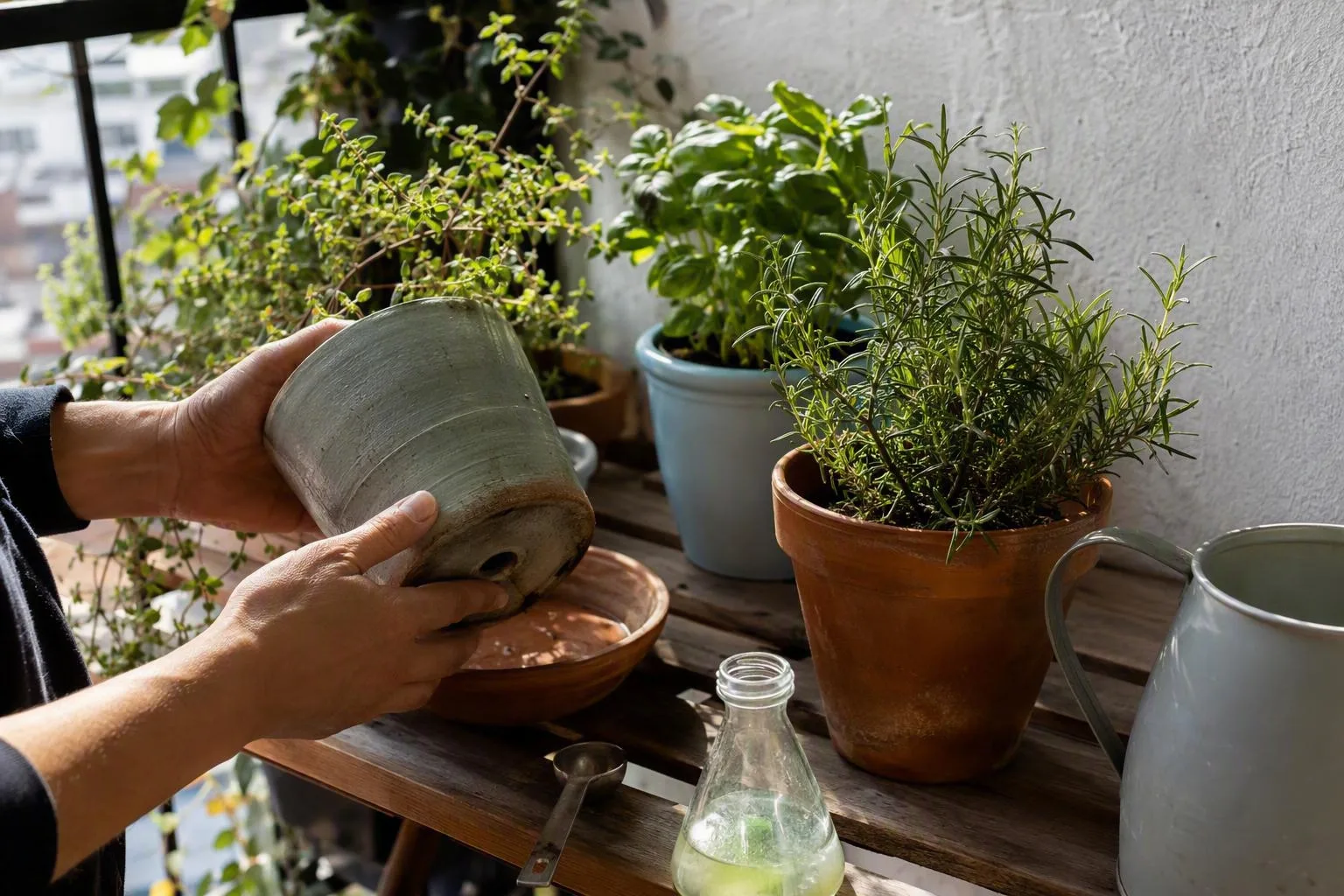
- Apply the diluted solution slowly over the surface, giving it time to soak in rather than running down a crack at the pot edge.
- When the pot and crop can tolerate runoff and drainage is reliable, allow roughly 10–20% of the applied water to leave through the holes. This helps distribute the solution through the mix instead of wetting only the top.
- Empty the saucer after the pot has finished draining. A pot sitting in fertilizer solution can draw that concentrated liquid back into the mix.
Runoff is not the same thing as permanently wet soil. The holes need to drain freely, and the pot still needs time to exchange air between waterings. If I suspect salt buildup because of crust, brown tips or a feeding mistake, I use a clean-water flush of about 2–3 pot volumes only when drainage is dependable and I can collect the runoff. I don’t use that flush as a routine weekly habit.
The weekly yes/no check before you feed
Use this three-check gate every seven days, rather than feeding because it is the same day of the week.
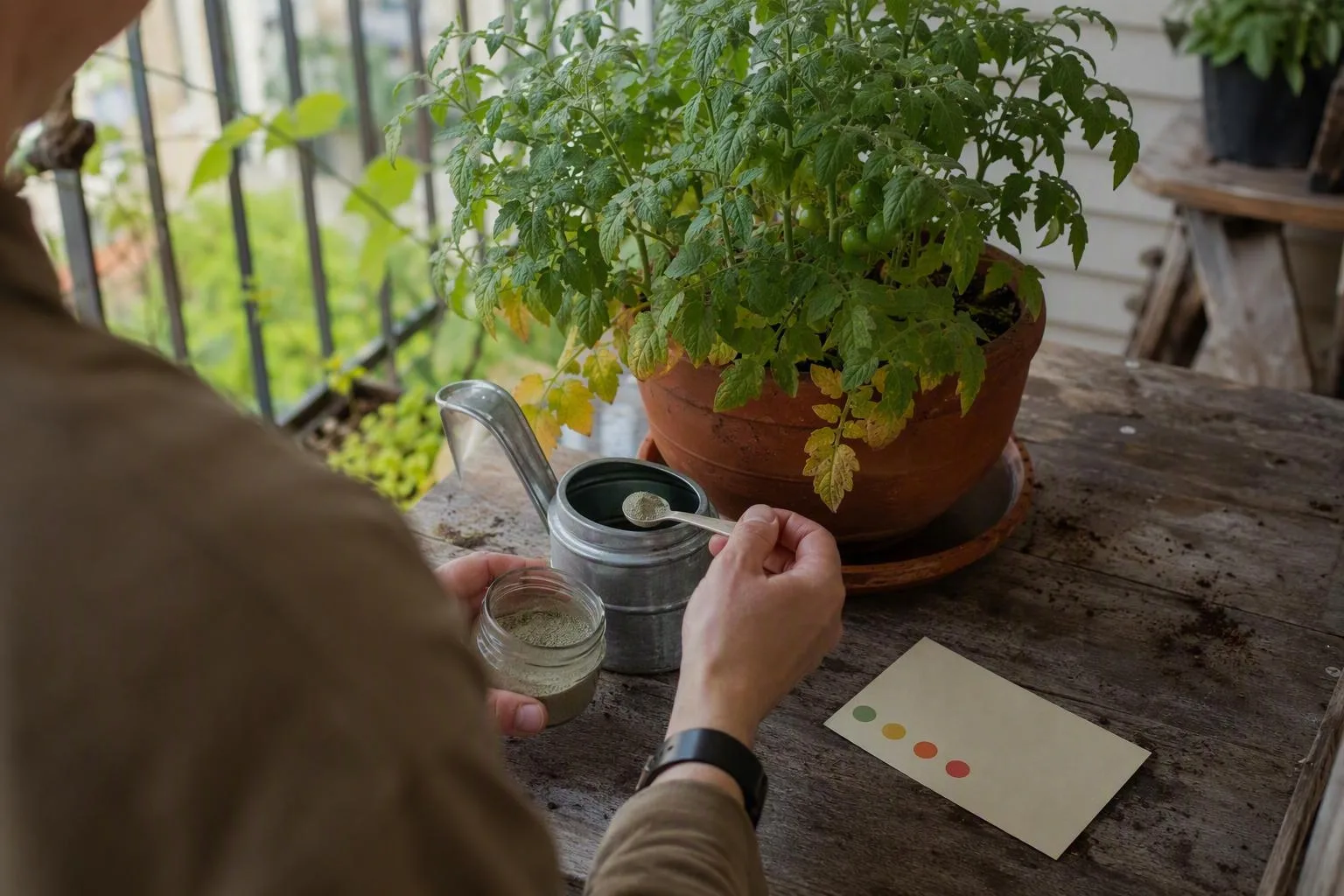
- Growth and mix: Is the plant producing new growth, and has the mix’s stated starter-feeding period ended? If not, wait.
- Interval and label: Has at least 7–14 days passed since the last liquid application, or has the controlled-release label interval elapsed? If not, use plain water if the plant needs it.
- Root-zone condition: Is the mix damp but not saturated, with no fresh white crust, brown tips or recent over-application? If not, diagnose first.
If all three answers are yes, apply the label-permitted dilution. If any answer is no, don’t add routine fertilizer. Record the date, product, dilution and pot size in a note or on a weatherproof label. That small record prevents a second dose from being added by memory after somebody else waters the balcony.
Yellow leaves are not a fertilizer schedule
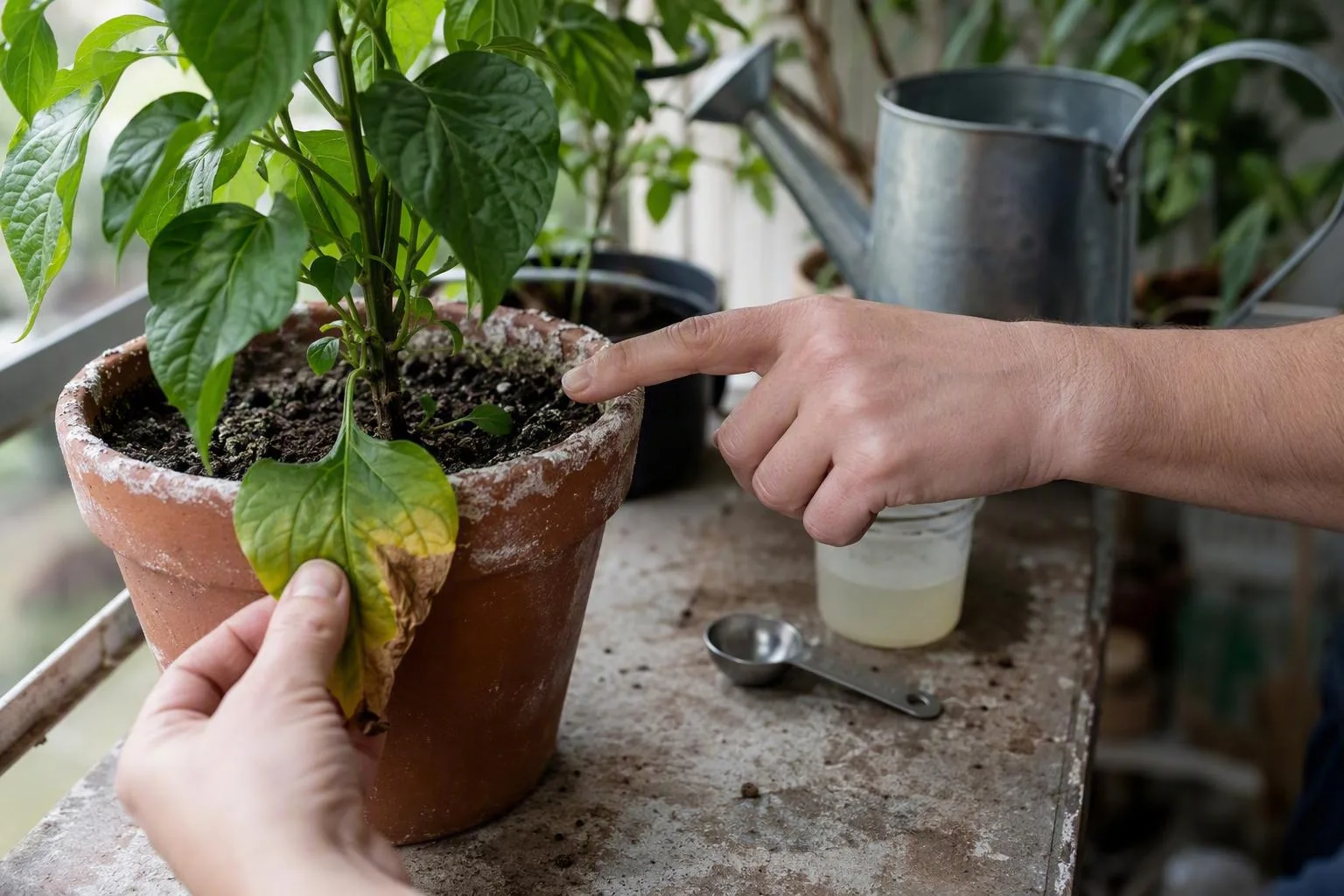
Read the symptoms together, not one leaf at a time. Colour, leaf age, moisture and the timing of the last feed give a better starting point than a yellow leaf on its own.
| What you see | Possible cause to check first | Next move |
|---|---|---|
| Brown tips or margins, white crust, and wilting while the mix is wet | Fertilizer salt buildup or an overly strong application | Pause feed. If drainage is reliable, flush with clean water and empty the runoff. |
| Older leaves paling with slow growth in mix that is not saturated | Possible nutrient shortage, but also low light or restricted roots | Check light, roots and mix age before resuming a cautious labelled feed. |
| Yellow leaves with persistently wet mix | Overwatering or poor drainage reducing oxygen around roots | Stop fertilizer, inspect the drainage holes and allow the mix to reach the crop’s normal moisture threshold. |
| Pale new leaves with green veins | A pH or micronutrient problem, particularly in crops with specialised soil needs | Use the crop-specific label; don’t keep piling on general-purpose fertilizer. |
| Sudden wilt soon after feeding | Root stress, dry pockets or concentrated salts | Pause feeding, rewet carefully with plain water if the mix is dry, and flush only if the pot drains freely. |
Low light, cold roots, a damaged root system and a blocked drainage hole can mimic deficiency. My checking order is simple: moisture, drainage, light, roots, then fertilizer. If the plant is already stressed, adding more food is usually a poor first experiment.
Four conditions that override the calendar: repotting, heat, rain and winter
The calendar is useful only while the plant is growing under ordinary conditions. Four changes make me suspend it.
- After repotting: Fresh pre-fed mix gets the feeding period printed on its bag, commonly around 4–6 weeks but sometimes longer. The condition that flips this answer is a label that says the mix contains little or no starter feed.
- During heat: At around 30°C/86°F or higher, especially in full sun, I don’t feed a wilted plant. I water first and wait until it has recovered through at least one full 24-hour cycle. Heat is a stress signal, not a reason to increase fertilizer because the pot is drying quickly.
- After heavy rain: I don’t automatically double the next dose. If the mix remains waterlogged, feeding waits; if repeated rain has caused substantial drainage and the plant resumes active growth, I return to the normal label-based check rather than trying to replace everything at once.
- In winter: Dormant outdoor plants generally get no routine feed. Indoor plants under strong lighting that continue producing new growth are a different case: I may continue at a reduced label schedule while checking the mix and light. The overwintering plants in pots guide is useful for the wider move indoors.
Should seedlings be fertilized differently from mature container plants?
Yes. I wait until seedlings have true leaves, then use a quarter- to half-strength product labelled for young plants. Small seedling containers have little mix to buffer mistakes, so I increase feeding only when growth and the label support it.
Can compost replace fertilizer in a container?
Compost can contribute nutrients, but it doesn’t provide a predictable N-P-K analysis or feeding interval. I treat it as an amendment rather than an automatic replacement for labelled container fertilizer, and I avoid using so much that the mix loses air space.
Is fertilizer safe for herbs and vegetables grown in pots?
Use a product whose label permits edible crops, and follow its dilution, application and harvest directions. I check the fertilizer label and nutrient-analysis requirements, including N-P-K and edible-crop directions, before using a product on food plants. An ornamental treatment containing pesticides is not automatically suitable for edible plants.
Write the next feeding date on the pot
Today, label each container with four details: crop, pot volume, fertilizer product and dilution. Add the last application date, then set a seven-day check and a possible next liquid-feed date 7–14 days later. For controlled-release fertilizer, write the label’s interval instead of inventing a weekly reminder.
In one week, inspect a single pot before you mix anything. It’s a candidate for another dose only if it has active new growth, evenly moist rather than soggy mix, and no fresh brown tips or salt crust. If one of those checks fails, put the fertilizer away and fix the root-zone problem first.
Frequently Asked Questions
Should seedlings be fertilized differently from mature container plants?
Yes. Wait until seedlings have true leaves and use a quarter- to half-strength product labelled for young plants; small pots accumulate salts quickly, so increase only if growth and the label support it.
Can compost replace fertilizer in a container?
Compost contributes some nutrients but does not provide a predictable N-P-K analysis or feeding interval. Treat it as an amendment, not an automatic replacement for a labelled container fertilizer, and avoid using enough to collapse the mix’s air space.
Is fertilizer safe for herbs and vegetables grown in pots?
Use a product whose label permits edible crops and follow its dilution, application and harvest directions. Do not assume a fertilizer or ornamental treatment containing pesticides is suitable for food plants.