How to Prune Rosemary Without Cutting Into Old Wood
The safe answer to how to prune rosemary is to cut only where green leaves or a live side shoot remain below the blade. If the stem below your proposed cut is bare, brown and woody, don’t cut there: old rosemary wood may not produce new shoots reliably.

That boundary matters more than making the shrub look perfectly round. A light, well-placed cut can shorten a wayward shoot; a cut too far back can leave a bare section with no visible growing point to continue from. Before you reach for the shears, follow the stem and check what is growing below the place you’re considering.
Find the cut boundary: green leaves below the cut, not bare stem
Start by looking closely at the stem. The newer part is usually flexible and carries leaves; older growth is more likely to be firm, brownish and leafless. Colour alone can mislead: weathered stems may look grey, so look for leaves and side shoots rather than judging by bark shade.
Then use your fingers. Gently bend the shoot a little. A leafy tip often flexes; an older woody section feels firmer. Don’t force it until it snaps. Flexibility is a clue, not a pass-or-fail test, and a plant can have a flexible section with too few leaves below your intended cut.
Here’s the decision that keeps the job simple: if there are no green leaves or live side shoots below the proposed cut, don’t make that cut. Move outward along the stem until you find leafy growth, or leave that branch alone for now. Rosemary can sometimes send growth from older wood, but I wouldn’t plan a shaping job around a bud I can’t see.
Picture a rosemary in a 25 cm (10 in) pot with one long shoot. Its lower 12 cm (5 in) is bare and woody; the outer 8 cm (3 in) has leaves. Don’t shorten it to the bare section just because that would give the pot a neater outline. Find a leafy node farther out and trim there, or keep the whole shoot until you can reduce it without leaving bare stem. The numbers describe a simple example, not a target size for every plant.
Choose the season by flowering and frost, not a fixed calendar date
For a main shaping trim, I’d look to the period after the plant’s main flowering flush, often in spring or early summer, while it has time to make and mature new growth. Rosemary’s flowering cycle and local weather vary, so the plant is a better cue than a date printed on a calendar.
In a frost-prone place, wait until you can see what winter has damaged and the risk of hard frost has passed before doing more than a small tidy-up. A late, hard cut can prompt tender growth at a point in the season when cold weather may damage it. If cold weather is still a possibility, take only a few sprigs for the kitchen and postpone reshaping.
Harvesting a little for cooking isn’t the same job as reshaping the plant. During active growth, you can snip a few leafy tips where the cut leaves green growth below. Keep those small harvest cuts scattered rather than stripping one side bare. If your rosemary is indoors, recently moved, or already struggling, wait for signs of active growth before adding a shaping cut.
Make each shaping cut just above a leafy node
A node is the point on a stem where leaves or a side shoot grow. Choose one with healthy green growth, then make the cut about 5–10 mm (¼–⅜ in) above it. That small gap leaves room to avoid nicking the growing point without leaving a long piece of stem beyond it.
Work in this order: choose the shoot you want to shorten; trace it back until you find leaves or a live side shoot below the planned cut; check that the plant’s outline will still have green growth at that spot; then make one clean snip with sharp, clean pruners. If you can’t find a suitable node, skip that cut. A missing cut is easier to correct later than a bare branch.
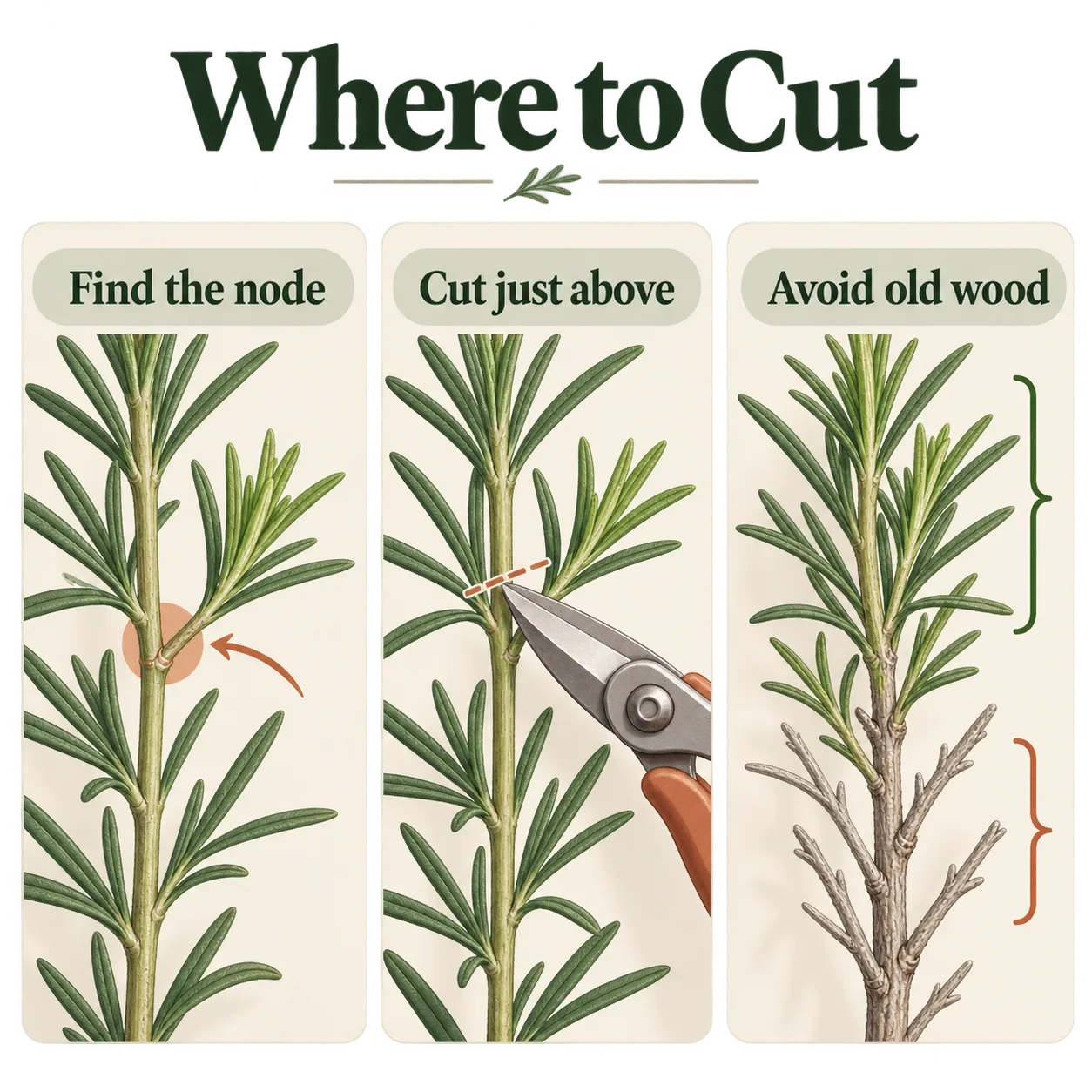
Cutting close to a live growing point avoids leaving a long stub that has no leaves. Cutting below the last leaves removes the visible growing point from that section and can leave you with bare wood. The goal isn’t to cut as close as possible; it’s to leave a short stub above healthy growth without damaging the node.
Don’t make every cut at the same height. Follow the shape of each shoot and shorten only the ones that are out of line. Step back between snips. Rosemary can look uneven while you work, and matching every branch by eye can tempt you to cut farther back than the leaves allow.
Use one-third as a cautious ceiling for a single pruning
As a conservative working limit, remove no more than about one-third of the plant’s leafy growth in one session, and take less from a small, weak, recently repotted or stressed plant. Treat that as a ceiling, not a quota. It refers to green growth you’re removing; it does not give permission to cut a third of the woody framework back to bare stems.
Why stay conservative? Leaves support the plant while it adjusts to pruning, and each cut also removes growing points. If you take a large share of the leafy top at once, you leave less green growth to carry on while the plant responds. A healthy, established shrub may tolerate more than a struggling one, but there’s little benefit in testing that limit when staged trimming can solve the shape problem.
If a rosemary has become leggy, take a few light cuts where green growth remains, then let it grow before deciding whether another round is sensible. Don’t try to fix years of bare framework in one afternoon. If new leafy shoots don’t appear, or the plant continues to decline, repeated hard cuts into old wood aren’t a dependable rescue plan.
Keep a potted rosemary compact without shaving its outer shell
On a balcony or patio, it’s tempting to shear the outside into a neat dome. I’d resist that shortcut. Repeatedly clipping only the tips can leave a dense leafy shell while the interior stays sparse and woody. The surface looks tidy, but it doesn’t solve the uneven growth hidden underneath.
Instead, turn the pot so you can see the whole plant, then shorten a few long or uneven shoots individually. Keep leafy growth at different points around the outline, and avoid cutting a tight, flat surface across the top. If one side gets more light, rotating the pot occasionally can help you assess the shape from all sides; it won’t make a shaded balcony as bright as a sunny one, but it stops you from judging the plant from one view.
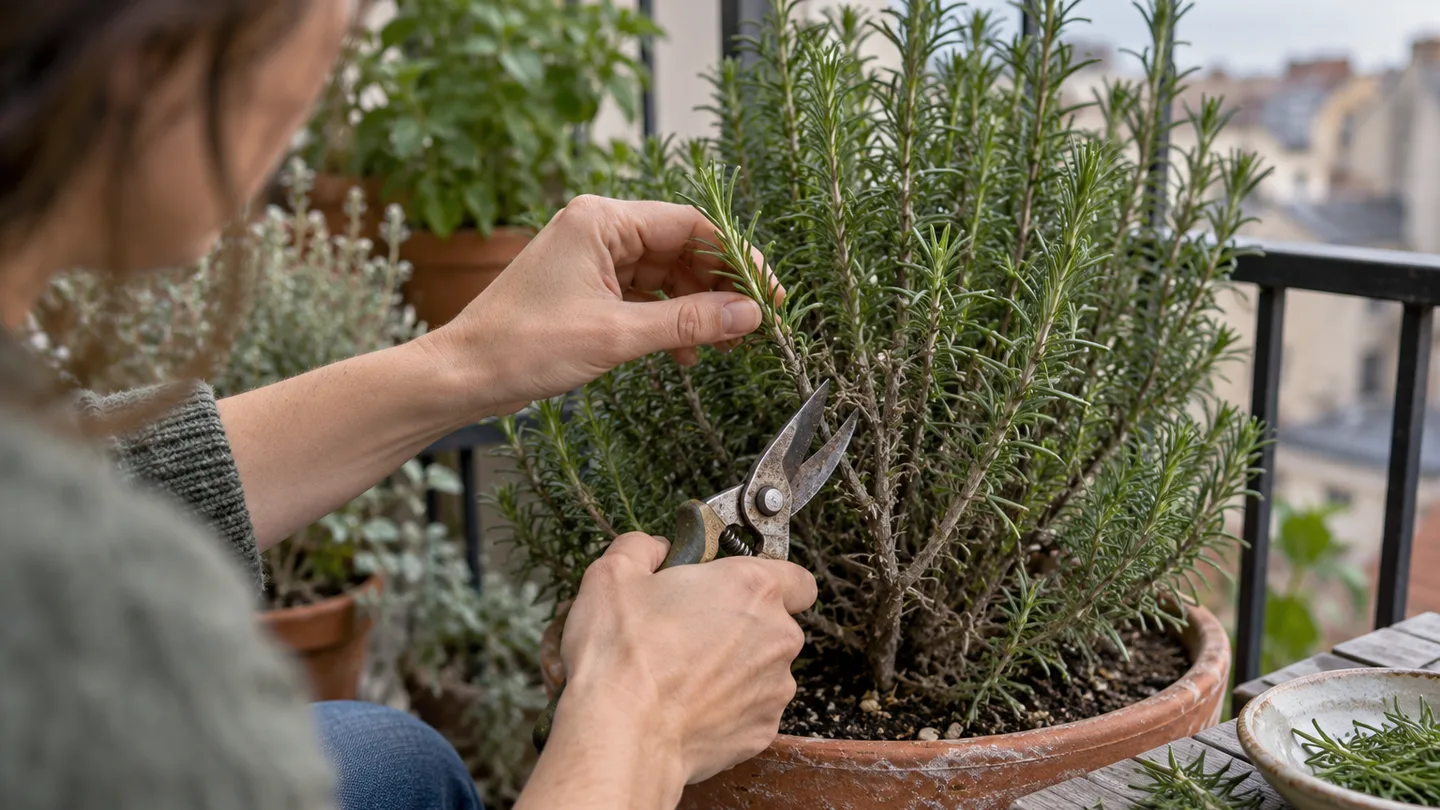
Check the plant’s condition before calling a branch unruly. A dry tip, weak shoot or patch of leaf loss may point to stress rather than a shape problem. Check the potting mix and the branch itself; don’t remove a section just to make the outline symmetrical. For general container decisions such as soil volume and drainage, the practical considerations in growing citrus in containers also show why a pot’s growing conditions matter alongside its shape.
If you grow other herbs nearby, remember that rosemary’s woody structure makes its trimming decisions different from the softer stems discussed in growing basil in pots. Treat the plants separately instead of applying one shearing style to everything in the planter area.
If you’ve exposed old wood, stop cutting and assess what is still alive
If a cut has left bare wood, stop trimming nearby branches to make the plant symmetrical. First look for green leaves and live shoots elsewhere. If they’re present, keep those parts intact and give the plant time to show how it responds. One awkward branch is usually a better problem to live with for now than several newly bare ones.
Check whether the exposed section seems alive or dead without making another large cut. A dry, brittle section is a reason for concern; a firm stem with living growth elsewhere still leaves you something to work with. Don’t assume that brown wood is dead just from its colour, and don’t assume that a flexible stem will grow back below a cut. No single quick check can promise recovery.
Keep watering according to the pot’s actual moisture rather than giving extra water in the hope of forcing new growth. Rosemary needs a mix that drains; leaving the pot persistently waterlogged adds a separate problem instead of helping the cut heal. If the plant is dry, water the root ball thoroughly and allow excess to drain. If the mix is still wet, wait and check again before watering.
Wait for active growth before deciding how to reshape it. If new shoots appear from healthy leafy sections, trim those selectively and preserve the new green outline. If the plant stays bare or continues to weaken, replacing it may be more realistic than repeatedly cutting farther into old wood. That’s disappointing, but it is a clearer decision than chasing regrowth from a stem with no visible growing points.
For local advice on a badly damaged shrub, check your area’s university extension guidance on pruning rosemary and other woody herbs, or the Royal Horticultural Society’s rosemary care guidance. Their local context may help with weather-related timing; either way, inspect the stems in front of you before cutting.
This week, turn the pot and trace each long branch back to its last healthy leaves. Mark the shoots you can shorten safely with your eyes, leave bare sections alone, and make only the cuts that pass that check.