Growing Banana Tree in a Pot: Pot Size, Sun & Winter Care
A compact banana can fit a balcony, but plan for a final pot of about 57–95 L (15–25 US gal) and a spot with around six hours of direct sun. The real decision comes before the shopping trip: choose a cultivar and winter plan your space can support, then size the pot to match.
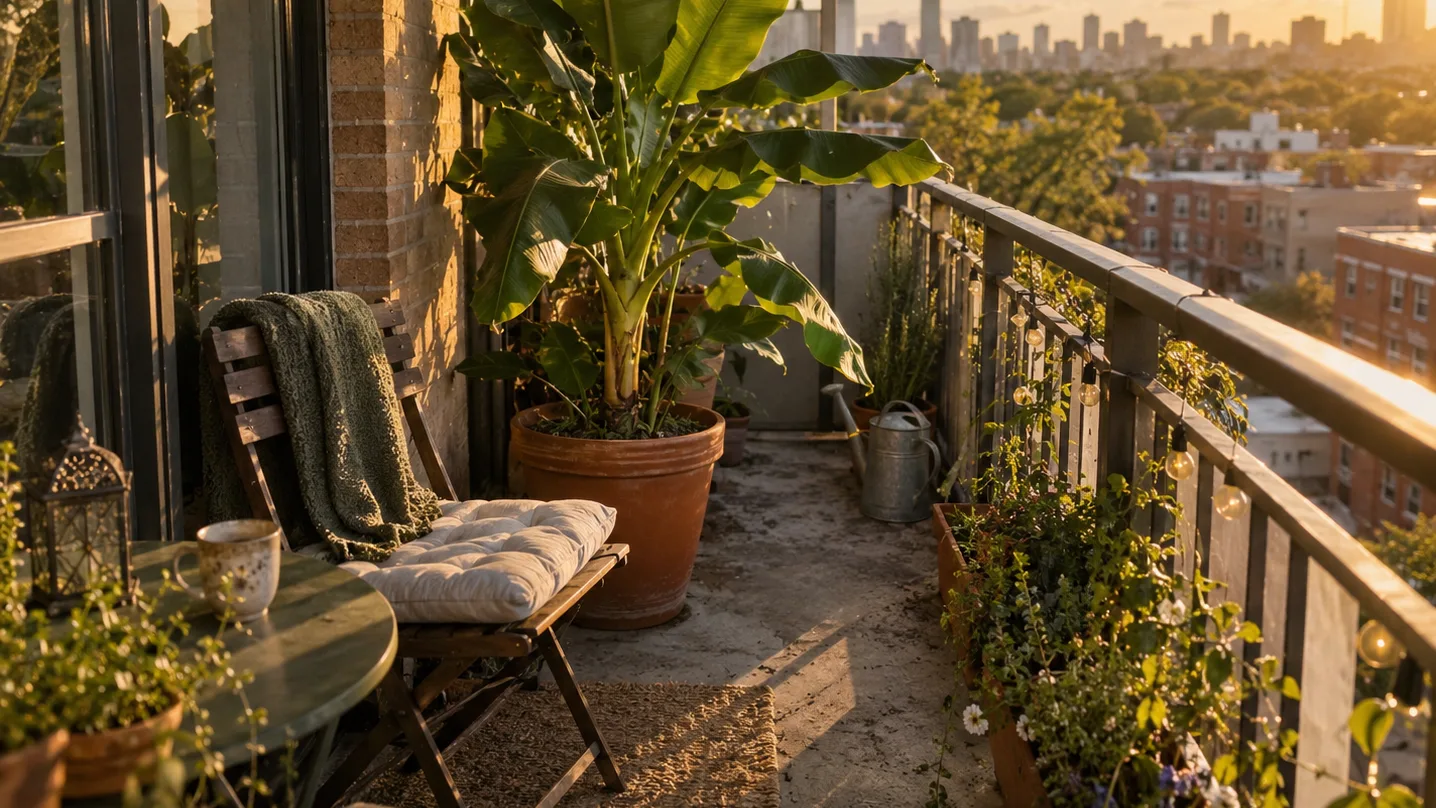
Pick a compact Musa before you buy the pot
What people call a banana “tree” is a large herbaceous plant. Its trunk-like stem is a pseudostem, formed from tightly packed leaf bases; the actual stem sits low, and new shoots can rise beside it. That matters in a container because the plant can look like a small tree while still needing room for a spreading root system and a stable, heavy pot.
For compact edible types, I use roughly 1.5–3 m (5–10 ft) as a planning bracket, not a promise about any one plant. “Dwarf” on a label doesn’t mean tabletop-sized. Cultivar, growing conditions and whether the plant is kept indoors all affect its eventual size. Ornamental bananas may be grown mainly for their leaves, while cold-hardy types are selected for different conditions; neither label alone tells you whether a plant will fruit in your space.
Read the full cultivar label before buying. Look for mature size, whether it is described as edible or ornamental, and guidance for your winter climate. If the label is vague, ask the nursery for the cultivar name. I wouldn’t choose a banana on the word “dwarf” alone.
The pot-size decision: work toward 57–95 L (15–25 gal)
A nursery plant doesn’t need to jump straight into its largest container. Pot it up in stages as roots fill the current root ball. A very large volume of fresh mix around a small root system can stay wet longer than the roots can use it; that’s a poor trade when you’re still learning how quickly your balcony pots dry.
For a compact banana, a practical final target is about 57–95 L (15–25 US gal), often a pot around 45–60 cm (18–24 in) wide. Treat width and capacity as a starting specification, not a cultivar-independent rule. Measure the inside of the pot, and check its stated capacity if available. A tapered pot holds less than a straight-sided pot with the same top width.
| Approximate internal dimensions | Estimated capacity if straight-sided | How I’d use it |
|---|---|---|
| 35 cm wide × 30 cm usable depth (14 × 12 in) | About 29 L (8 US gal) | A temporary step up for a small plant, not my final target. |
| 45 cm wide × 40 cm usable depth (18 × 16 in) | About 64 L (17 US gal) | A reasonable lower end for a compact plant. |
| 50 cm wide × 40 cm usable depth (20 × 16 in) | About 79 L (21 US gal) | A useful middle-ground example if the balcony can take the weight. |
| 60 cm wide × 40 cm usable depth (24 × 16 in) | About 113 L (30 US gal) | More than the target range; consider weight and room before buying. |
A quick pot-volume estimate starts with a cylinder: multiply the inside radius by itself, then by the usable depth and by 3.14. Convert cubic centimetres to litres by dividing by 1,000. For example, a straight-sided pot with a 50 cm inside diameter and 40 cm usable depth works out to about 79 L. Real pots taper, and the root ball takes up space, so use the estimate to compare pots rather than treating it as an exact fill amount.
Drainage holes matter more than a gravel layer. Water moves more slowly through fine potting mix than through a coarse layer beneath it, so a gravel base doesn’t pull water out of the mix; it can leave a saturated zone above the boundary and steals space from roots. Keep the holes open, raise the pot slightly if it sits in a saucer, and empty water that collects there.
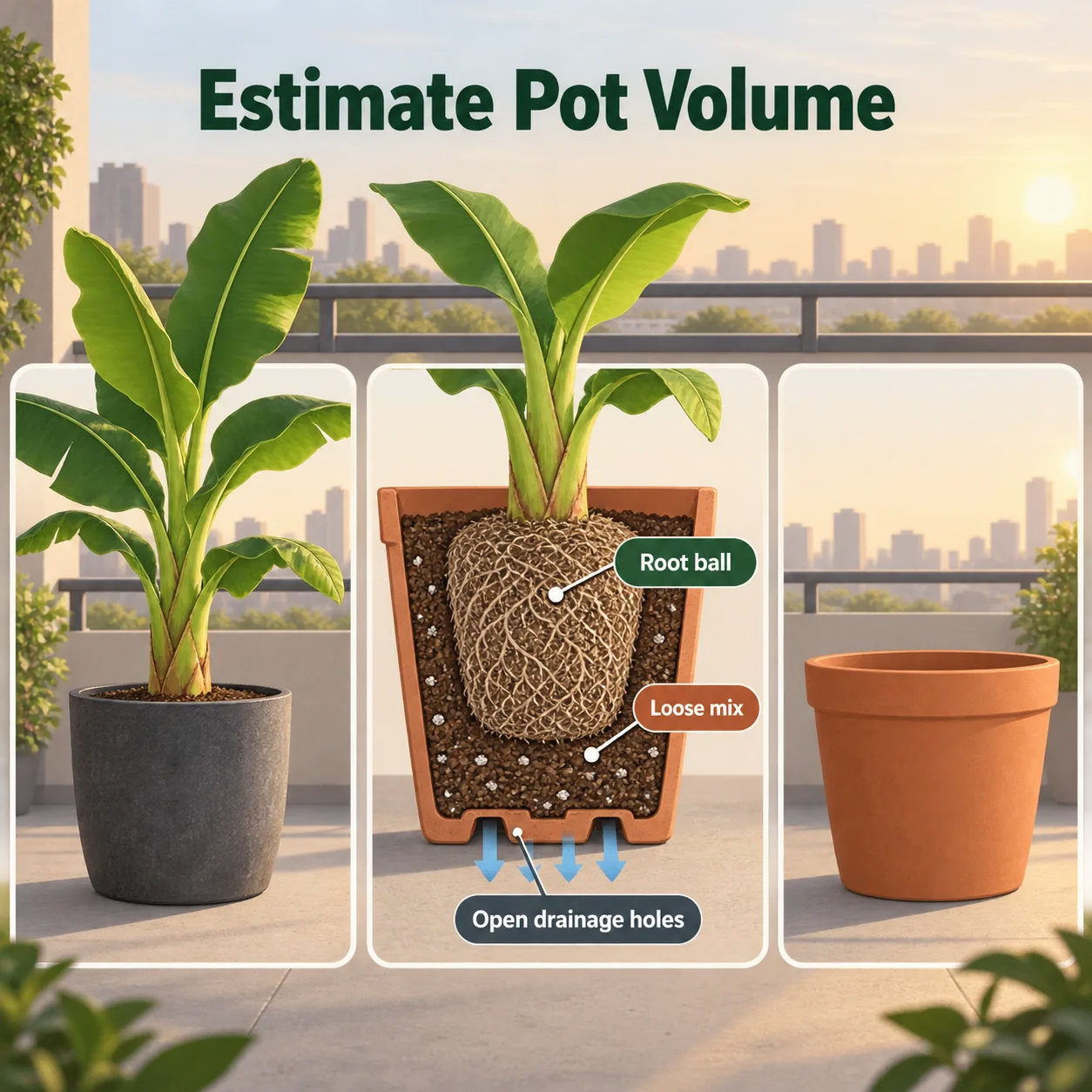
For the 50 × 40 cm example, I’d check the balcony’s load limit and the pot’s filled weight before committing. That capacity estimate describes volume, not weight: wet mix is heavier than dry mix, and the container itself adds more. If you rent or live above ground level, keep the plant near a wall only if the site rules and safe load allow it.
Build a mix that drains; pH matters less than air
Use a loose, moisture-holding potting mix made for containers, not garden soil dug from a bed. Garden soil can compact in a pot, shrinking the air spaces roots need. A pH around 5.5–6.5 is a useful reference for bananas, but I wouldn’t chase a reading if a suitable commercial mix is supporting steady growth. Repeated pH corrections can create more trouble than they solve.
If a mix feels dense or stays soggy long after watering, I’d add a little coarse perlite or pumice, wet the mix, and see how quickly it dries before adding more. That’s a judgment call, not a fixed recipe: the starting mix, pot material, temperature and wind all change the result. The aim is a mix that holds some moisture without closing off air around the roots.
Six hours of sun is the floor; map the balcony first
For vigorous growth and a better chance of fruit, aim for at least six hours of direct sun. A banana may stay alive in less, but growth can slow and fruiting becomes a less realistic goal. Warmth and bright light are useful; a hot, exposed corner that shreds leaves or dries the pot quickly may not be the best overall site.
Before buying, watch the intended spot over two or three clear days. Make a simple note at hourly intervals: direct sun, bright shade, or building and railing shadow. Repeat the check at the plant’s height, not just where you stand. A balcony that looks sunny from indoors can lose a large part of the day behind an overhang.
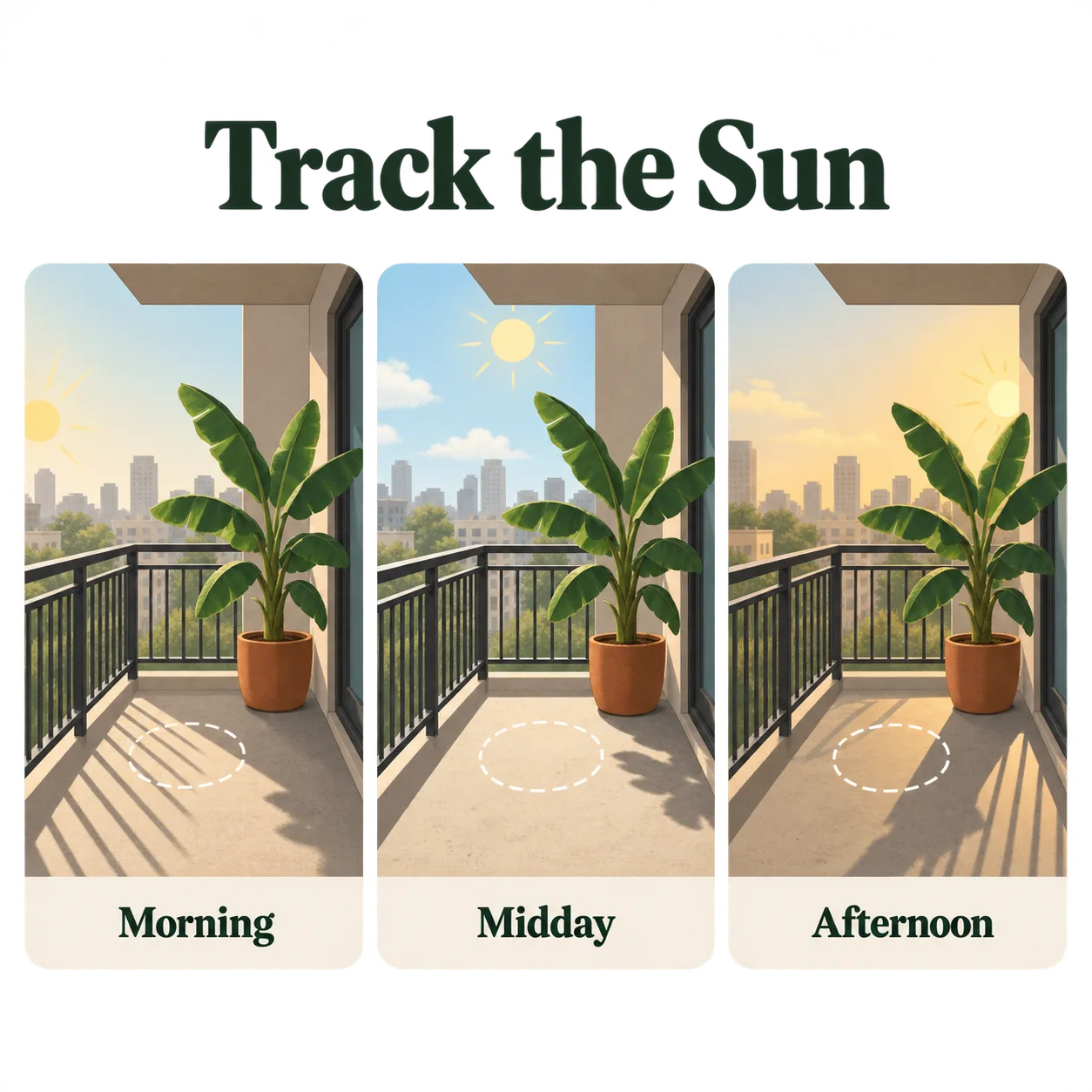
When moving a banana from indoors to stronger outdoor sun, ease it in over roughly 7–10 days. Start in bright shade, then add direct exposure gradually; leaves grown indoors can scorch when abruptly placed in hard sun. I’d also favour a wind-sheltered position that still gets light. A screen or wall can reduce leaf damage, but don’t tuck the pot so far back that it spends the day in deep shade.
For a practical example, suppose your balcony gets five hours of direct sun and the only sheltered corner gets three. I’d choose the five-hour spot, then protect the plant from the strongest wind without blocking more light. I’d treat it as a foliage plant first, rather than buying an edible cultivar on the assumption that it will fruit.
Set the root ball level, then manage suckers before they crowd the pot
Set the plant at the same soil level it had in its nursery pot. Fill around the root ball, firm the mix gently so the plant doesn’t wobble, and water until the whole root area is wet and excess drains from the bottom. Don’t bury the base of the pseudostem under a mound of mix.
A sucker is a new shoot growing from the plant’s base. In a finite pot, several shoots compete for the same water, nutrients and root space. Keep one main stem and, if you want a replacement, one healthy sucker; remove extra shoots while they’re small and easier to handle. A crowded clump isn’t automatically a stronger plant when the container cannot expand with it.
Use clean, sharp pruners for unwanted shoots and avoid tugging at the main plant. If you want to keep a sucker, let it develop rather than separating it as soon as it appears. The exact point to divide depends on its size and the cultivar, so ask the nursery for cultivar-specific guidance if you’re unsure.
Water to runoff, then check 2.5–5 cm (1–2 in) of mix
Don’t set a permanent watering calendar. Feel the top 2.5–5 cm (1–2 in) of mix first. If that layer is dry, water slowly over the surface until excess runs from the drainage holes. If water races down the sides while the root ball stays dry, pause, let it soak in, and water again. Empty the saucer so the pot isn’t left standing in runoff.
A small plastic pot in hot, windy sun may need checking daily. A larger glazed pot in cooler part shade may dry more slowly. Those are prompts to check, not schedules: pot size, plant size, wind and recent weather all change how quickly the mix loses moisture.
Both a dry root ball and persistently wet mix can leave leaves limp or yellow, so read the soil before reacting to the leaf. A dry plant may have crisping edges and mix pulling away from the pot wall. In waterlogged mix, the soil stays wet, the pot feels heavy, and yellowing may continue even though you’ve watered. If the mix is wet, don’t add more water just because the foliage droops. Check the drainage holes and the moisture below the surface first.
For a deeper look at checking rather than guessing, see our guide to growing citrus in containers, where the same pot-and-moisture decisions matter. The plant differs, but the habit of checking the root zone before watering transfers well.
Feed through active growth, not through a cool-season pause
A banana growing quickly in a limited volume of mix uses up available nutrients; extra fertilizer isn’t a shortcut to bigger leaves. Too much can leave salts in the mix and damage roots. If you use controlled-release fertilizer, follow the product label and don’t layer on liquid feed by default. If you choose liquid feed, dilute and apply it according to its label.
My own starting practice is to feed roughly every 2–4 weeks when a potted banana is warm and actively growing, using a diluted liquid feed and letting the product label take priority. I’d watch the plant’s response rather than treating that interval as a universal schedule. When cool conditions slow new growth, reduce or stop feeding; the plant isn’t using nutrients at the same pace.
For another long-season container crop, growing ginger in containers also calls for adjusting care to the plant’s growth phase rather than feeding by calendar alone.
Before frost, choose a winter route: warm indoors, dormant storage or a hardy corm
Decide where the plant will spend winter before the first cold night. A tropical cultivar, a cold-hardy type and a banana kept as a leafy houseplant don’t all have the same plan. Tender foliage can be damaged around 0°C (32°F); don’t confuse leaves surviving a brief chill with the underground corm surviving the winter.
Choose the route that fits the cultivar and the space you actually have:
- Keep it actively growing indoors. Bring a tender tropical cultivar inside before frost and put it in the brightest available spot. Water when the mix begins to dry, not on the summer routine, and reduce or pause fertilizer if growth slows. Expect a large plant to need floor space and clear access to the window.
- Use dormant storage only when it suits the plant and method. Some growers store suitable plants with little or no foliage in a cool, protected place. The right temperature and moisture depend on the cultivar and storage setup, so don’t assume a method for one banana applies to every plant. Keep the corm from drying out completely or sitting wet.
- Leave a genuinely cold-hardy type outdoors with appropriate protection. Confirm the cultivar’s cold tolerance for your location, then follow local guidance on protecting the plant. “Hardy” doesn’t mean every leaf stays intact, and a sheltered pot can still experience colder conditions than the ground.
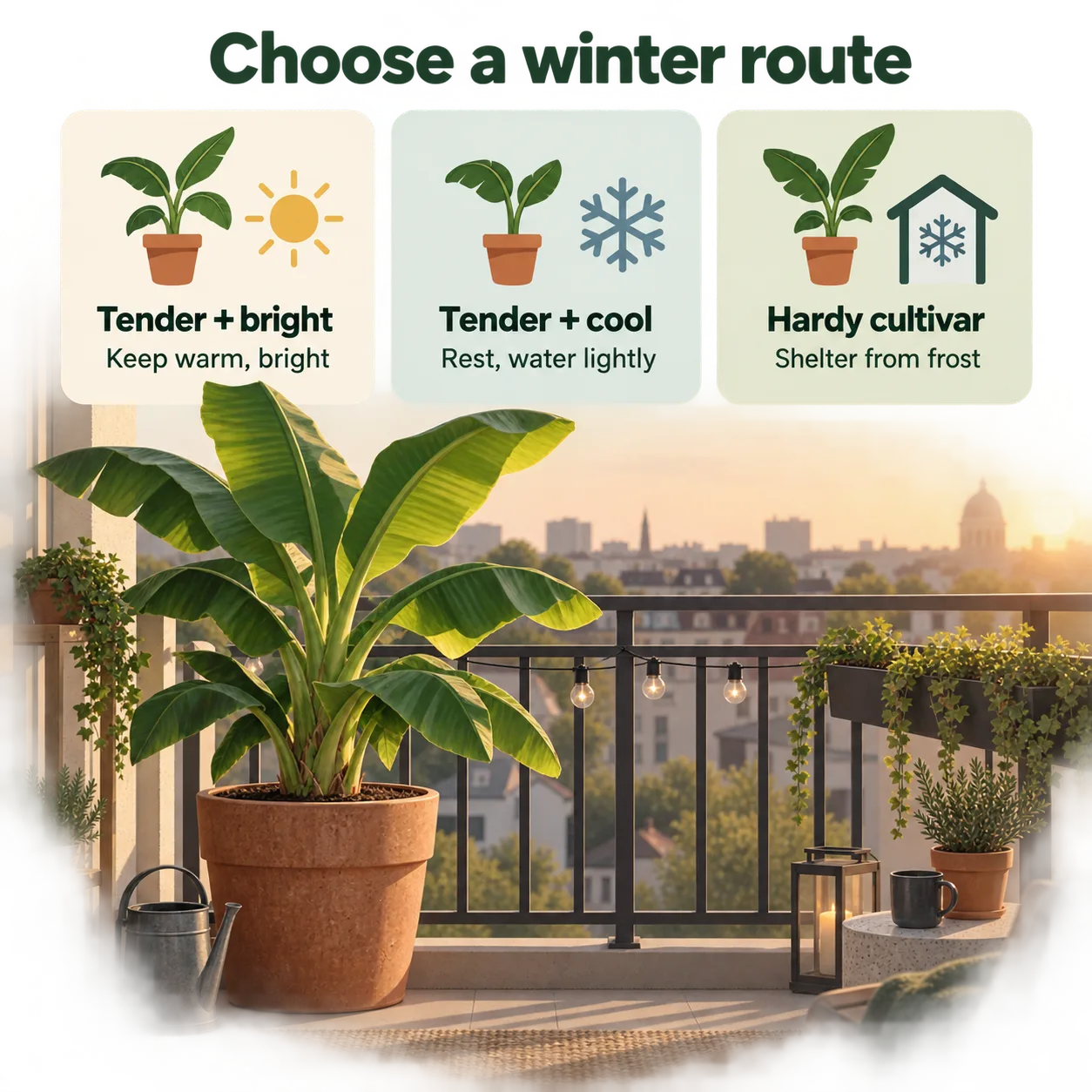
As a decision order, I’d check the cultivar first, the lowest winter temperatures at the actual site second, and indoor light third. If the plant is tender and you can offer a bright indoor place, active indoor growth is the straightforward route. If it is tender but there’s no suitable light, ask whether that cultivar can be stored dormant before buying it. If it is genuinely hardy, confirm the protection needed for a container rather than relying on a label word alone.
For another perspective, compare university extension guidance on banana cultivar growth habits and container culture, and botanical garden or extension guidance on Musa cold tolerance and overwintering. Use advice that names your cultivar and distinguishes foliage damage from corm survival; broad cold-hardiness language can hide that difference.
Fruit is possible, not promised: know what the pot can support
A banana can flower and fruit in a pot, but a small-home setup often makes it more realistic to grow for foliage. Fruiting depends on cultivar, maturity, root volume, warmth, direct light and a long enough growing season. If the plant gets only a few hours of sun or spends much of the year recovering indoors, don’t treat a bunch as the expected payoff.
Each pseudostem flowers once. After it has fruited, the plant’s continuation comes from new growth at the base, which is why keeping a replacement sucker can matter. In suitable warmth, allow several months for a bunch to mature after flowering; roughly 3–6 months is a planning estimate, not a deadline. Cool weather or limited light can stretch the wait.
Repot when roots circle densely at the pot edge or emerge from drainage holes, or when the mix starts drying unusually fast despite a thorough watering. Those clues suggest the root ball is taking up much of the available space; they don’t mean you should automatically jump to the biggest container you can find. If you’re still deciding whether a banana is the best use of your balcony, browse Easy fruits and vegetables to grow in pots and compare the space and winter demands.
This week, read the cultivar label and count direct-sun hours at the exact spot where the pot would sit. Then measure the proposed container’s inside width and usable depth before you buy the mix.