Growing Onions From Seed in Pots: When to Sow and Thin
For bulb onions, sow indoors about 8–10 weeks before you plan to move the seedlings outside; then thin them to roughly 3–4 inches (7.5–10 cm) apart. The catch is that the right onion variety depends on your day length, so a perfectly timed sowing can still make small bulbs if the variety doesn’t suit your region.
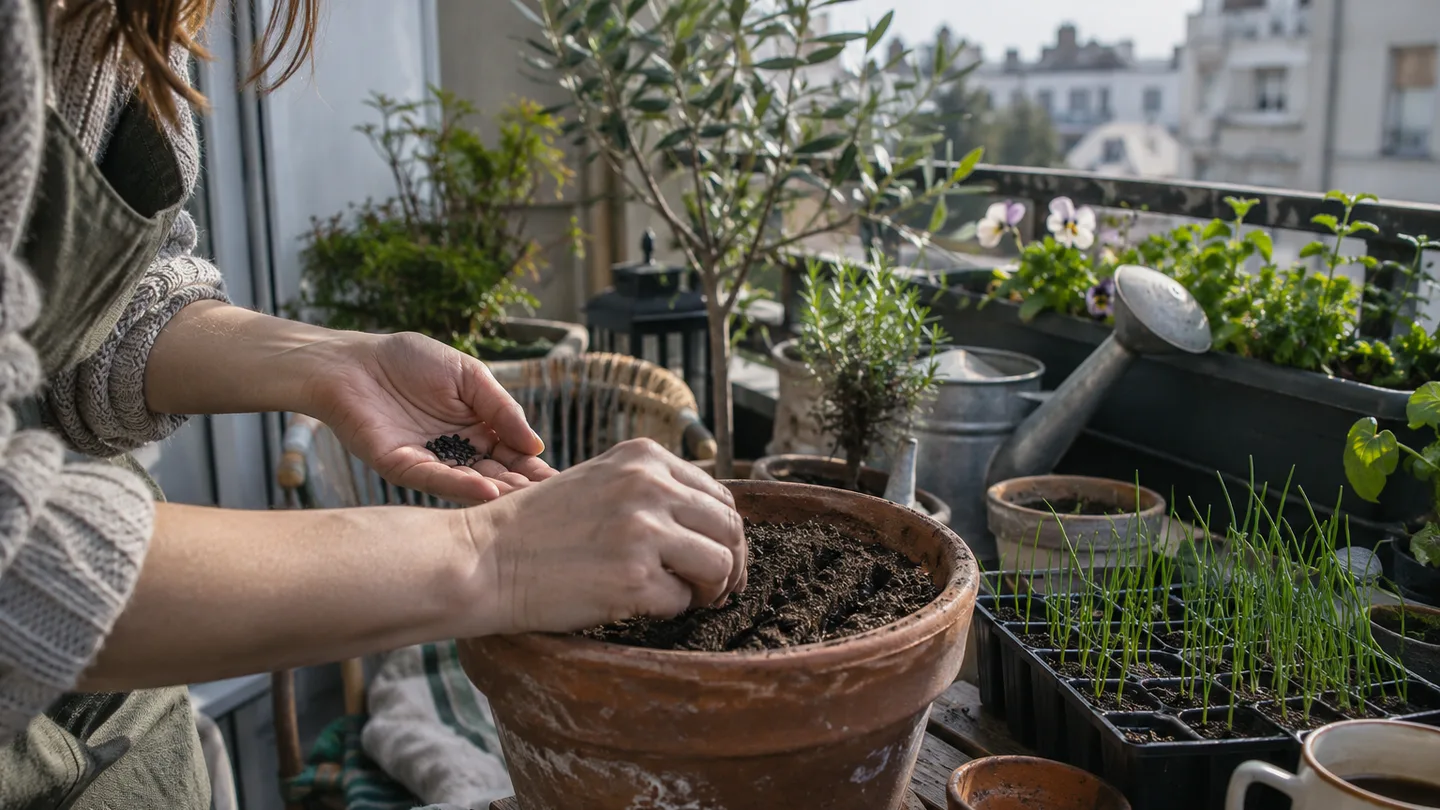
Count back from planting day—and match onion type to your latitude
Start with the date you expect to put the seedlings outdoors, not a date on a packet that assumes your local spring. Count back about 8–10 weeks for an indoor start. That gives young plants time to grow before they go into their final pot, while avoiding an unnecessarily long stay indoors. If your balcony is exposed, spring stays cold, or your local planting window comes later, shift the schedule with it.
Then choose the onion type for your latitude. Bulb onions respond to day length: short-day varieties generally begin bulbing with about 10–12 hours of daylight, intermediate-day types around 12–14, and long-day types around 14–16. These are useful selection ranges, not a guarantee that every named variety behaves identically. Read the seed packet’s regional advice, and, if it names a suitable latitude or growing region, use that over a generic calendar.
Day length is not the same as direct sun on your balcony. A plant may receive bright shade for part of the day, but a bulb onion still needs enough direct light to build leaves and then a bulb. The variety’s day-length class tells you when bulbing is triggered; it doesn’t compensate for a dim spot.
If you mainly want green onions, you have more flexibility. You can harvest the leaves and slender stems before the plant needs to form a mature bulb. That makes them a sensible choice for a partly sunny windowsill or a shallow box. For bulb onions, use regional variety guidance such as regional university-extension guidance on onion day-length classes and variety selection; the key is to match the variety to your area, not simply pick the packet with the prettiest picture.
My rule of thumb: choose the onion for the light and latitude you have, then fit the sowing date around your outdoor planting window. Don’t try to solve a day-length mismatch by sowing earlier.
Seed tray first, or straight into the final pot?
A seed tray is easier to manage indoors; direct sowing saves you from separating seedlings later. Both work. I’d use a starting tray if the final pot is bulky, the balcony is windy, or you want to keep seedlings under close watch while they’re small. Sow directly into the final pot if it already fits your light and space, and you can keep its surface from drying out.
For indoor starts, a tray about 2–3 inches (5–8 cm) deep is enough for the early stage. It doesn’t need to be a fancy insert: a clean container with drainage holes will do, as long as it hasn’t held anything unsuitable for edible plants. Move seedlings before they become cramped and tangled.
For a final container, aim for roughly 6–8 inches (15–20 cm) of depth, with drainage holes. That gives roots room below the bulb and leaves space for a useful depth of potting mix. A shallow window box can still grow onions, but it suits green onions better than a full-size bulb crop. In a bulb-growing pot, leave about 3–4 inches (7.5–10 cm) between plants. The more crowded the bulbs, the more likely you are to harvest smaller ones.
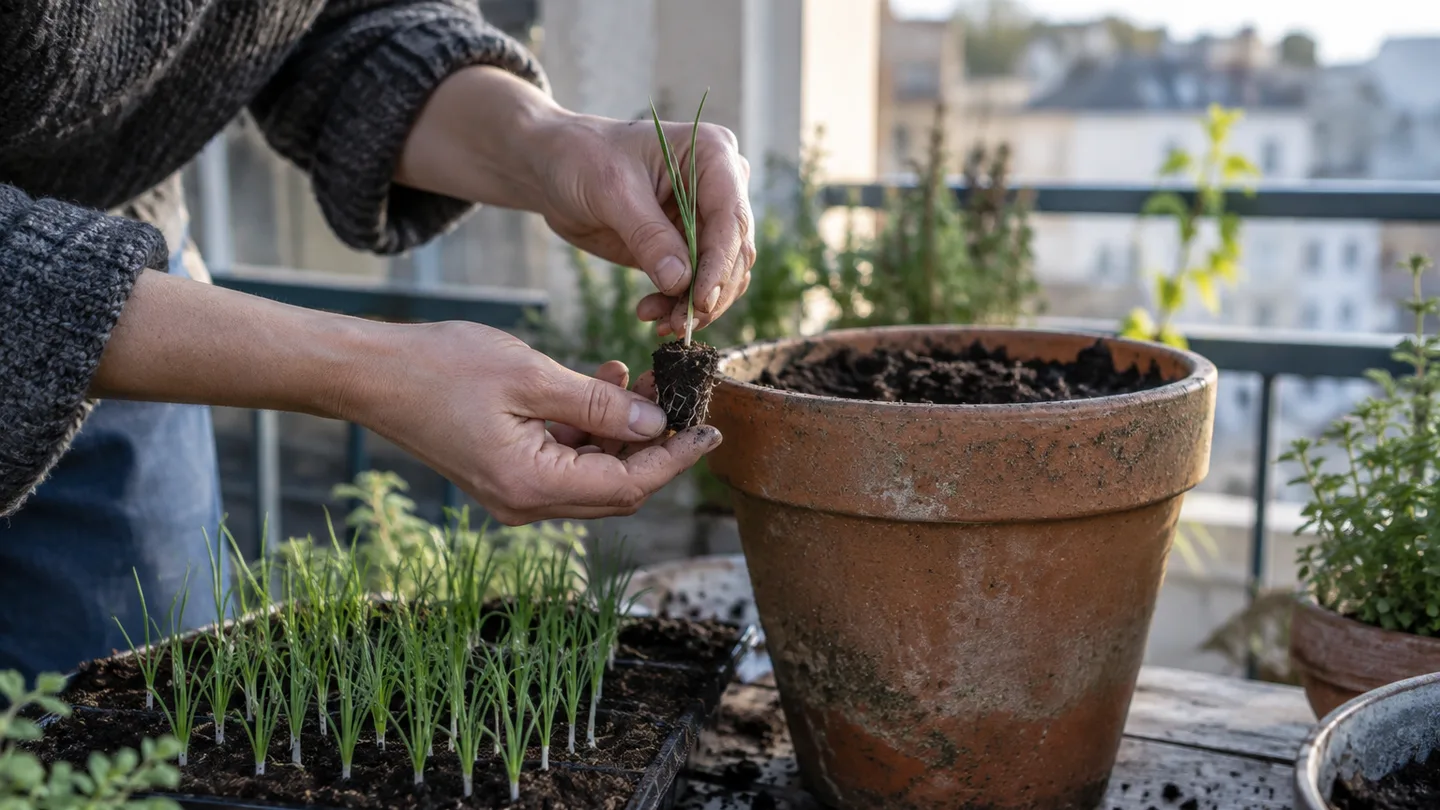
Here’s a practical way to picture the choice. A trough roughly 60 cm (24 inches) long and 18 cm (7 inches) deep can be sown for greens at closer spacing, or used for fewer bulb onions with room between them. That’s a planning example, not a measured yield or a promise: the variety, light and watering still decide how the plants develop.
One container detail worth checking before you fill it: drainage holes must let excess water escape. Onion roots need moisture, but a pot that stays saturated leaves less air in the mix. Don’t add a gravel layer at the bottom to ‘improve drainage’; it takes up root space and doesn’t fix a blocked or hole-free pot. If you’re still choosing containers for edible crops, Easy fruits and vegetables to grow in pots is a useful place to compare crops by the space they ask for.
Sow the seed ¼ inch (6 mm) deep; don’t bury it in a heavy mix
Use a fine, free-draining seed-starting mix. Tiny seedlings have little stored energy, so a coarse, compacted surface can be harder to push through than a fine covering. A heavy mix can also form a crust as it dries. I pre-moisten the mix before sowing so the first watering doesn’t wash the seeds into a corner.
- Fill the tray or final pot, stopping just below the rim. Gently level the surface; don’t press it into a hard layer.
- Water the mix until it is evenly damp, then let excess water drain through the holes.
- Sow dry seeds about ¼ inch (6 mm) deep. In a tray, leave enough room to identify and lift small clumps later. In the final pot, sow a little more closely than your intended final spacing so you can keep the strongest seedlings after they emerge.
- Cover lightly with mix and mist or water gently. The aim is to wet the covering without exposing or shifting the seeds.
Soaking onion seed before sowing is generally unnecessary. In a small tray, dry seeds are easier to distribute and cover evenly than seeds made slippery by soaking. Keep the surface damp while you wait, but not glossy with standing water.
For direct sowing, mark the surface first so you can see where seeds went. In a nursery tray, close sowing is acceptable because you’ll transplant or thin later. In the final container, sow in the positions you intend to keep, plus a few spares. You’re not trying to grow a dense lawn of onion shoots; you’re giving yourself replacements in case some seeds fail.
Sprouts often appear in 7–14 days; move them into strong light
At about 65–75°F (18–24°C), use 7–14 days as a reasonable planning window for germination, not a deadline. Older seed, fluctuating room temperatures and a surface that dries between waterings can all make emergence slower or patchier. Keep the mix evenly damp: dry seed may not start, while waterlogged mix can leave roots short of air.
As soon as shoots appear, give them the brightest light you can. A sunny window can work, but light often comes from one direction, and young leaves may lean toward the glass. Turn the container regularly, or move it to a brighter position if the shoots stretch. Long, thin, pale seedlings are telling you that their stems are reaching for more light; they’re not improved by more fertilizer.
On a balcony windowsill, I’d use the seedlings’ angle as a simple check: if the row keeps bowing toward the window after you turn the tray, the light is still one-sided or weak. Rotate the tray and look for a brighter spot before the stems become floppy. That’s a practical observation to make in your own container, rather than a reason to assume every leaning seedling has the same cause.
If a pot stays empty, check the surface first. Did it dry out, or was the seed buried deeper than a light covering? Next, check whether the mix stayed soggy or the room was cool. If the seeds were old or storage conditions are unknown, sow a small fresh batch alongside them rather than waiting indefinitely on a bare pot.
Thin by the crop you want: 3–4 inches for bulbs, 1–2 for greens
Make your first spacing check when seedlings are about 2–3 inches (5–8 cm) tall. For bulb onions, leave roughly 3–4 inches (7.5–10 cm) between the plants you intend to mature. For green onions, about 1–2 inches (2.5–5 cm) is a workable closer spacing if you plan to harvest them young.
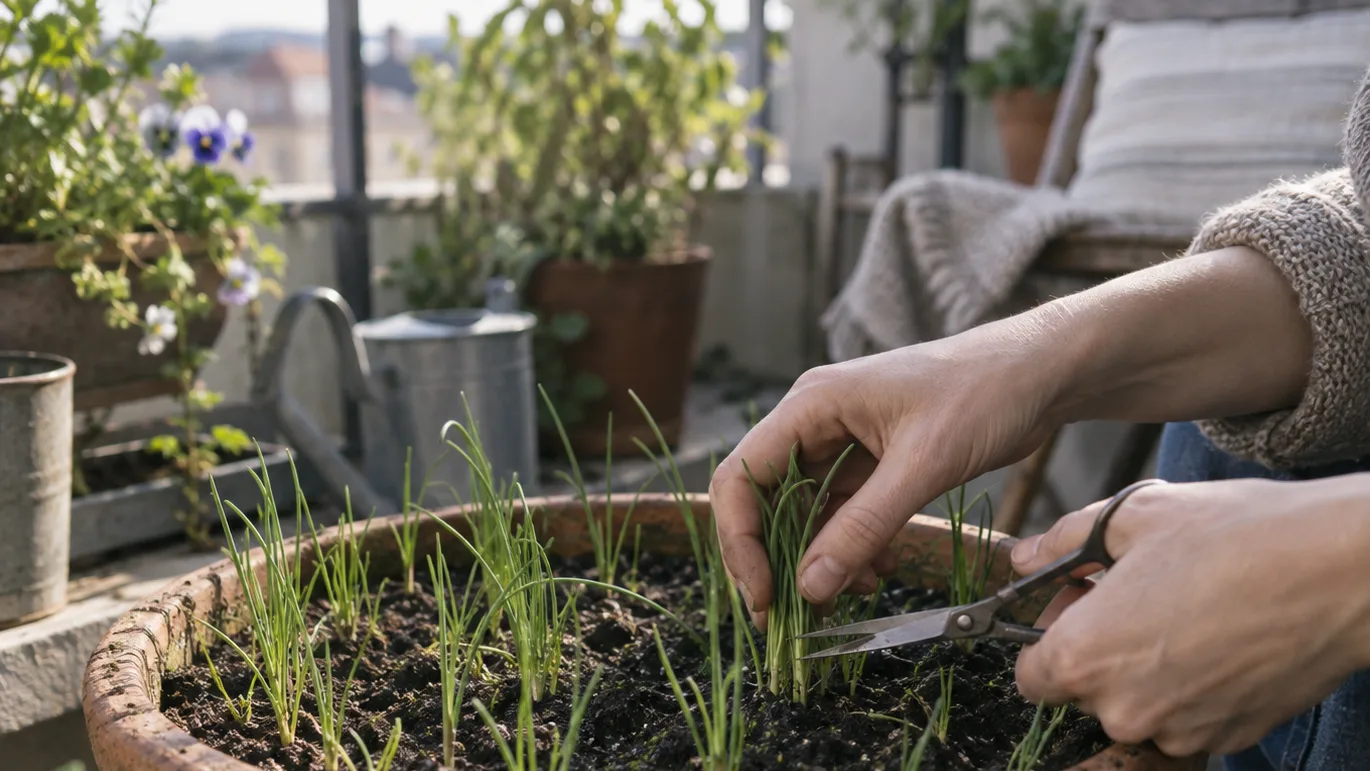
Thinning means removing extra seedlings so the keepers have room. If several come up together, snip the ones you don’t want at soil level with clean scissors. Pulling can tug at the roots of the seedlings you’re keeping, especially when their roots have intertwined. Take out the extras gradually if the cluster is dense, then check the spacing again.
That isn’t the same as separating nursery seedlings for transplanting. When you transplant, water the tray first, ease out a small clump and tease the roots apart gently. Hold a seedling by a leaf rather than squeezing its thin stem. Set it at about the depth it was growing before, firm the mix around it, and water it in. If roots are knotted tightly, don’t fight to save every plant; keep the easiest seedlings and snip the rest.
A useful small-pot example: if a container is about 30 cm (12 inches) across and you’re growing bulb onions, a rough 3–4-inch spacing means planning for a handful of plants rather than packing in a dozen. The exact number depends on the container’s shape and usable planting area. I’d rather leave a gap than crowd the pot and end up with a mass of leaves competing for the same light and root space.
Young thinnings can be used like scallions if they were grown in clean, food-safe mix and haven’t been treated with anything unsuitable for edible plants. If you want a crop mainly for leaves, see growing chives in pots; for another allium grown in a container, growing garlic in containers covers a different planting rhythm.
Harden seedlings for 7–10 days, then judge the pot by its light and leaves
Before moving indoor seedlings outside for good, give them about 7–10 days to adjust. This gradual adjustment is called hardening off: start with a short spell outdoors in a sheltered spot, then extend the time and exposure a little each day. Bring them back in if the weather turns harsh or the container dries quickly. Indoor leaves are not used to wind, direct sun and outdoor temperature swings.
When you plant them out, keep the onion’s neck—the narrow point where the green leaves meet the base—at the surface rather than burying it deeply. Water gently to settle the mix. For bulb development, aim for around six or more hours of direct sun if your space allows. In less sun, onions may still give you edible greens, but small bulbs are a realistic possibility. A variety suited to your day length can’t make up for a balcony that gets only a brief patch of sun.
Container watering depends on the pot, weather and exposure. Wind and warm sun can dry a small pot quickly; a larger pot in a sheltered spot usually changes more slowly. Check the mix with a finger rather than following a fixed schedule. If the top is dry but the mix below still feels slightly damp, wait and check again; if the root area is drying, water thoroughly until excess drains, then empty any saucer.
I wouldn’t judge success by whether every seedling becomes a large bulb. Bulb size depends on the variety, day length, spacing, light and how steadily the pot stays watered. Treat the first crop as a chance to learn how your particular balcony behaves. If it’s short on direct sun, harvest some as greens rather than leaving crowded plants in place while hoping for large bulbs.
Three quick onion-seed questions
Should I soak onion seeds before sowing? Usually there’s no need. Dry seed is easier to spread and cover evenly in a small tray. Sow it into pre-moistened mix instead of soaking it first.
How long do onion seeds stay viable? Storage matters, and germination tends to decline as seed ages. If you don’t know how the packet was stored, test a small batch on damp mix before committing a whole pot. A weak or uneven result is a reason to sow more seed, not proof that every seed in the packet is dead.
Can I eat onion seedlings I remove while thinning? Yes, if they were grown in clean, food-safe mix and haven’t been exposed to products not intended for edible plants. Rinse them and use them like young scallions.
This week, check the seed packet for its recommended day-length type, choose the sowing date by counting back from your outdoor planting window, and make sure the container has open drainage holes. Then fill one tray or pot, pre-moisten the mix and sow a small batch at ¼ inch (6 mm).
Frequently Asked Questions
Should I soak onion seeds before sowing?
Explain that soaking is generally unnecessary; sowing dry seed makes it easier to space and cover evenly.
How long do onion seeds stay viable?
Give a cautious storage-dependent answer, note that germination declines with age, and suggest testing older seed rather than assuming every seed will sprout.
Can I eat onion seedlings I remove while thinning?
Yes, young thinnings can be used like scallions if they were grown in clean, food-safe mix and have not been treated with anything unsuitable for edible plants.