Hydrogen Peroxide for Plants: When It Helps—and Hurts
A 3% bottle of hydrogen peroxide can be useful on a dirty tray or tool, but it is not plant food and it is not a reliable way to oxygenate a waterlogged pot. The popular 1:4 soil drench makes a 0.6% solution; I treat that as an optional, tightly bounded experiment—not a cure for fungus gnats, root rot, or yellow leaves.
That distinction is the whole answer to hydrogen peroxide for plants: start with the job you want done, then ask whether peroxide is the right tool. A bubbling reaction can look dramatic while doing very little for the actual problem.
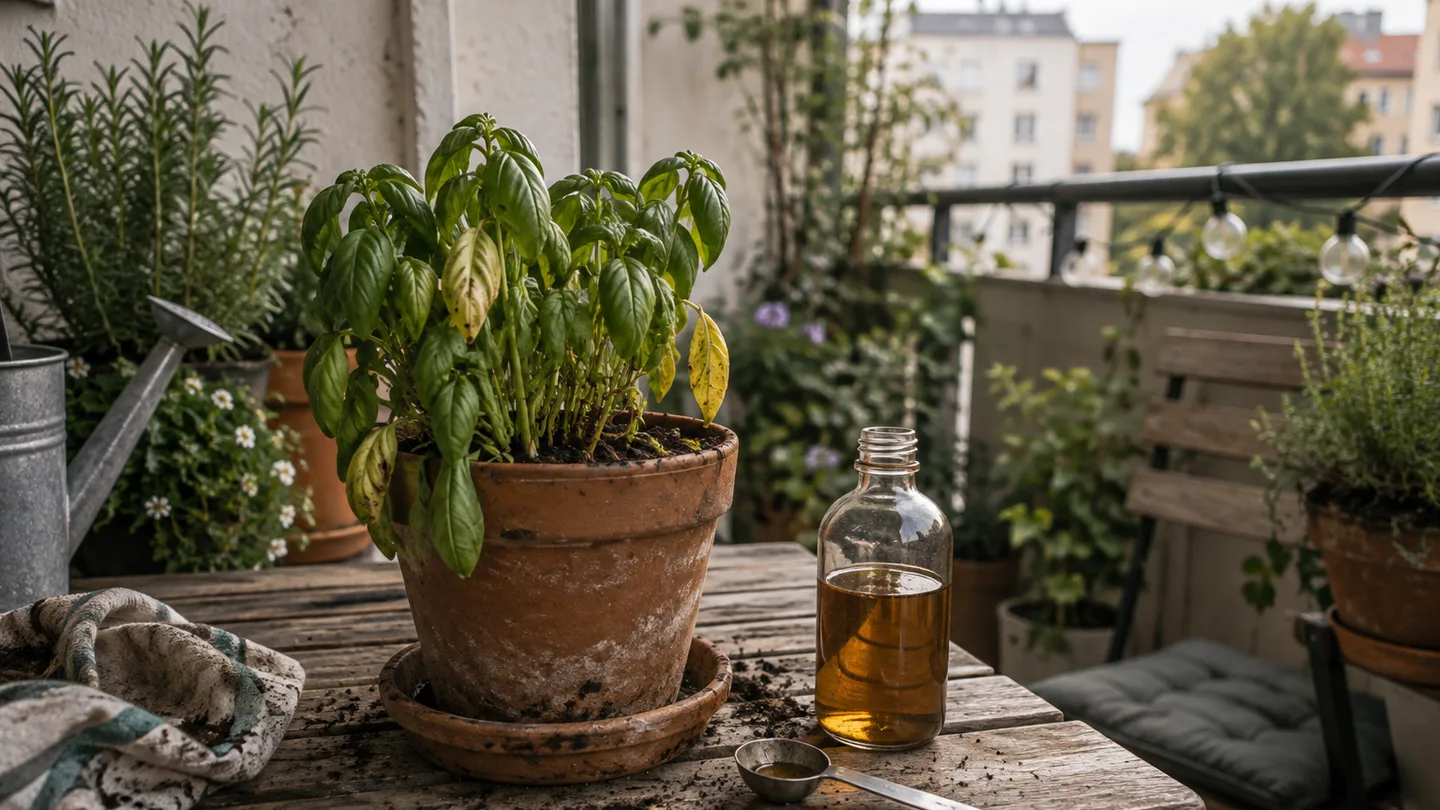
Start with the label: a typical 3% bottle is an oxidizer, not plant food
By household peroxide here, I mean a product whose label says 3%. If your bottle has a different concentration, added fragrance, stabilisers, or a salon-style developer formulation, the dilution maths and the risks change. I would not transfer a recipe from a pharmacy bottle to a stronger product simply because both containers say peroxide.
Peroxide is an oxidising chemical. When it contacts organic material, enzymes, metals, or other reactive surfaces, it can break down into water and oxygen. That makes it useful for some short-lived cleaning jobs, but it does not supply nitrogen, phosphorus, potassium, calcium, magnesium, or trace nutrients. In other words, hydrogen peroxide plant fertilizer is a misleading idea: there is no useful fertiliser charge waiting in the bottle.
It also does not provide a lasting oxygen boost to roots in saturated mix. A waterlogged container has too little air-filled pore space because water has displaced the air between particles. The lasting fix is to restore drainage, adjust the mix, reduce watering, or repot when the root system is failing. A quick release of bubbles at the surface cannot rebuild those air spaces.
The bubbles are the part that causes trouble. They show that a reaction is happening; they do not show that fungus-gnat larvae have been eliminated, that root rot has stopped, or that oxygen has reached every damaged root. In my own balcony routine, fizz is a prompt to inspect the pot, not a verdict that the treatment worked.
So I divide the possible uses into three groups:
- Surface cleaning: potentially reasonable on a cleanable, non-porous tool or tray when the product label permits that use.
- Root-zone treatment: sometimes discussed for fungus gnats, but not a guaranteed cure and not a routine watering step.
- Plant nutrition or rescue: not what a 3% bottle provides.
The bottle is a narrow-purpose tool, not a general plant tonic. That judgment saves more plants than trying to find a stronger recipe.
The cleanest win is outside the pot: cleaning tools, trays, and hard surfaces
If I were choosing where hydrogen peroxide for plants has the clearest role, I would start outside the root ball. A clean seed tray, pruning tool, saucer, or hard plastic shelf is a much easier problem than a living potting mix. The important part is the order of operations.
- Remove soil and plant debris first. Brush, scrape, or wash away old mix, algae, roots, and sticky residue.
- Apply only a product whose label permits the intended surface use. Use the stated concentration and contact time rather than guessing from the colour of the liquid.
- Allow the item to dry before reusing it. Do not pour the cleaner into a pot simply because the tray held a diseased plant.
Organic debris matters because it can react with peroxide before the solution reaches the surface you wanted to clean. A visibly dirty pot therefore gives you a poor test of the chemical. Porous wood, cracked terracotta, and rough untreated surfaces are also difficult to treat consistently because liquid can disappear into gaps and soil particles can remain lodged below the surface.
Cleaning a surface is not the same as creating lasting protection. Once the peroxide has decomposed or been rinsed away, it is no longer sitting there as a residual barrier. New soil, dirty hands, reused tools, or an infected plant can reintroduce the problem.
My conservative US-facing rule is this: a pesticide's label is generally treated as legally binding for that product's approved uses—check the specific label. That rule matters even more around edible crops. A household cleaner or pharmacy bottle should not be assumed to have permission for a crop, a harvestable part, or a particular application method.
The oft-repeated 1:4 gnat drench: calculate 0.6%, then question it
Fungus gnats are the reason the soil-drench recipe keeps circulating. The suggested mixture is usually one part of 3% hydrogen peroxide with four parts water. The final solution is not 3%; it is 0.6%, because the original peroxide makes up one part of five total parts.
Do the arithmetic on paper
For a one-litre batch, measure 200 mL of 3% peroxide and 800 mL of water. For 250 mL, measure 50 mL of peroxide and 200 mL of water. Those examples assume the starting product really is labelled 3% and that you are combining volumes in the ordinary way. Measure with a cup or syringe; do not estimate a one-to-four ratio by eye.
That arithmetic is useful, but it is not a safety certificate. A commonly repeated recipe is still a recipe without a crop-specific label, and the response can change with plant species, root condition, mix texture, temperature, and how often the treatment is repeated.
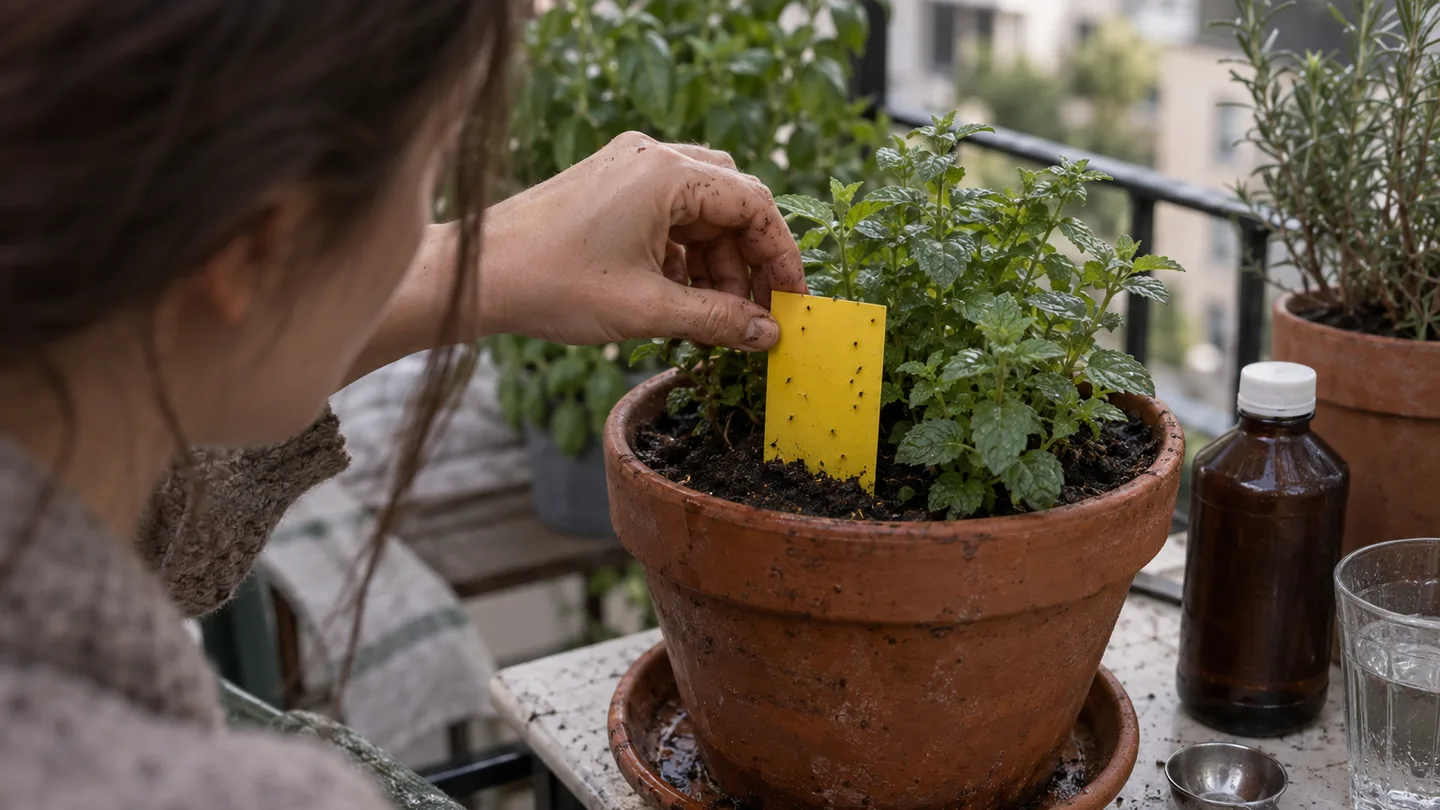
If I considered testing the mixture at all, I would limit it to one established, non-stressed, non-edible plant. I would not use it on a seedling, fresh cutting, newly transplanted plant, or a container already wilting from heat or drought. I would make one measured application, avoid putting it on a schedule, and watch for root or leaf stress before deciding whether the original diagnosis was even correct.
Adult fungus gnats are the small flies you see hovering around the surface. Their larvae live in the mix, so yellow sticky traps help monitor and catch adults but do not address every life stage. Letting the upper layer dry can make the surface less suitable for them, but that advice only fits plants that tolerate some surface drying. A moisture-loving plant, a small seedling, and a large established container do not share the same watering margin.
Drainage and watering practice are usually more direct levers. If the pot stays wet because the hole is blocked, because the container is oversized, or because the mix holds too much fine material, peroxide does not correct that mechanism. Before changing chemicals, compare the pot with guidance on how much to water container plants and check whether the plant is being kept wetter than its roots can use.
I use the same conservative US-facing rule here: a pesticide's label is generally treated as legally binding for that product's approved uses—check the specific label. I would not treat generic pharmacy peroxide as a pesticide for an edible crop unless the product label specifically allows that crop and application, including any required harvest interval. For label terminology, the National Pesticide Information Center guidance on pesticide labels is a better starting point than a forum recipe.
Where it turns from help to harm: roots, leaves, and the living potting mix
Roots are not inert plumbing. They are living tissue surrounded by bacteria, fungi, decomposing organic matter, water, and air. Peroxide does not identify which organism is helpful and which one is causing trouble. The effect depends on concentration, contact time, the amount of organic material present, and the condition of the plant.
Undiluted 3% peroxide around roots can injure tender root tissue. Repeated 0.6% drenches can also add chemical stress, particularly when the root ball is already short of oxygen. The failure may not appear as an immediate collapse. You might see stalled growth, limp leaves despite wet mix, a sour smell, fewer fine roots, or roots turning brown and soft.
A foliar spray creates a different risk. Droplets can collect in leaf creases, dry unevenly, or leave pale patches and brown scorch marks, especially on thin leaves, young growth, or plants sitting in strong sun. A leaf that was already dehydrated is a poor candidate for an improvised spray because its protective surface is already under strain.
A perched water table is the band of saturated mix that can remain above the drainage opening after free water has stopped running out. In a fine or shallow container, that wet band can occupy a meaningful share of the root zone. A 10–15 cm (4–6 in) pot can therefore have an open hole and still keep its lower mix too wet for a plant that needs air around its roots.
The practical clue is the whole pot, not the fizz. If the container remains heavy, the surface stays wet, and the roots are soft, adding peroxide makes the diagnosis harder because any later change could come from chemical stress rather than improved growing conditions. I would clear the hole, inspect the mix, and repot if necessary before reaching for a stronger treatment.
Plants with less established root systems have less room for error. Seedlings, cuttings, recent transplants, drought-stressed plants, and heat-stressed plants can all react badly to a treatment that a robust plant might tolerate. That is why a recipe that looks gentle on paper should not be treated as universally gentle in practice.
Read the symptom before the bottle: a five-row diagnosis table
Before dosing peroxide, I would write down what I can actually see. The signs below overlap, so use the table as a checking order rather than a diagnosis from one symptom. If you are comparing overwatered plant symptoms, inspect the pot, the mix, and the roots together.
| What you see | Check before peroxide | Address the mechanism first |
|---|---|---|
| Adult fungus gnats at the surface | Look for small flies when the pot is disturbed; check whether the surface remains constantly damp. | Use sticky traps to monitor adults, improve watering practice, and let the surface dry only if the crop tolerates it. Consider a labelled treatment for larvae when appropriate. |
| Mix wet for 3 or more days, with brown or mushy roots | Check the drainage hole, pot weight, smell, and root texture. The three-day point is a prompt to investigate, not a universal diagnosis. | Clear the hole, reduce the container size if the root ball is sitting in excess mix, or repot into a better-aerated mix when root damage is established. |
| White powdery growth on leaves | Look at the leaf surface and surrounding airflow. Powder on leaves is a different problem from wet soil. | Improve spacing and airflow, remove badly affected material where practical, and choose a crop-labelled powdery mildew treatment instead of a root drench. |
| Crispy foliage with a dry root ball | For plants that tolerate surface drying, check the top 2.5–5 cm (1–2 in) of mix and lift the pot to judge its weight. | Re-wet the root ball slowly until some water drains, then adjust the routine using the pot, weather, material, and crop rather than spraying leaves with peroxide. |
| Yellowing leaves | Note whether yellowing starts on older or newer leaves, and check moisture, root condition, and mix pH before assuming nutrition is missing. | Correct watering first. If the pattern still suggests nitrogen deficiency in plants, use a crop-appropriate fertiliser rather than an oxidiser. |
Two moisture checks that prevent the wrong treatment
The top 2.5–5 cm (1–2 in) is useful only for plants that tolerate some surface drying. It is not a universal moisture gauge. For a plant that dislikes drying, check deeper with a wooden skewer or your finger, lift the container, and look at how quickly water exits the hole. A lightweight plastic pot in hot sun can need attention much sooner than a glazed pot in part shade.
Likewise, a pot that stays wet for three or more days is not automatically suffering from root rot. A cool room, a moisture-loving crop, a large container, and a fine mix can all slow drying. Brown, mushy roots and a persistent sour smell make the case for root damage stronger than wet soil alone.
White powder on leaves deserves the same discipline. A peroxide drench does not put a treatment where leaf-surface mildew is growing. If the pattern points toward mildew, start with airflow and a suitable powdery mildew treatment. University extension guidance on fungus gnats is also useful for separating the adult flies you see from the larvae hidden in the mix.
After a drainage correction, I would expect the wetness symptom to change before old yellow leaves recover. If the pot still stays saturated after the hole and mix are corrected, that observation would challenge the idea that watering was the only cause and send me back to the roots, light, temperature, or nutrition.
Use this stop/go checklist before you pour, spray, or repeat
Here is the short version I would save on my phone. It is designed to stop an improvised treatment before it becomes a routine.
- Stop if the concentration is unknown. Confirm that the bottle says 3% before using the 1:4 calculation. Do not substitute salon developer, industrial peroxide, or an unlabeled concentrate.
- Stop if the product has no permission for the job. Check whether the label allows plant use, the specific crop, the application method, and any harvest interval. If it does not, do not treat an edible crop with a homemade recipe.
- Stop if the pot does not drain freely. Inspect the hole and saucer first. A blocked opening or permanently saturated mix is a water-management problem, not a peroxide problem.
- Stop if the plant is already fragile. Avoid improvised drenches on seedlings, cuttings, fresh transplants, drought-stressed plants, and heat-stressed plants.
- Go cautiously only when the use is justified. Measure the dilution rather than eyeballing it, test one established plant, and avoid repeating the application on a calendar.
- Inspect in two stages. Look for leaf or root stress over the next 24–48 hours, then reassess the original problem after about 7 days. Do not increase the strength just because the first application produced no bubbles or visible change.
Never mix hydrogen peroxide with vinegar, bleach, or another household chemical. Keep it in its original labelled container and treat it as a reactive product, not as harmless irrigation water.
Before buying peroxide this weekend, check the drainage hole and lift the pot. If the mix is still wet below the surface or the hole is blocked, fix that first; the right purchase may be a better-draining pot, fresh mix, or a set of sticky traps rather than another bottle.