Overwatered Plant Symptoms: 7 Signs, Causes and Fixes
A plant can be overwatered while its leaves are drooping. The clearest pattern is a pot that stays heavy and wet 2–5 cm (1–2 in) below the surface, paired with yellow lower leaves, soft tissue, or a sour root ball—not a single yellow leaf by itself.
Here’s the seven-sign scan I use: start with the potting mix and pot weight, then look at the leaves and stems, and only then inspect the roots. No single symptom proves overwatering, but several clues lining up usually tell a much clearer story.
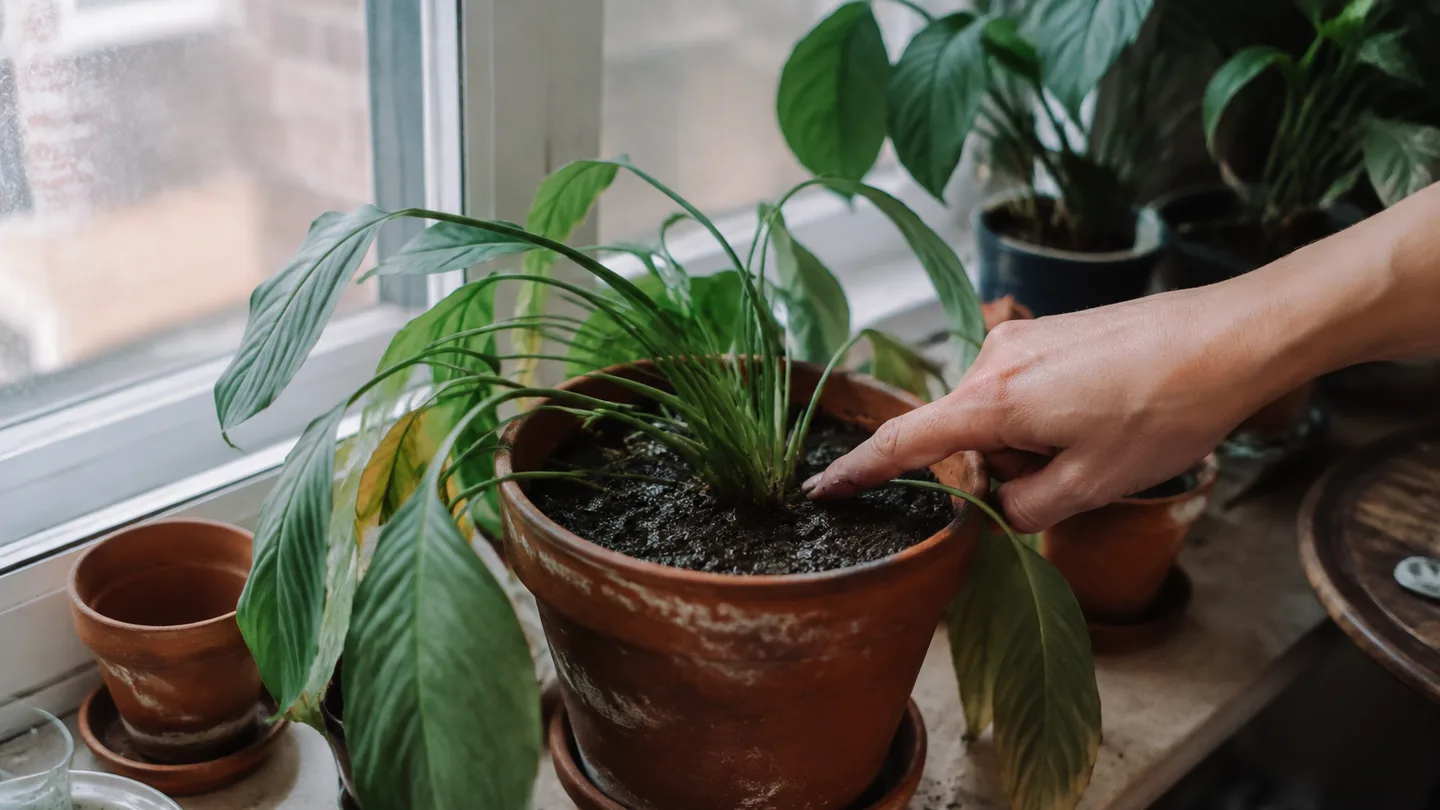
The seven clues, from a wet root ball to visible root rot
Use this table as a sorting tool rather than a diagnosis. The first clues tell you that the container is staying wet. The last clue gives you the strongest confirmation available without laboratory testing.
| Clue | What it may mean | How much weight I give it |
|---|---|---|
| Soil stays wet 2–5 cm (1–2 in) down | The root zone is drying slowly or not at all. | Early clue; check pot weight and drainage. |
| Lower leaves turn yellow | Roots may be stressed, though older leaves can also yellow naturally. | Supporting clue, not proof. |
| Leaves droop or curl while the mix is damp | Wet roots may not be taking up water properly. | Strong pattern when the pot is heavy. |
| Brown or black leaf spots appear | Water stress can weaken tissue, but spots also have other causes. | Supporting clue only. |
| Stems or the crown feel soft | Damage may have moved from the roots into lower tissue. | Stronger warning sign. |
| Mould, algae, or fungus gnats appear | The surface or upper mix is staying moist for long periods. | Moisture clue, not proof of root rot. |
| Soil smells sour and roots are soft or collapsing | Root tissue is breaking down in persistently wet conditions. | Strongest confirmation in a home inspection. |
Before watering, push a finger 2–5 cm (1–2 in) into the mix and lift or tilt the pot. A container that still feels heavy several days after watering deserves more attention than a leaf that looks slightly tired. If the surface is dry but the pot is heavy, don’t assume the root ball is dry; the lower half may still be holding water.
Yellow leaves, brown spots, and limp stems: when leaf symptoms point to excess water
Yellow leaves are a traffic light, not a diagnosis. Both drought and excess water can damage roots, interrupt water uptake, and leave the foliage looking limp or pale. The useful question is not simply whether the plant is wilting. It is whether the root zone is wet or dry while the wilting is happening.
- Wet-root pattern: the mix is damp below the surface, the pot feels heavy, lower leaves yellow first, and stems or leaves may feel unusually soft. The plant can droop because oxygen-starved roots are no longer functioning normally.
- Dry-root pattern: the mix is dry deeper down, the pot feels light, leaf edges may turn crisp or papery, and the plant often improves after a thorough watering.
Brown or black spots sit in the middle. They can follow prolonged moisture stress, but they can also come from damaged leaves, poor airflow, sun scorch, or disease. I look at the spot pattern only after checking the soil and pot weight. A few spots on an otherwise firm plant do not justify an emergency repot.
There are two common exceptions. Many succulents need a much deeper dry-down than leafy tropical plants, so a barely dry surface is not a watering signal for them. Also, one or two older leaves may yellow as part of normal ageing. I become more concerned when yellowing moves through several lower leaves while the mix remains wet and the plant is producing no firm new growth.
My rule of thumb: a wilted plant needs a root-zone check before it needs another drink.
Mould, fungus gnats, and a sour smell: the soil-and-root evidence
White mould on the surface, green algae, and fungus gnats usually tell me that the upper mix is staying moist. They do not, by themselves, prove that the roots are rotting. A seedling tray, recently watered pot, or mix rich in organic matter can show surface growth without having badly damaged roots.
The sour smell changes the picture, especially if the pot also stays wet and the plant is declining. Roots that are healthy for that species should feel reasonably firm when handled gently. Rotting roots may be soft, hollow, collapsing, or coated in tissue that slips away. Colour helps, but it is not decisive: root colour naturally varies between plant types and potting mixes.
For a root check, work slowly:
- Move the pot over a towel and remove any saucer or decorative outer pot.
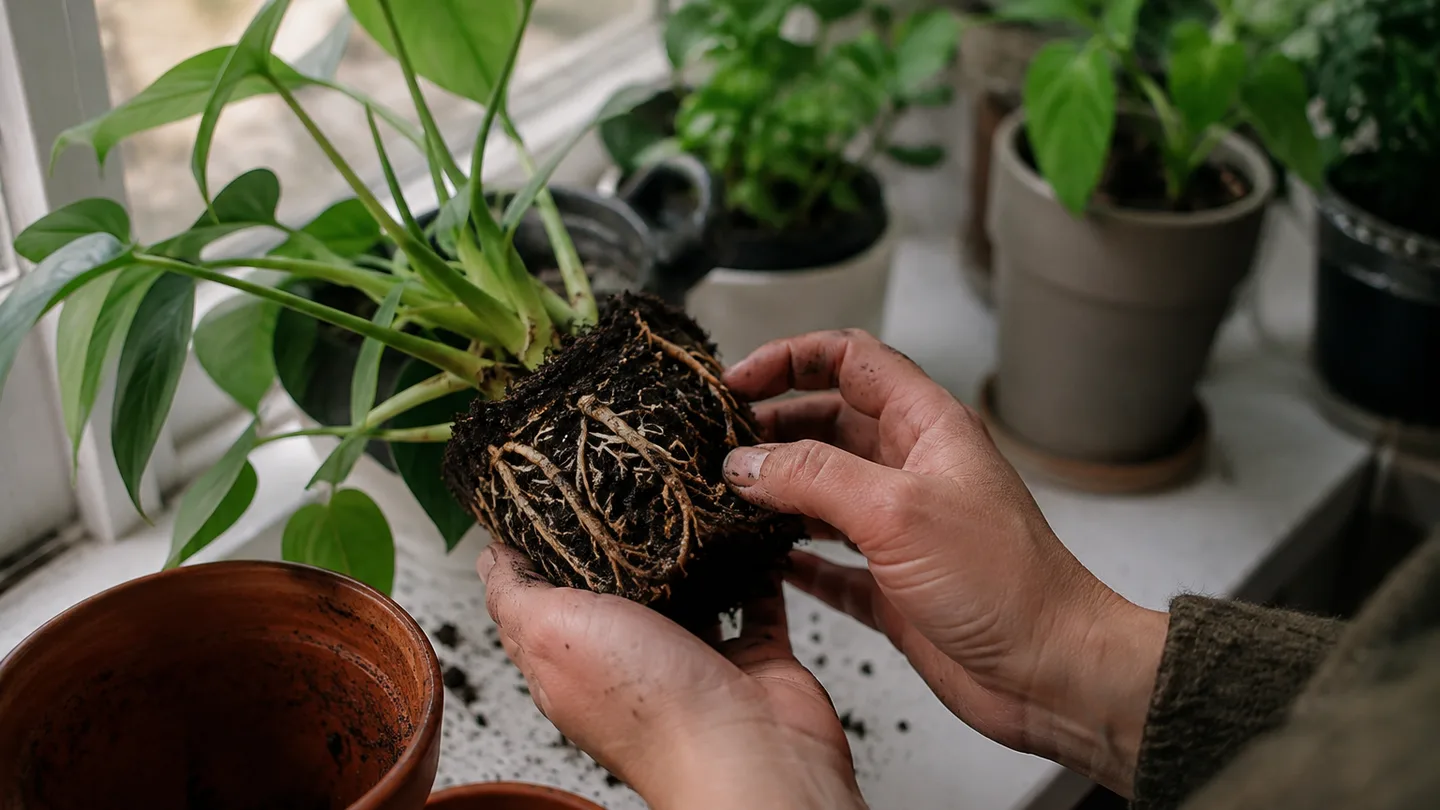
- Support the stems near the soil line, turn the pot on its side, and slide out the root ball. Don’t pull the plant by its leaves.
- Brush away loose mix from the outside and bottom of the root ball with your fingers. Avoid tearing through every fine root just to expose the centre.
- Check texture and smell. Firm roots are reassuring; soft, collapsing tissue and a sour odour point to active decay.
If you want a second perspective on plant-specific exceptions, extension guidance on diagnosing root rot is a useful reference. I still treat the actual root texture and the way the pot is drying as more useful than a root-colour chart.
Four container causes keep roots wet: pot size, mix, drainage holes, and saucers
Overwatering is often a container problem rather than a person problem. A careful grower can still create wet roots if the pot, mix, light level, and watering pattern keep more moisture in the root zone than the plant can use.
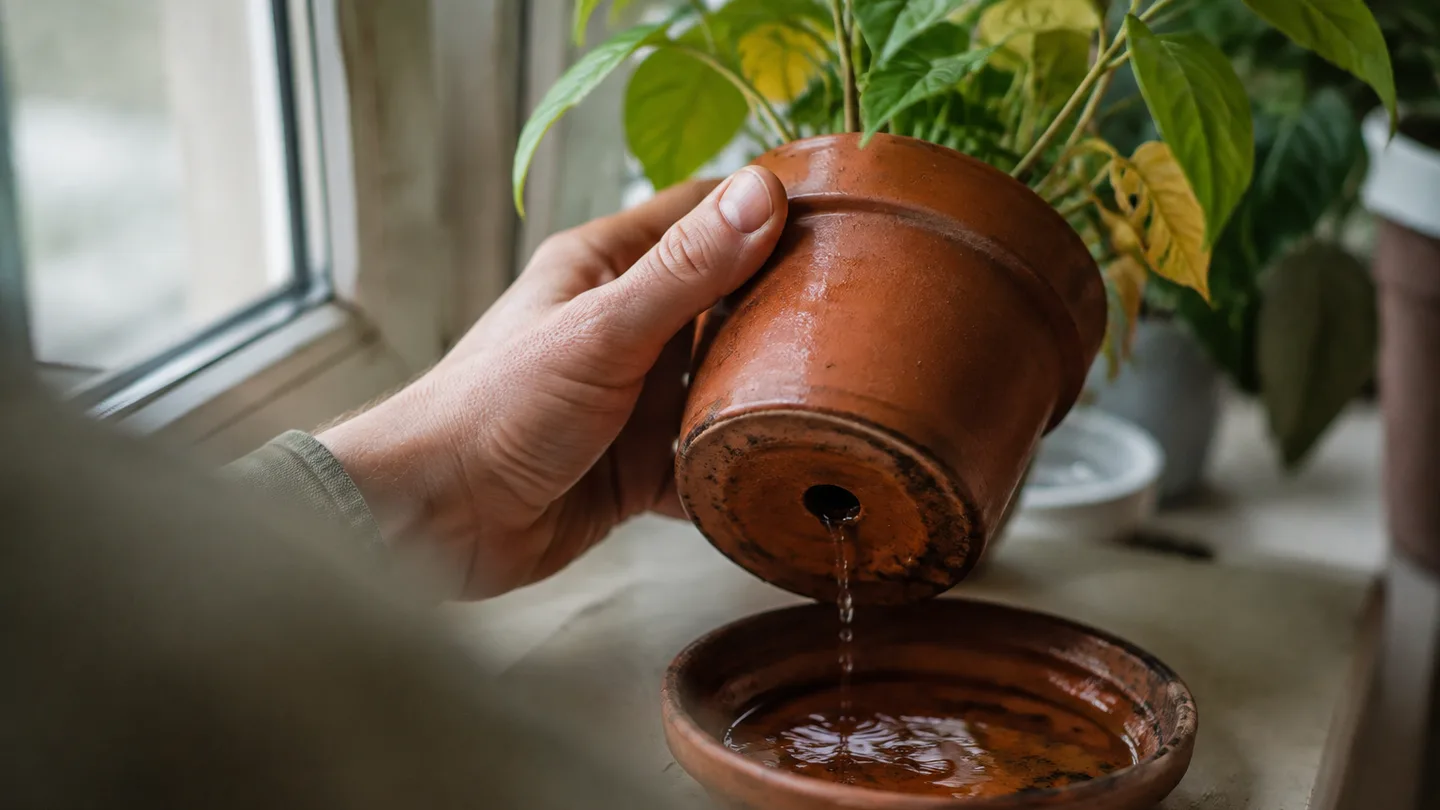
- Blocked or missing drainage holes: water needs a route out of the container. Check that the hole is open and not sealed against a flat balcony surface, plastic sheet, or saucer.
- Standing water: a saucer or cachepot can hold the lower end of the root ball in water after the mix has finished draining. A cachepot is a decorative outer pot that may not have its own drainage hole.
- Compacted or overly fine mix: small pores hold water tightly and can collapse when the mix is old, compressed, or repeatedly walked on during planting.
- Too much wet mix for the root system: an oversized pot, low light, cool conditions, or frequent small sips can keep moisture around a small root ball for too long.
A perched water table is the wet layer that remains above a drainage hole because the mix’s fine pores hold water before gravity can pull it out. It is not a visible table inside the pot; it is a zone of slower drainage near the bottom. Adding gravel at the bottom does not create extra drainage space. The change between gravel and potting mix can leave the wet zone sitting above the gravel instead of drying the roots.
For most routine repots, I move up only about 2–5 cm (1–2 in) in pot diameter. A much wider container adds a larger volume of mix that must dry, while the plant still has the same small root system. The practical setup is simpler: use an open drainage hole, a mix suited to the plant, and an empty saucer once drainage stops.
Rescue in the right order: drain, inspect, trim, or simply let the pot dry
Don’t start with fertiliser or a dramatic root wash. Start by removing the extra water, then decide whether the roots are merely wet or actually damaged.
- Stop adding water. Empty the saucer or cachepot and place the container where air can move around it. If the drainage hole is blocked, clear it without pushing a plug deeper into the pot.
- Decide whether the plant needs time or a repot. If the mix is wet but the stems are firm and the roots look healthy, improve light and airflow and let the pot reach the plant’s usual dry threshold. Wet for one day is not the same problem as wet for weeks.
- Unpot when saturation persists. If the pot remains waterlogged, smells sour, or contains mushy roots, slide out the plant and remove loose old mix. Don’t aggressively strip every piece that clings to a healthy root.
- Trim only damaged tissue. Use clean, sharp shears for roots that are clearly soft, collapsing, or slimy. Leave firm roots in place. The aim is to remove decay while preserving the working root system.
- Repot with less excess volume. Use fresh, airy potting mix in the same pot if the root ball still fits, or choose one only 2–5 cm (1–2 in) wider. Make sure the drainage hole is open before the plant goes back in.
On my balcony, I once read a wilted pothos as a thirsty plant and gave it another drink. The plastic pot was still heavy, so I slid the plant out instead of watering again. The outer mix was wet but most of the roots were firm; I removed the standing water, moved the pot into brighter indirect light, and waited for the top layer to dry before watering. The useful lesson wasn’t never water a wilted plant. It was to inspect the root zone before adding more water.
After a repot, don’t automatically drench a badly stressed plant. If the fresh mix is already slightly moist, give the roots time to settle. If the roots are sound and the new mix is dry, a modest watering may be appropriate. The condition of the roots and the moisture of the replacement mix decide this step.
Fertiliser cannot rebuild roots that have already collapsed. Feeding a plant with damaged roots can also add dissolved salts to a small, weakened root zone, so I wait for signs of active recovery before resuming a normal feeding routine. I also would not hide the pot in a water-filled cachepot after the rescue. That simply recreates the condition that caused the problem.
If the old mix came from a pot with mushy roots, I would not use it for another rescue. The decision in can you reuse potting soil is much safer when the original plant was healthy and the mix has not stayed saturated.
After the fix, watch 7–14 days for new growth—not greener old leaves
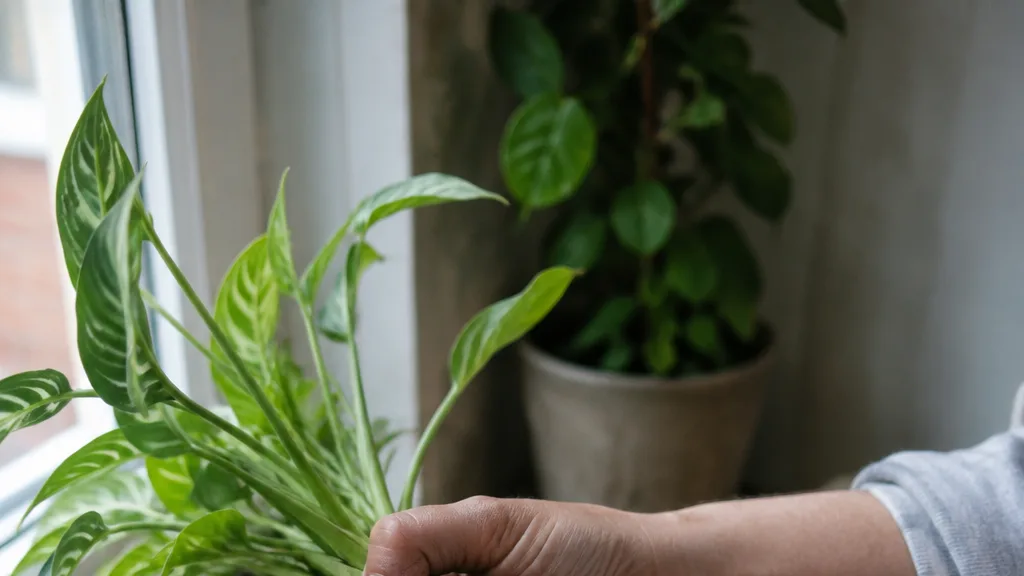
Recovery is easier to judge by what happens next than by the damaged leaves already on the plant. Over the following 7–14 days, check whether the stems remain firm, new spots stop spreading, and the pot begins drying at a sensible rate for its light and size.
- Existing yellow leaves may stay yellow. A damaged leaf often does not turn green again. It may eventually drop even while the root system improves.
- New tissue is the better test. Fresh leaves that open without rapid spotting or collapse are more useful than trying to restore an old leaf.
- Drying speed matters. A pot that remains saturated after the rescue still has a drainage, mix, pot-size, or light problem.
- Reinspect if decline continues. A sour smell, soft crown, or new mushy roots means the first correction did not remove the wet conditions.
Severe root loss may not be recoverable, even with a careful repot. That is not a failure in the rescue sequence; there may simply be too little living root tissue left to support the foliage. For plants that propagate easily, taking a healthy cutting can be a sensible backup, but it is not a guarantee that the original plant will survive.
A watering rule that survives plastic pots, low light, and summer heat
I don’t use a fixed calendar for container plants. I check the moisture at the depth where the active roots are likely to be, lift the pot to learn its weight, and then water thoroughly enough that a little exits the drainage hole. Once drainage stops, I empty the saucer.
For many leafy houseplants, the first check is 2–5 cm (1–2 in) below the surface. Succulents and other drought-adapted plants generally need a deeper dry-down before watering, while seedlings and shallow-rooted herbs may need attention sooner. The plant’s normal dry threshold matters more than a universal number.
Container conditions can shift the timing sharply. Plastic usually loses less water through its walls than unglazed terracotta, so the same plant may stay wet longer in plastic. A small pot in sun and wind can dry quickly; a large pot in low light can remain damp much longer. Root fill, humidity, temperature, and season can all change the result.
For a separate volume walkthrough, how much to water container plants follows the same drain-and-check logic. If you are adjusting care through the seasons, how often to water container plants is a better starting framework than a date on the calendar. During a heatwave, the useful question is how often to water potted plants in hot weather, followed by an actual check of the mix.
Record one week of observations for each problem pot: the day you watered, whether water exited the hole, how the pot felt afterward, and when the top layer reached its dry threshold. Use that drying time as a starting range, not a rule. If the weather changes or the plant fills the pot with roots, the range changes too.
Three side questions about overwatering
Can a moisture meter tell me whether a plant is overwatered?
It can add a clue, but it reads moisture at one probe depth and may miss a wet lower root ball. Use the meter alongside the 2–5 cm finger check, pot weight, drainage behaviour, and—when necessary—root condition. I would not treat one reading as a universal instruction for every plant or potting mix.
Is a self-watering pot safer for someone who overwaters?
Not automatically. A reservoir can keep the mix continuously moist, which may suit plants that prefer even moisture but can work against drought-adapted plants. The wicking system still needs monitoring, and the reservoir should not be treated as proof that the root zone is getting the right amount of air.
Should I add hydrogen peroxide after overwatering?
I would not use it as a default cure. It cannot remove saturated mix, reopen a blocked drainage hole, or replace mushy roots. Drainage, inspection, and fresh mix come first; any chemical treatment should follow its product label and plant-specific guidance rather than an improvised concentration.
Before the weekend, choose one pot that worries you. Empty its saucer, push a finger 2–5 cm (1–2 in) into the mix, lift the container, and write down whether it feels light or heavy. Check that same pot again in a week: firm stems, no spreading spots, and a root zone that is actually drying are the signs I want to see.
Frequently Asked Questions
Can a moisture meter tell me whether a plant is overwatered?
It measures moisture at one probe depth and can miss a wet lower root ball; use it alongside the 2–5 cm soil check, pot weight and root condition rather than treating its reading as universal.
Is a self-watering pot safer for someone who overwaters plants?
Not automatically: a reservoir can keep media continuously wet. Explain which even-moisture plants may suit one, which drought-adapted plants do not, and why the wicking system still needs monitoring.
Should I add hydrogen peroxide to soil after overwatering?
Do not present it as a default cure. It cannot remove saturated mix or mushy roots, so drainage, root inspection and fresh media come first; any treatment should follow its label and plant-specific guidance.