Pepper Plant Leaves Curling? 5 Causes and What to Check
Pepper plant leaves curling? Start by checking whether the newest leaves, the oldest leaves, or the whole plant are affected. Then compare the leaves in the morning and afternoon and feel the potting mix before changing the watering or reaching for a spray; those quick checks often point you toward one of five causes.
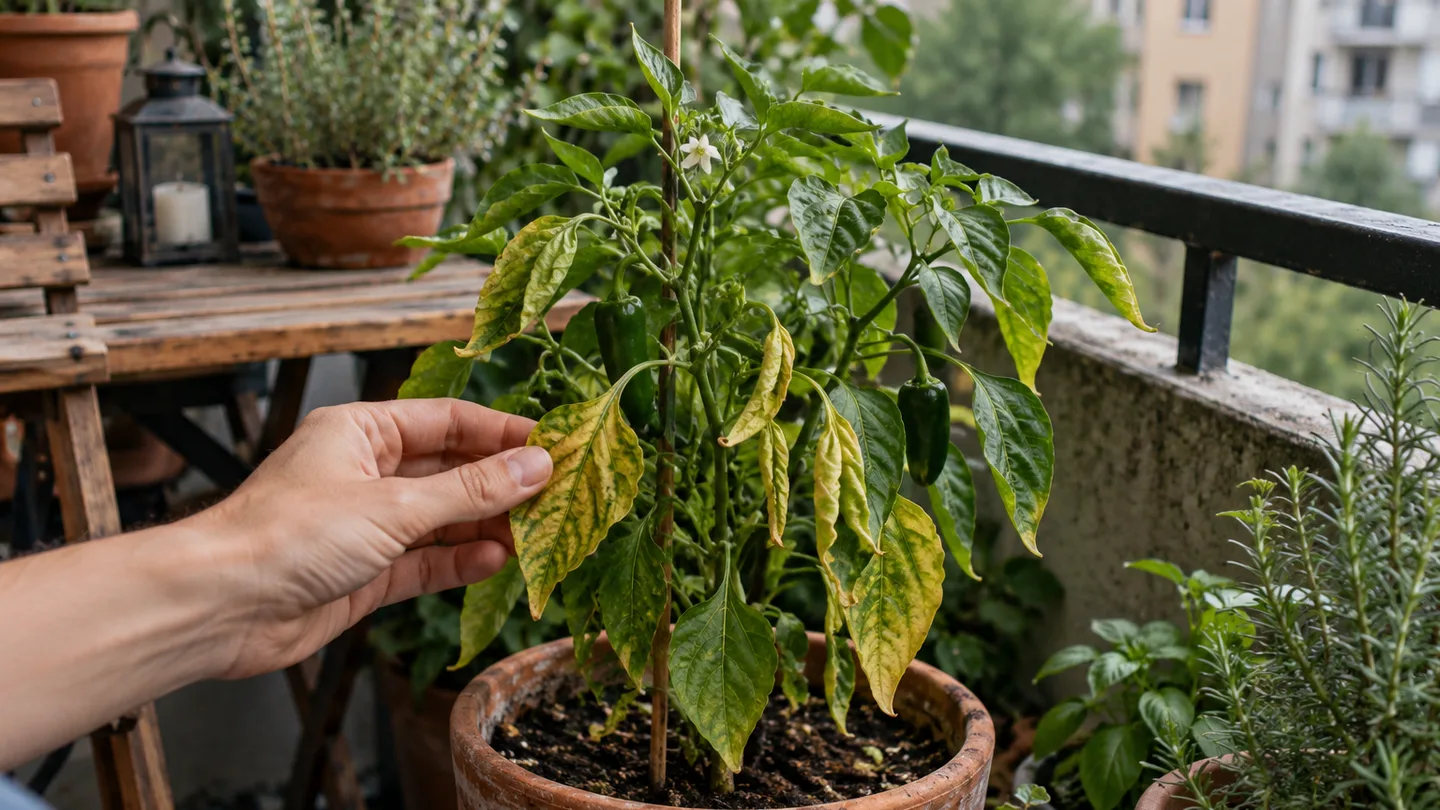
Start with the pattern: old leaves, new leaves, or the whole plant?
Look at the newest two or three leaves at the growing tip, then compare them with leaves farther down the stem. Note whether the edges roll upward, fold downward, twist, or pucker. Also ask whether the change appeared on one branch or across the plant.
That pattern is a clue, not a diagnosis. A plant that rolls several leaves during a hot afternoon but looks more relaxed in the morning is telling a different story from one whose newest leaves keep emerging twisted. Curl on older leaves alone can also follow a recent spell of dry soil or strong sun.
Before you intervene, take a close look at both sides of a few affected leaves and check the potting mix below the surface. My first move on a balcony is deliberately unexciting: observe, touch the soil, and check for pests before changing anything. If you alter water, fertilizer, position, and pest treatment all at once, you may lose the clue that would have identified the problem.
Cause 1: hot sun and balcony wind make leaves roll to limit water loss
Hot, bright conditions and moving air can make a pepper lose water from its leaves faster than its roots can replace it. Rolling or cupping the leaf reduces the exposed surface, so a plant may curl even when the mix still feels moist. A sunny wall or glass balcony panel can add reflected heat, and wind can dry foliage and the pot more quickly than the sheltered forecast suggests.
I treat about 90°F (32°C) as a reason to investigate heat stress, not as a magic cutoff. The more useful test is timing: compare the plant early in the day with its appearance during the hottest part of the afternoon. If leaves relax overnight or by morning and the mix is neither bone-dry nor soggy, temporary heat or wind stress moves up my list.
Try a little afternoon shade or a less exposed position for a day, while keeping the pot in enough light for the plant’s needs. Don’t move it repeatedly or flood the container just because the leaves look limp. If the curl persists at dawn, inspect the roots’ moisture conditions and the new growth next.
Cause 2: the root ball is either drying too far or staying waterlogged
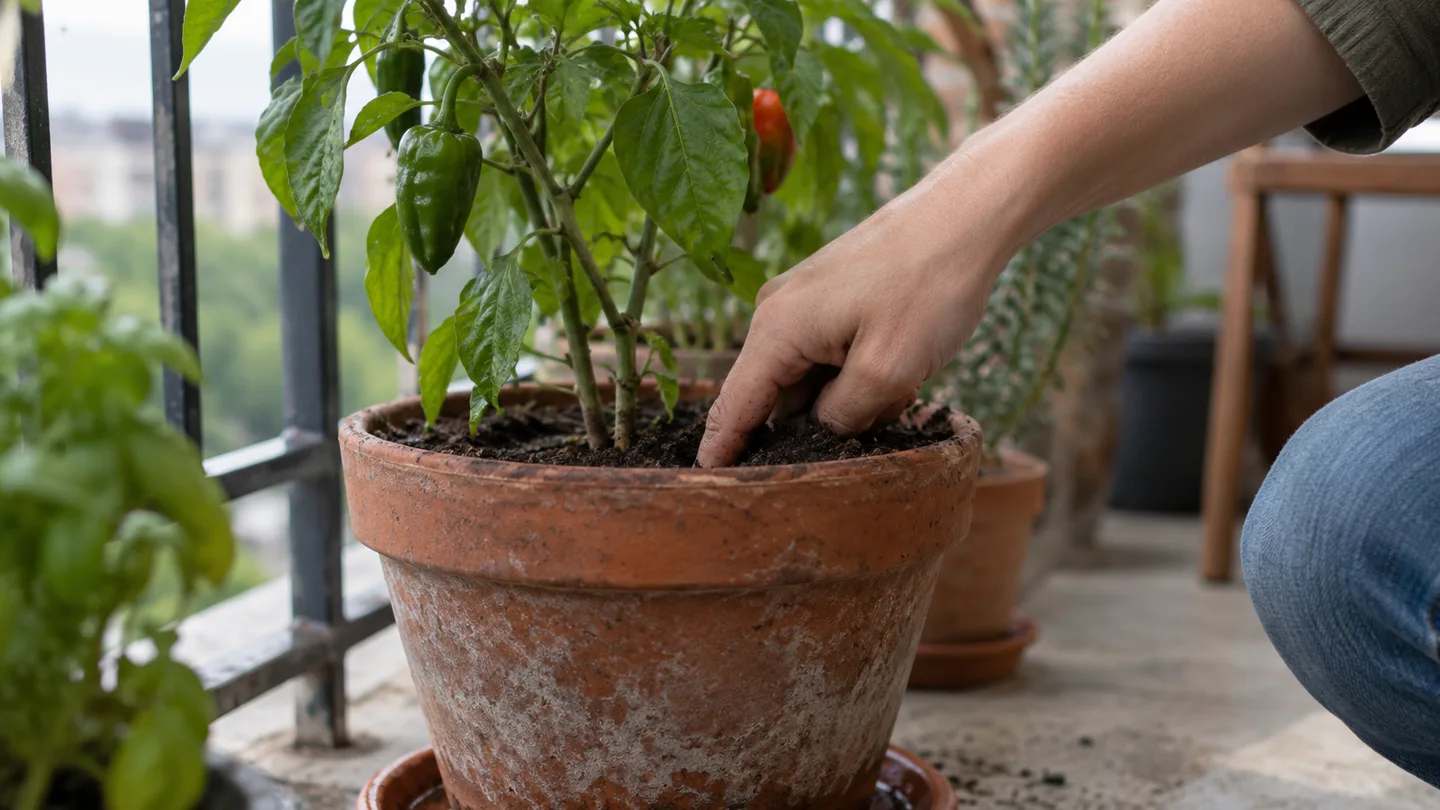
Touch the mix about 1–2 inches (2.5–5 cm) below the surface. If it feels dry there and the pot is light, the root ball may be short of water. If it feels wet, the pot is heavy, and the plant is still drooping or curling, adding more water may make the problem worse. A wet surface alone doesn’t tell you what is happening deeper in the container.
Check the drainage holes as you water. Water that exits can mean the mix is draining, but a quick stream is not proof that the whole root ball got wet: very dry mix may let water run down a gap along the pot wall. If the pot stays heavy and wet, check that its holes are open and that it isn’t sitting in a saucer full of runoff.
Calendar watering misses these differences. A small plastic pot in sun and wind can dry sooner than a larger glazed pot in partial shade; the same container can also need water at different intervals as weather changes. Use the pot’s weight and the mix’s moisture to decide, then consult how often to water container plants for a broader routine. If you’re unsure whether water is getting through the root ball, water slowly and check again rather than repeating a large soak immediately.
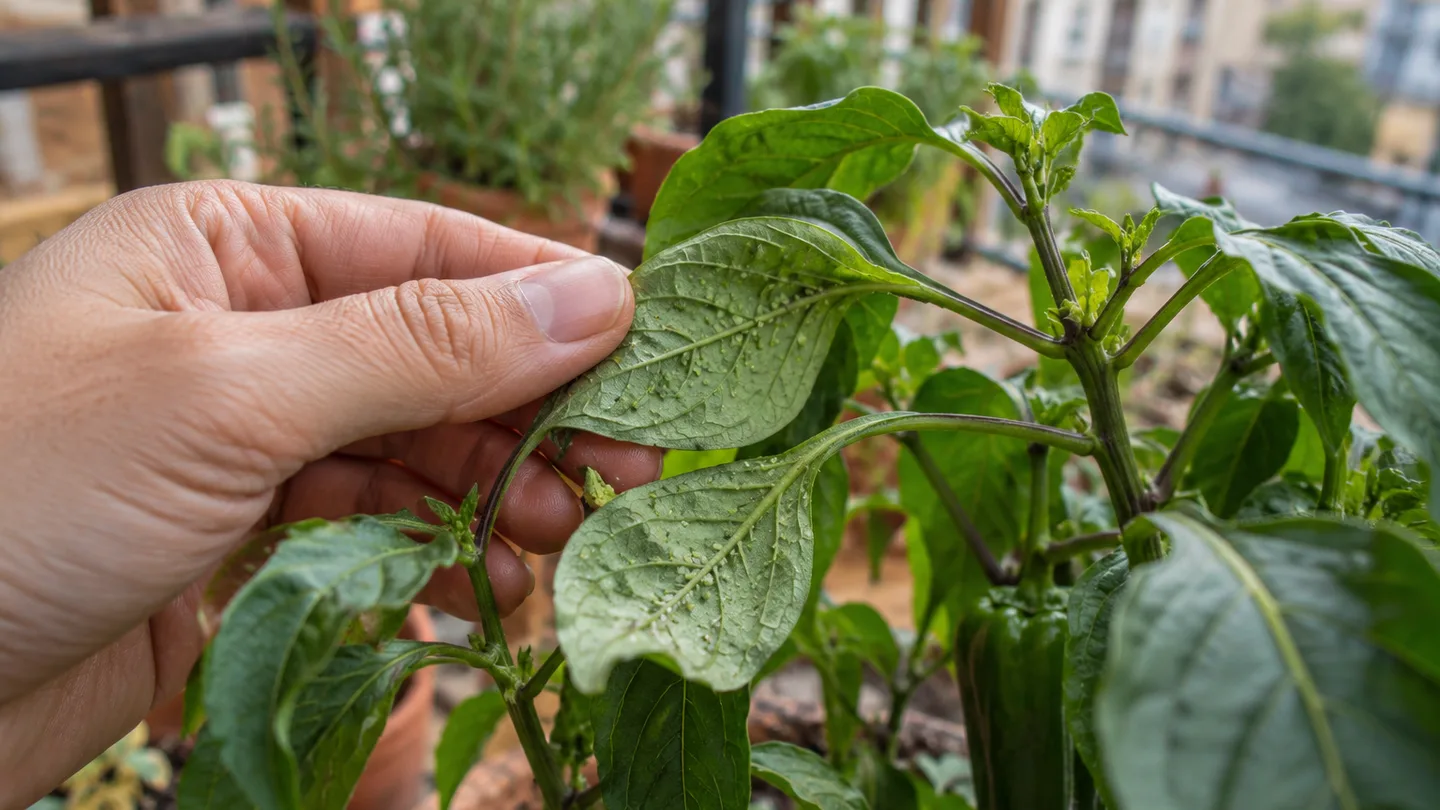
Cause 3: look under curled leaves for aphids, mites, and other sap-feeders
Turn over several leaves, including the distorted newest growth. Look for small insects clustered on tender stems, pale stippling, sticky residue, fine webbing, or tiny eggs. Aphids may be visible to the naked eye; mites can be harder to spot, and a 10× hand lens can help you inspect suspicious specks on the underside of a leaf.
Heat curl tends to track the day’s conditions; pest damage tends to leave evidence on the plant. That distinction isn’t absolute, so inspect more than one leaf. A single curled leaf with no insects or feeding marks is a weaker reason to treat than repeated distortion alongside visible pests or stippling.
If you find insects, identify what you’re seeing before choosing a response. A gentle rinse can dislodge some exposed pests, but check the plant again because hidden insects may remain. For persistent trouble, follow directions on a product specifically labelled for the pest and edible plants, if you choose to use one. Don’t spray in strong sun, and avoid treating flowers where pollinators may be visiting. A university extension guide to mites can help you compare signs when the insects are too small to identify by eye.
Cause 4: excess feed or fertilizer salts can curl and scorch leaf edges
Think back to recent feeding. Did you apply fertilizer more often than the label directs, use a concentrated solution, or add several products close together? A whitish crust on the mix or pot rim, along with brown, dry, or curled leaf margins, makes salt buildup worth checking. The crust can also come from minerals in water, so it doesn’t prove fertilizer is the cause by itself.
Fertilizer salts in a pot can make it harder for roots to take up water. Adding more fertilizer to a plant with scorched edges is therefore a poor first response: if salts are contributing, another dose adds to the very condition you’re trying to correct. Pause feeding while you review what went into the pot and when.
If the container drains freely and the mix is not already waterlogged, a careful flush with water may help carry soluble salts out through the drainage holes. Don’t do that to a pot with blocked drainage or persistently wet mix. When you resume feeding, use the product label for the plant and application method; there isn’t one safe dose for every fertilizer, pot, and watering routine. For a routine, see how often to fertilize container plants.
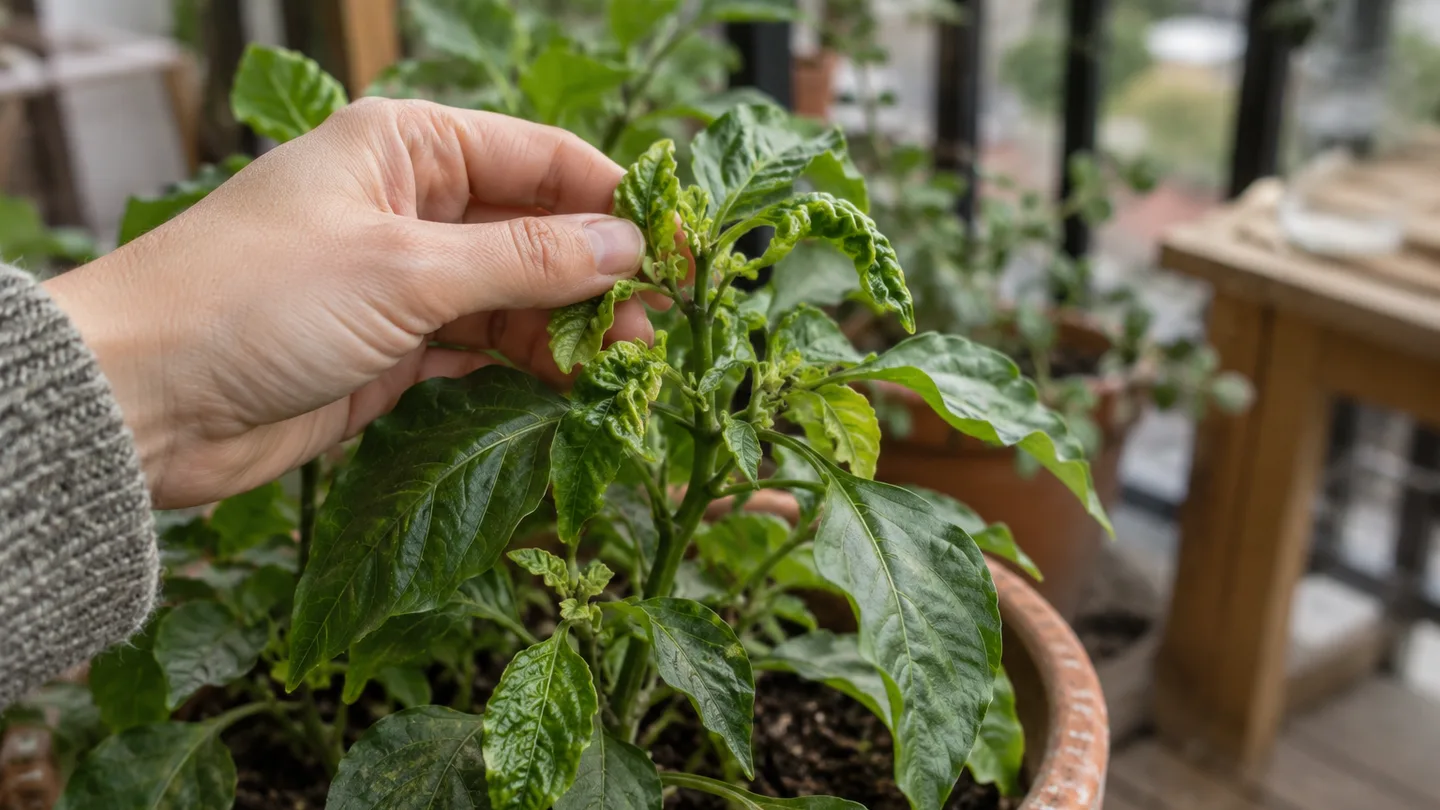
Cause 5: persistent, misshapen new growth can point to a virus
Pay closer attention when new leaves keep emerging twisted, unusually narrow, mottled, or oddly coloured, especially if the plant’s growth also seems stunted. A brief afternoon roll that eases by morning is not the same pattern as distortion that continues on successive sets of new leaves.
Those signs can fit a virus, but they do not confirm one. Pests, root stress, and other growing conditions can also distort leaves. Herbicide drift is another possibility if the change began after nearby spraying; new growth may appear misshapen even when you can’t find insects on the plant. Consider where the plant sits and whether spray could have reached it before deciding that disease is the explanation.
Keep a plant with persistent, unexplained symptoms apart from other peppers if you can do so without stressing it further, and avoid moving sap or plant debris between plants. Photograph the newest growth and compare it over several days. For a more specific diagnosis, check a university extension pepper disease guide or ask a local plant clinic, where available, rather than treating a guessed virus with a general-purpose spray.
Use this symptom-to-check table before choosing a fix
Use the table to choose the next inspection, not to label the plant from one symptom. Two causes can overlap—for example, a hot balcony can dry a pot while pests are also present.
| What you notice | First check | Don’t assume |
|---|---|---|
| Leaves roll mainly in hot afternoons | Compare morning and afternoon; check wind, reflected heat, and mix moisture | That curl alone means the plant needs more water |
| Leaves curl while the plant looks limp | Feel the mix 1–2 inches (2.5–5 cm) down; lift the pot and check drainage | That drooping always means dry soil |
| New growth is puckered, with specks or sticky residue | Inspect both sides of several leaves for insects and feeding marks | That every curled leaf needs pesticide |
| Edges look brown or scorched after feeding | Review recent fertilizer use and look for crust on the mix or pot | That another feed will repair the leaves |
| New leaves stay misshapen or mottled | Check for pests, root stress, and possible nearby spray exposure | That a virus is confirmed by appearance alone |
Correct one likely cause at a time, not all five at once
Start with the checks that don’t disturb the plant: note the time of day, feel the mix, lift the pot, and inspect leaf undersides. Then review recent weather and feeding. If you find pests, respond to the pest you actually see. If symptoms stay concentrated in new growth or look systemic, investigate disease and spray exposure instead of cycling through unrelated treatments.
Here’s a useful balcony example. Imagine a pepper in a small plastic pot beside a warm wall. Its leaves roll by late afternoon, the top inch of mix is dry, but the pot still feels heavy and the mix below that is damp. Watering heavily because the surface is dry could keep the lower root zone wet. I’d first give the plant some relief from reflected afternoon heat, confirm that water can leave the pot, and check it the next morning. If the leaves are still distorted then, I’d inspect for pests and look at the newest growth before changing the watering again.
That order is my judgment call: check the growing conditions before treating an uncertain diagnosis. It’s not a promise that one adjustment will fix the plant. If you do change something, write down what and when. Recheck after 24–48 hours for whether fresh stress is easing, but don’t expect damaged leaves to become a reliable report card.
Judge recovery by the next leaves, not by whether old leaves flatten
Leaves that have been badly distorted, scorched, or dried may stay marked even after the cause is corrected. Look instead at the next leaves as they open. After adjusting a likely stressor, watch the plant over roughly one to two weeks; that gives you a chance to see a new growth pattern rather than judging only the old damage.
If new leaves emerge more normally and the curling stops spreading, that supports your working explanation, though it doesn’t prove it. If distortion continues, check the parts you haven’t ruled out: hidden pests, a root ball that remains too wet or too dry, recent fertilizer, and possible spray exposure. New mottling or worsening stunting is a reason to seek a more specific diagnosis from a local extension service or plant clinic.
Reduce repeat stress with a steadier pot, position, and moisture check
For a full-size pepper, a container around 5 US gallons (about 19 L) offers more soil volume and moisture buffer than a very small pot. That doesn’t make it immune to drying: an exposed, dark container in afternoon sun can still heat up, while compact varieties and partly shaded sites may behave differently. Check that the pot is stable in balcony wind and that runoff can escape without creating a mess or standing water.
Position matters too. If afternoon sun repeatedly brings on temporary roll, try modest shade during the hottest hours rather than moving the plant into deep shade for the whole day. Keep watering decisions tied to the mix and pot, not a fixed weekday schedule. If you want a seasonal comparison, how often to water potted plants in hot weather can help you think through changing conditions.
Next week, feel the mix below the surface at the hottest part of the day, lift the pot, and note whether the leaves look different by morning. That small check tells you more than a calendar reminder—and it gives you a baseline before the next heat spell.