Cucumber Leaves Turning Yellow: 7 Causes and Fixes
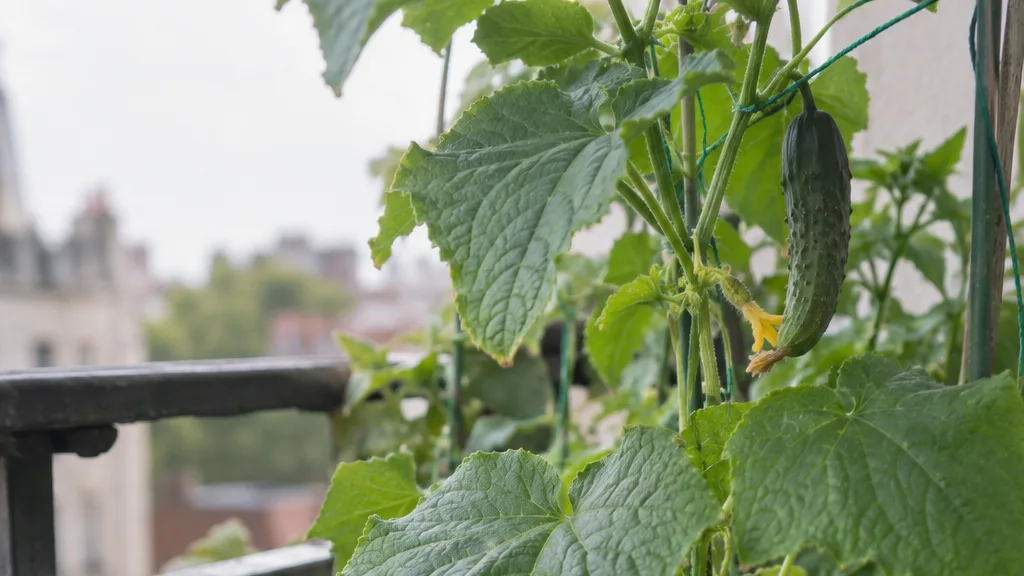
One or two yellow lower leaves on a cucumber vine are a different problem from yellowing that is moving through the whole plant. I start with three checks before adding fertilizer: which leaves are affected, whether the yellowing sits between green veins or covers the whole leaf, and whether the top 2–3 cm (about 1 inch) of potting mix is wet or dry.
Yellow colour alone is not a diagnosis. A wet root ball, a dry root ball, low light, exhausted feed, spider mites and leaf disease can all produce some version of it, so I use the pattern to decide what to test next.
| What you see | Check first | Most useful route |
|---|---|---|
| One or two oldest leaves yellow; new tips look firm and green | Leaf age, fruit load and recent watering | Natural ageing, thirst or a mild feeding issue |
| Several leaves pale while the pot stays heavy | Drainage holes, saucer and wet mix | Waterlogged roots |
| Dull yellow leaves, limp stems and crispy edges | Pot weight and dry depth | Underwatering |
| Older leaves uniformly pale | Feeding history and salt crust | Nutrient shortage or salt buildup |
| New leaves pale between green veins | Root-zone pH and drainage | Iron availability or root stress |
| Fine speckles, sticky residue or webbing | Leaf undersides and inner growth | Mites, aphids or whiteflies |
| Angular patches, fuzz, spreading lesions or lasting wilt | Stems, leaf undersides and recovery after watering | Disease or root damage |
Cause 1 — Waterlogged roots: the pot stays wet between waterings
Cucumber roots need both moisture and air. When the mix remains saturated, water occupies the spaces that would normally hold oxygen, and the roots can struggle to take up water and nutrients even though the pot looks well watered. The result can be pale leaves, slow growth and a plant that seems thirsty while sitting in mud.
Press a finger into the top 2–3 cm of mix. Then lift the pot if you can. A container that still feels unusually heavy and wet after 24–48 hours deserves a drainage check, especially if the cucumber is in a sheltered spot with little wind.
A pot can have holes and still drain badly. A saucer may be holding water against the base, the mix may have collapsed into a dense layer, or roots may have blocked the openings. The repair order matters:
- Confirm that water can leave through several open drainage holes.
- Empty the saucer or outer cachepot immediately after watering.
- If the mix is compacted or sour-smelling, slide the plant out and inspect the roots.
- Only after drainage is working should you adjust the watering interval.
This is the situation where I would use the same logic as the checklist for overwatered plant symptoms: correct the root environment before reaching for feed. Adding fertilizer to a pot that cannot exchange air puts more dissolved material around already stressed roots.
You may hear the phrase perched water table. It means that a wet layer can remain at the bottom of a pot above the drainage holes because the mix holds water against gravity. Adding gravel underneath the mix does not remove that wet layer; it usually reduces the usable root volume instead. I would rather use a properly sized pot with a free-draining mix than try to repair poor drainage with a false bottom.
Cause 2 — The dry-root-ball test: thirst can look like disease
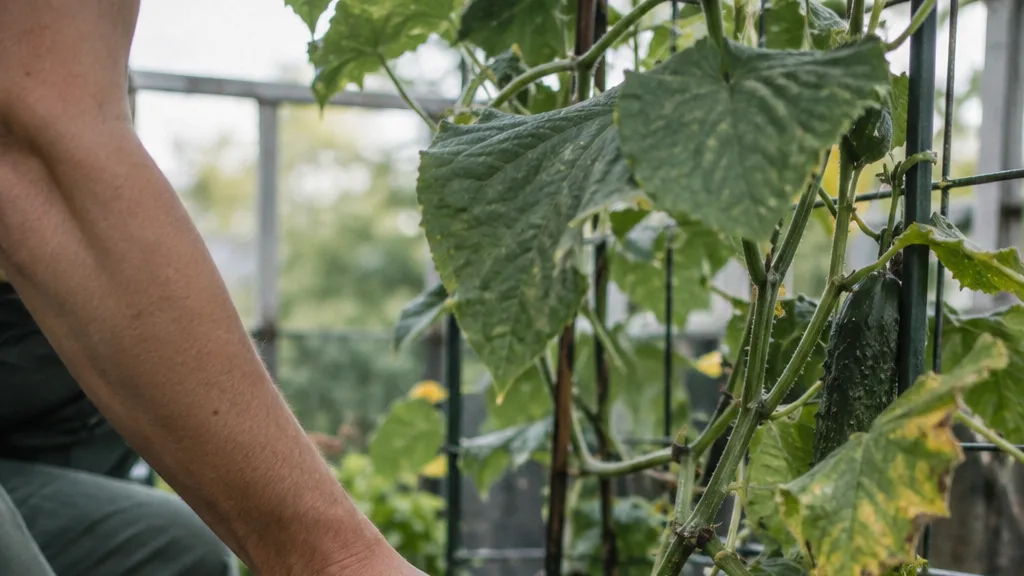
Underwatering gives cucumber leaves a dull, tired yellow cast rather than a clean bright green. The leaves may droop during the warmest part of the day, edges can turn crispy, and fruit may stop expanding. This is especially common in a small plastic pot, a windy balcony, full sun, or a trellised plant with a large canopy pulling water from a limited root volume.
Do not judge the whole root ball from a quick touch on the surface. A dried peat-based mix can shrink from the pot wall, allowing water to run down the sides while the centre remains dry. Water slowly until a little excess appears through the drainage holes. If the mix is extremely dry, water partway, wait several minutes, then water again so the centre has time to absorb it.
In a hot, windy position, a cucumber in a small plastic container may need checking daily. In cooler weather or bright part shade, the same plant may go two or three days between thorough waterings. That is why I prefer the method in how often to water container plants over a fixed calendar: the pot, weather and plant size change the interval.
A properly watered but wilted plant should be reassessed later the same day and again the following morning. If the pot is still light, the surface is dry again and the plant has not recovered, the container may simply be too small for the vine’s current leaf area.
Cause 3 — Nutrient shortage, salt buildup, or pH lockout
Yellow leaves tempt people to add more fertilizer, but colour patterns are clues rather than laboratory results. I separate the possibilities by leaf age and pattern:
- Older leaves uniformly pale: a mobile nutrient such as nitrogen may be running short, particularly in a fruiting vine with little fresh mix.
- Older leaves yellow between green veins: magnesium availability is one possibility, but damaged roots can create a similar appearance.
- Newest leaves pale while the veins stay greener: iron availability or root-zone pH becomes more relevant.
- Leaf tips look scorched and the pot has a white crust: accumulated fertilizer salts may be adding stress rather than solving it.
A cucumber that is producing flowers and fruit can draw down nutrients from a small pot faster than a leafy seedling. That does not mean it needs a stronger dose. Use a fertilizer intended for edible container crops, and follow the product label. A 7–14-day liquid-feed interval is reasonable only when the label supports that interval and the plant is actively growing.
If a salt crust is present and the pot drains reliably, flush the mix slowly with roughly 2–3 pot volumes of plain water, allowing each portion to leave through the holes. Do not flush a container that has poor drainage; you will only leave the roots wetter. I would also avoid adding Epsom salt simply because a leaf is yellow. Without a magnesium diagnosis, it can add more dissolved material without fixing the actual problem.
For a full feeding routine, use how often to fertilize container plants as the broader reference, then adjust for the cucumber’s growth and the instructions on the label. If the leaves keep yellowing after watering and feeding are corrected, pH or root damage may be blocking uptake even when nutrients are present.
Cause 4 — Old leaves ageing under a fruit-heavy vine
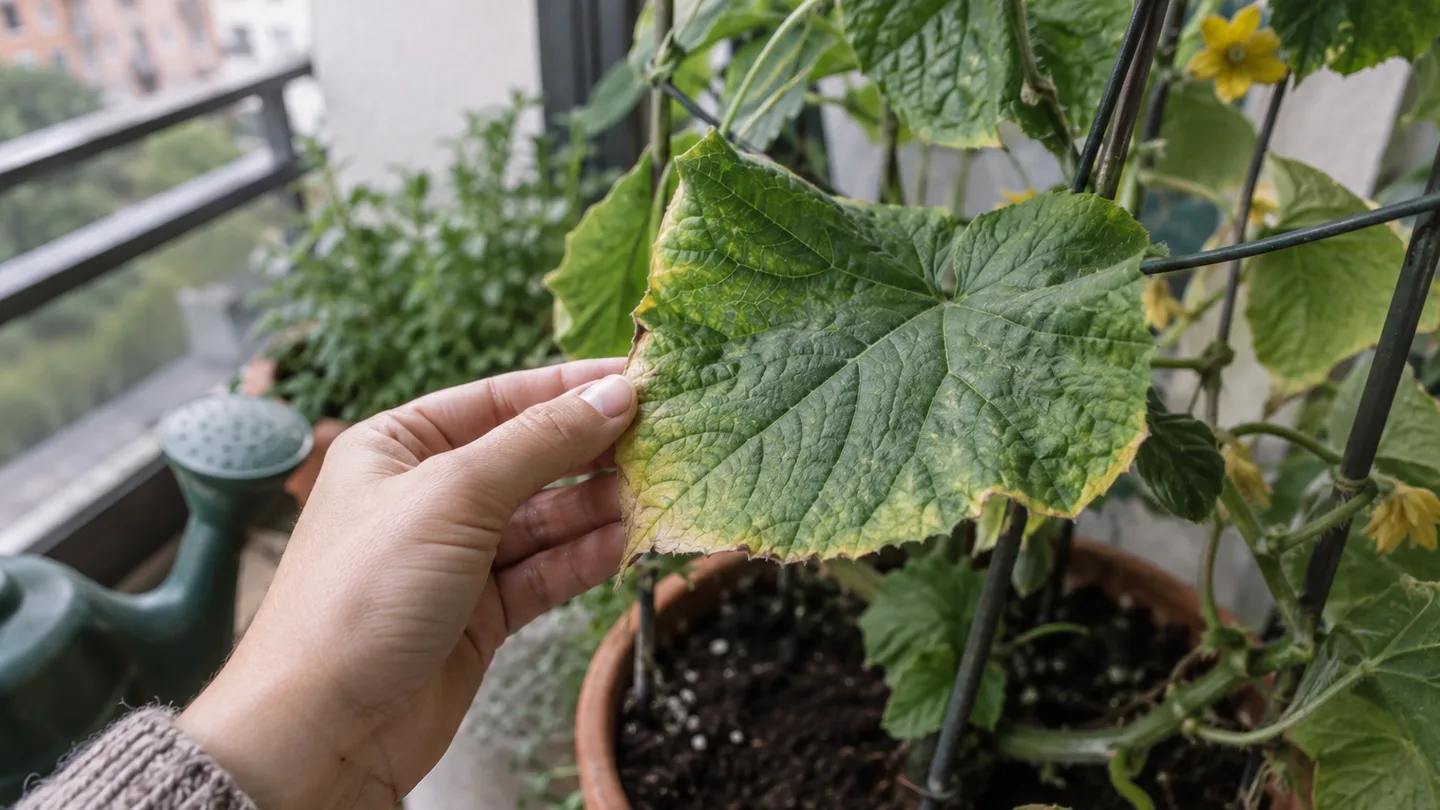
One or two of the oldest, lowest leaves can yellow as the vine keeps producing new growth and fruit. If the growing tips are firm, the newest leaves are green, and the yellowing is not climbing rapidly, I treat that as a limited ageing pattern rather than proof of disease.
Remove a leaf once it is fully yellow, dry or damaged. A leaf that is still mostly green is still contributing energy to the plant, so stripping it early removes useful surface without correcting the cause. Cut the stem cleanly rather than tearing the leaf away from the vine.
The pattern changes the decision. Yellowing that moves from the bottom toward the middle of the plant, appears on new leaves, or comes with spots needs a fresh check of water, roots, pests and disease.
Cause 5 — Weak light or a temperature swing after moving or transplanting
Cucumbers generally perform best with about 6–8 hours of direct sun. A balcony that receives only 1–2 usable hours can still grow a vine, but the growth may be weak, stretched and pale, with less leaf area to support fruit. In that situation, moving the pot is more useful than feeding it.
Temperature can make the same plant look suddenly unhappy. Night temperatures around or below 13°C/55°F can slow warm-season growth. Days around 32°C/90°F or higher sharply increase water demand, especially in a dark plastic pot against a reflective wall. Wind adds another drying force even when the air does not feel particularly hot.
After transplanting or moving a cucumber, a short 3–7-day period of drooping or mild yellowing can be a response to disturbed roots or a changed light level. I would leave the plant in a stable position, keep the mix evenly moist rather than saturated, and watch the new growth. If the yellowing continues beyond that settling period, inspect the light exposure and root condition instead of repeatedly applying feed.
Cause 6 — Stippling and webbing from sap-sucking pests
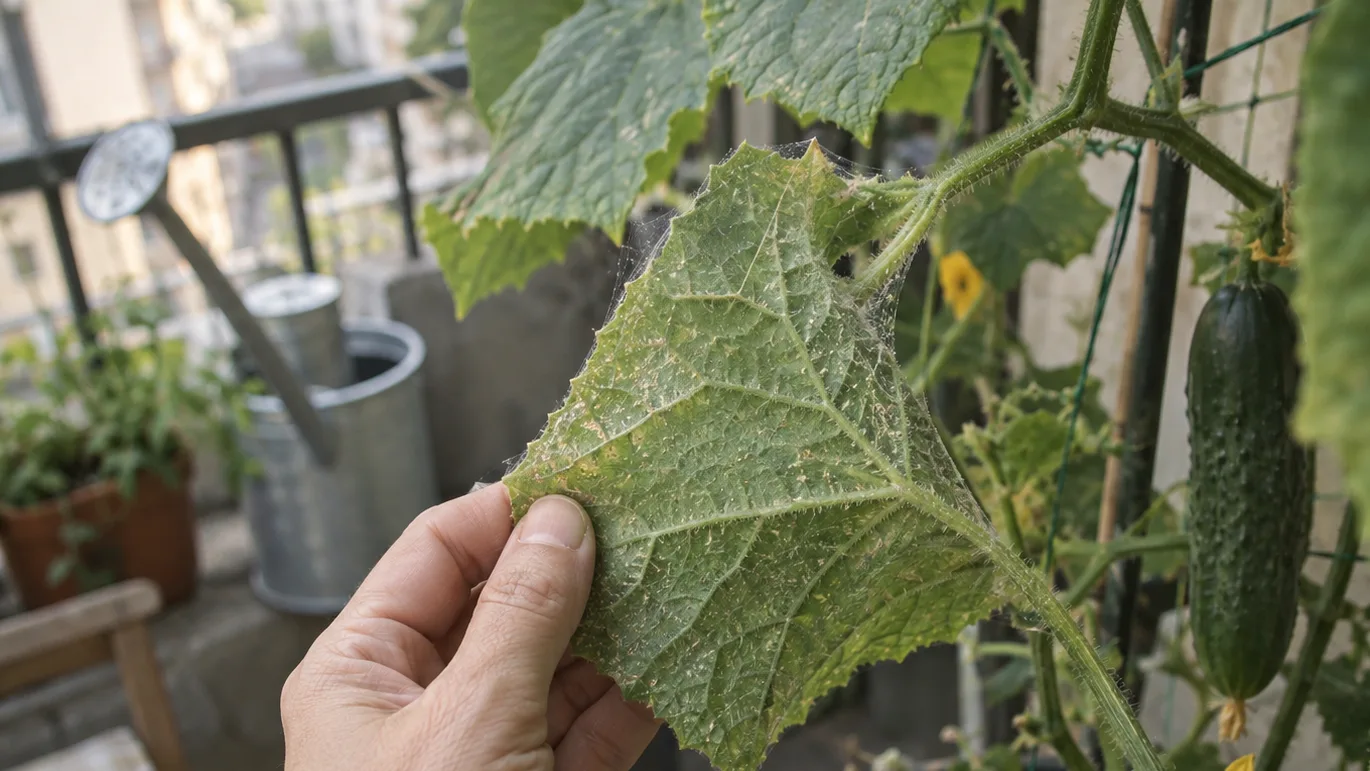
Spider mites often begin as fine pale stippling: hundreds of tiny light marks that make the leaf look dusty or sandblasted. Webbing may appear later, especially in sheltered inner growth. Aphids and whiteflies are more likely to leave visible clusters, shed skins or sticky residue, though a general yellow cast can have another cause entirely.
Use a repeatable inspection rather than checking the most obvious leaf. Examine at least five leaves, including the undersides and the protected growth near the stem. A 10× hand lens helps when mites are too small to identify clearly. Tap a leaf over white paper if you need to see moving specks.
If you find pests, rinse the undersides with a gentle stream of water, improve airflow and inspect again over the next several days. Choose only a control labelled for edible crops, follow its directions and observe the harvest interval if one is listed. Do not spray a wilted cucumber in hot, direct sun; the plant is already under stress and the leaf surface can be damaged.
The practical inspection is similar to the one I use for spider mites on plants: undersides first, sheltered leaves second, and a repeat visit instead of assuming one rinse solved the problem. For product choices, integrated pest management references for spider mites, aphids, and whiteflies on edible plants are safer starting points than an improvised detergent mixture.
Cause 7 — Spots, fuzz, or sudden wilt: disease clues that change the fix
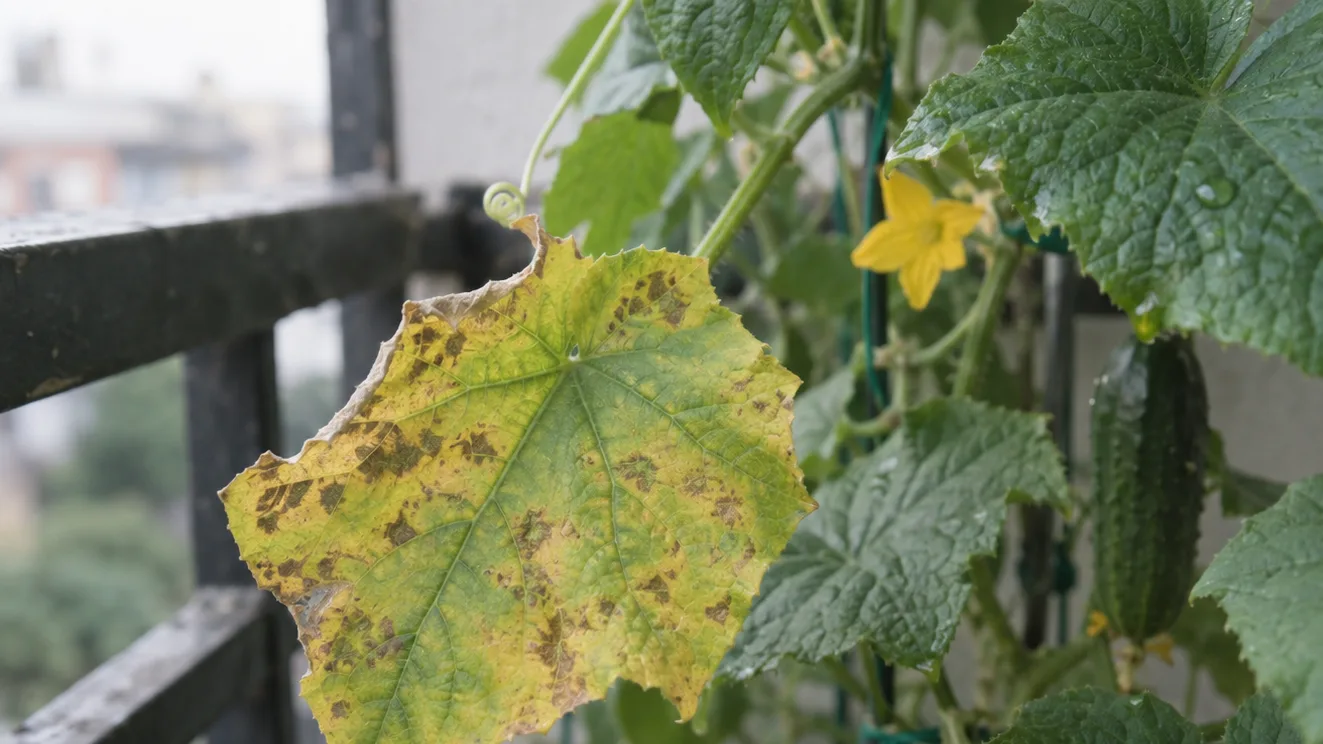
Yellowing accompanied by a distinct mark is a different case from an evenly pale leaf. Angular yellow patches bounded by veins can point toward a foliar disease. Grey or white growth beneath a leaf, lesions that spread over 24–48 hours, or a vine that stays wilted after the mix has been rehydrated all deserve a disease check.
Downy mildew and other foliar problems affect the leaves directly. Bacterial wilt and root or stem damage can interfere with the water supply, so the plant may remain limp even though the pot is moist. Those clues can narrow the route, but a photograph alone cannot confirm the diagnosis. For patterns that keep spreading, I would cross-check university extension guidance on cucumber diseases rather than trusting a single image search.
Take the immediate steps that help across several possible diagnoses:
- Remove leaves that are badly affected, fully yellow or touching neighbouring foliage.
- Isolate the pot from other cucumbers where practical.
- Water the mix at soil level and keep foliage dry overnight.
- Improve spacing and airflow around the vine.
- Stop escalating fertilizer until the pattern is clearer.
Do not compost heavily diseased leaves if your compost does not reliably heat. Bagging and disposing of them may be the more sensible option for a small balcony setup, where one infected pot sits close to every other edible plant.
A 15-minute diagnosis, followed by a 3–7-day recovery check
When I’m standing beside a yellow cucumber, I do not begin by pinching leaves or opening the fertilizer bag. I use the pot as evidence and work from the least destructive checks to the most serious possibilities.
- Feel the top 2–3 cm of mix. Note whether it is dry, wet or deceptively damp only at the surface.
- Lift the pot and inspect the base. Check its weight, drainage holes and saucer. A heavy pot that never seems to dry moves waterlogging up the list.
- Compare old and new leaves. Older-only yellowing points in a different direction from pale new growth.
- Review the last week. Note a move, transplant, hot spell, cold night, missed watering or recent feed.
- Inspect five leaf undersides. Look for stippling, webbing, clusters, sticky residue or shed skins.
- Look for spots and lasting wilt. A leaf that is marked, fuzzy underneath or spreading damage quickly needs a disease-focused response.
Here is a concrete balcony example. Imagine a cucumber in a 20-litre plastic pot: the top 3 cm is dry, the pot feels light, the lower leaves are dull yellow, and the newest leaf is still green. Water slowly until excess exits the holes, then check the plant later that day and the following morning. If the vine firms up and no new leaves yellow, thirst was a strong possibility. If the pot becomes heavy and remains wet for two days, drainage deserves attention instead.
A wilted plant may recover within several hours to a day after proper watering, but a fully yellow leaf usually will not turn green again. I judge the fix by the next leaves: firmer tips, normal green colour and no continuing spread over the following 3–7 days. Waiting for damaged tissue to reverse is a poor test because that tissue may already be finished.
What to prune, what to leave, and when to reset the mix
Remove leaves that are fully yellow, clearly diseased or resting on wet soil. Leave leaves that are still substantially green unless they are spreading a confirmed disease or blocking essential airflow. Train the vine upward so foliage is not pressed against damp potting mix, and pick fruit promptly once it reaches the variety’s normal harvest size; an overloaded vine is harder to keep balanced in a container.
Flush accumulated salts when the mix has a crust, the pot drains freely and the plant has been fed repeatedly. Replace the mix when drainage has failed, the texture has collapsed, or inspection reveals black, mushy roots. If only a few roots are damaged, remove the soft material with clean tools and repot into fresh, airy mix; if the stem base is soft or the whole root system is failing, recovery is less certain.
By one week later, a successful correction should show in the growing tip rather than the old yellow leaves. Look for firm stems, new leaves opening with an even green colour and no fresh spots or stippling. Before the next watering, check the top 2–3 cm of mix, lift the pot, and look once more at the drainage holes. That three-part check will tell you more than the colour of yesterday’s damaged leaf.
Three quick questions
Can yellow cucumber leaves turn green again?
Fully yellow tissue usually stays yellow. New leaves can emerge green once the water, root, light, pest or disease problem is corrected, so judge recovery by new growth over 3–7 days.
Should I cut off yellow leaves from a cucumber plant?
Remove leaves that are fully yellow, diseased or touching the soil. Keep leaves that are still mostly green because they continue contributing energy to the vine.
Can I still eat cucumbers from a plant with yellow leaves?
Leaf yellowing alone does not automatically make a normal-looking cucumber unsafe. I would discard fruit that is damaged, diseased or abnormal, and I would not eat produce after using a product that was not labelled for edible crops until the label and local guidance have been checked.
Frequently Asked Questions
Can yellow cucumber leaves turn green again?
Fully yellow tissue usually stays yellow, but new leaves can emerge green once the root, water, light, pest, or disease problem is corrected; assess recovery over 3–7 days.
Should I cut off yellow leaves from a cucumber plant?
Remove leaves that are fully yellow, diseased, or touching the soil, but keep leaves that are still mostly green because they continue feeding the vine.
Can I still eat cucumbers from a plant with yellow leaves?
Usually yes if the fruit looks normal and no unlabelled pesticide has been used, but yellowing can reduce plant vigour and diseased or damaged fruit should be discarded.